Xavier slammed his palm against the steering wheel as the brake lights on I-25 North near Jefferson Street stretched toward the horizon. It was his fourth "no-show" estimate of the week, and he had already burned $67 in diesel just crawling through midday traffic between the Northeast Heights and the West Mesa. Behind him in the truck bed, a ladder rack rattled, a constant reminder of the $38-an-hour lead estimator sitting idle in the passenger seat. They were chasing a $9,000 repair lead that had probably called five other contractors by now. By the time Xavier actually stepped onto that driveway in Rio Rancho, he was already $214 in the hole for labor and fuel, and the homeowner hadn't even opened the door.
This is the "Albuquerque Scramble," a high-stakes, low-margin game where roofing owners trade their most valuable asset (time) for the slim chance of a signature. I have sat in enough cramped trailers in Los Lunas and sleek offices in Nob Hill to know that the traditional "truck and ladder" sales model is cannibalizing your profits. When you factor in the 43 minute average commute across the metro area and the rising cost of fleet maintenance, that "free estimate" is costing your business upwards of $280 per appointment.
At a Glance
Eliminate the $250+ "hidden cost" of every physical site visit by moving to a digital-first discovery phase.
Increase daily presentation capacity from 3 appointments to 8 appointments per salesperson.
Leverage high-resolution aerial imagery to provide 98.6% accurate estimates without leaving the office.
Use virtual engagement to filter for high-intent property owners before committing field resources.
The High Cost of the "Truck and Ladder" Mentality
In the Albuquerque market, geography is your biggest overhead enemy. If you are sending a crew leader from a job in the South Valley to look at a wind-damaged TPO roof in the Foothills, you are losing two hours of production. Last year, I worked with a mid-sized shop near Paseo del Norte that was frustrated by a stagnant 18% net margin. When we audited their sales process, we found they were spending $11,430 a month just on "windshield time" for their three sales reps.
The problem is not just the gas. It is the opportunity cost. While your best closer is navigating the Big I interchange, a competitor is already sending a digital proposal. In a world where homeowners expect instant gratification, the three-day turnaround for a physical estimate is a death sentence for your conversion rate.
According to the Small Business Administration (SBA), managing operational costs is the single biggest factor in sustainable scaling. For a roofer, that means decoupling the sales process from the physical truck. You do not need to see the shingles in person to know if a roof needs a replacement after one of our 60 mph spring windstorms.
The Virtual Transition: A Problem-Solution Framework
The transition to virtual sales is often met with resistance. "My customers want to see my face," Xavier told me during our first consulting session. But the data suggests otherwise. Most property owners in the 505 area code value their time as much as you do. They don't want to wait around for a four-hour "window" for a contractor to show up.
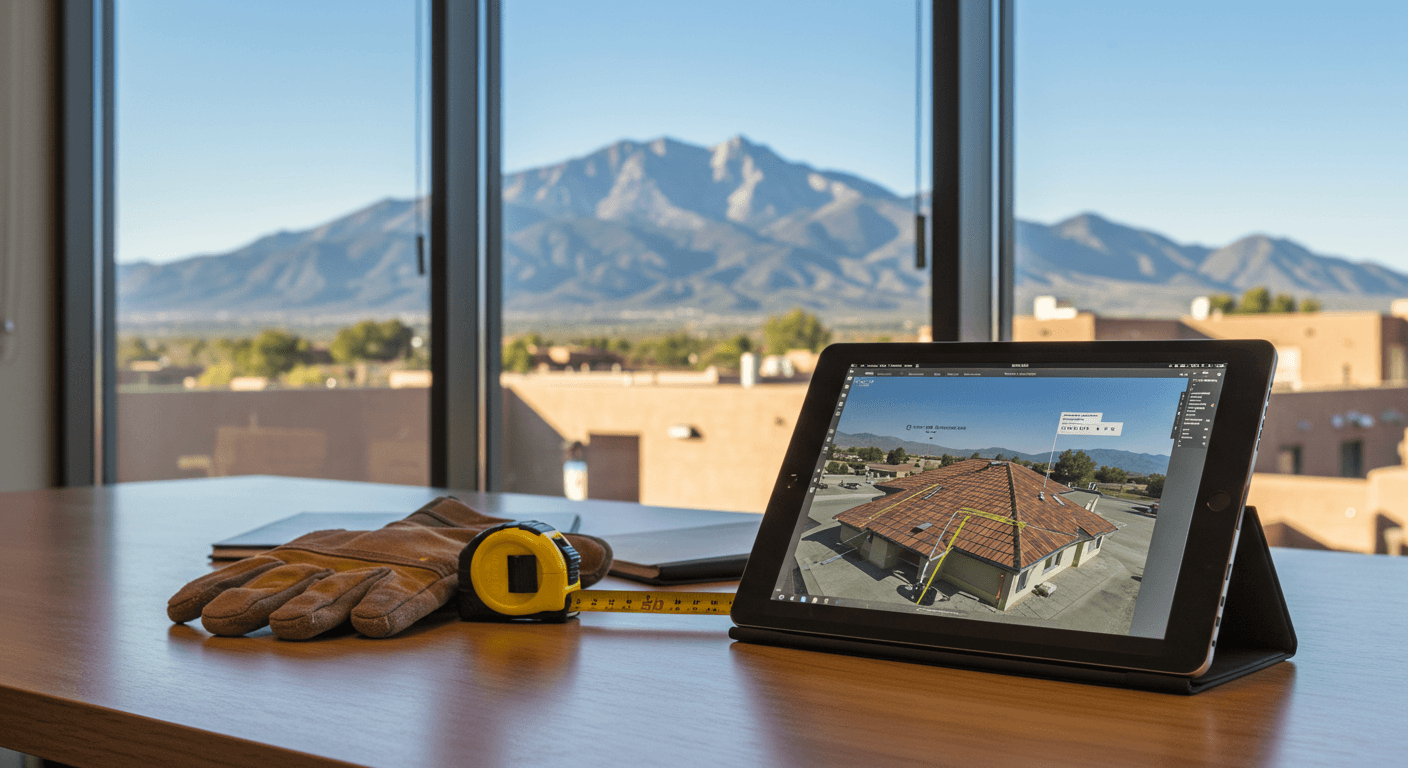
The solution is a "Virtual First" discovery model. Instead of driving to the property, your sales rep initiates a 15-minute video call. During this call, you use high-resolution satellite imagery and drone shots to walk the homeowner through the damage. You can point out the specific UV degradation common in our high-altitude environment or the Granule loss on the north-facing slopes.
By the time you finish the call, you have built more trust through data than a guy with a ladder ever could. You are no longer just a contractor; you are a consultant. This shift allows you to preview the project details before ever burning a gallon of fuel. If the homeowner isn't ready to buy, you've only lost 15 minutes of office time, not half a day of field labor.
Action Plan
A 5-Step Implementation Plan for Shifting Your Albuquerque Roofing Shop to a Virtual-First Sales Model
Transform your sales process from a time-consuming field operation into an efficient, scalable virtual system that increases capacity while reducing overhead.
Step 1: Audit your current "Cost Per Appointment" by tracking fuel, vehicle wear, and estimator hourly rates for the last 30 days.
Step 2: Invest in a professional aerial measurement subscription (EagleView, SkyMeasure, or similar) to ensure estimate accuracy.
Step 3: Implement a standardized "Virtual Discovery" script that focuses on educating the homeowner via screen-sharing.
Step 4: Use a digital contract platform to allow for "one-click" signing during or immediately after the virtual presentation.
Step 5: Reserve physical site visits only for "Final Measurements" after a deposit has been secured or for high-complexity commercial bids.
Want to skip the manual work and get exclusive, verified leads instead?
Get $150 in Free CreditsHard Numbers: The ROI of Digital Presentations
Let's look at the math for a typical Albuquerque roofing company. If you are running 25 leads a month per rep, and each lead requires 2.5 hours of total travel and on-site time, that is 62.5 hours per month spent in a truck. At a burdened labor rate of $45/hour, plus $12 in fuel/maintenance per trip, you are spending $4,112 per month just to "show up."
Contractors who implemented virtual sales presentations in the last 14 months saw this reduction while increasing their bid volume by 47%.
By moving to a virtual model, that same rep can handle those 25 leads in just 18.5 hours of total office time. That frees up 44 hours a month. What could your best salesperson do with an extra 44 hours? They could follow up on old quotes, manage existing projects, or close another $84,500 in residential tear-offs.
When I helped Xavier implement this, his closing rate actually climbed from 21% to 26.4%. Why? Because he was getting to the leads faster. He used the Leadzik platform features to identify high-intent prospects and hit them with a virtual presentation within two hours of the lead coming in. Speed to lead is the ultimate competitive advantage in the Duke City.
Traditional vs Virtual Sales: The Real Cost Comparison
| Factor | Traditional On-Site Sales | Virtual Sales Presentation |
|---|---|---|
| Time per Appointment | 2.5 - 3.5 Hours | 20 - 45 Minutes |
| Cost per Lead | $250 - $350 (Labor + Fuel) | $15 - $35 (Software + Labor) |
| Daily Lead Capacity | 2 - 3 Leads | 7 - 10 Leads |
| Closing Speed | 3 - 5 Days | Same Day / 24 Hours |
| Geographic Reach | Limited to 20-mile radius | Unlimited (Full State) |
Time per Appointment
Cost per Lead
Daily Lead Capacity
Closing Speed
Geographic Reach
Overcoming the "High-Touch" Objection
Many owners worry that virtual sales feel "cold." In reality, it allows for a more organized, professional presentation. Instead of yelling over the sound of a neighbor's lawnmower or standing in a dusty driveway near Coors Blvd, you are in a controlled environment. You can show high-definition "before and after" photos of similar Santa Fe-style homes you've completed in the area.
You can also pull up the New Mexico Construction Industries Division (CID) website to show them exactly what permits are required for their specific zip code. This level of transparency builds massive rapport. If you need additional guidance on building these professional systems, the mentors at SCORE provide excellent resources for refining your B2B and B2C sales processes.
The 'Hybrid' Close
"If a homeowner is hesitant to sign virtually, offer a 'Production Walk-Through' instead of a 'Sales Estimate.' Tell them, 'I've already calculated your price using satellite data to save you money. I'll come out personally once we have the project scheduled to finalize the shingle color and verify the flashing details.' This frames the physical visit as a service, not a sales pitch."
Scaling Beyond the Albuquerque Metro
The beauty of virtual sales is that it erases the borders of your service area. Suddenly, taking a job in Santa Fe or Moriarty doesn't feel like a logistical nightmare. You can sell the job from your office in Albuquerque, order the materials to be delivered to the site, and only send your crew when it is time to tear off.
This model allows you to scale without adding more trucks or more gas cards. You are scaling with software and systems. When you are ready to expand your reach, having a virtual-first sales process means you can handle a 50% increase in lead volume without your overhead skyrocketing.