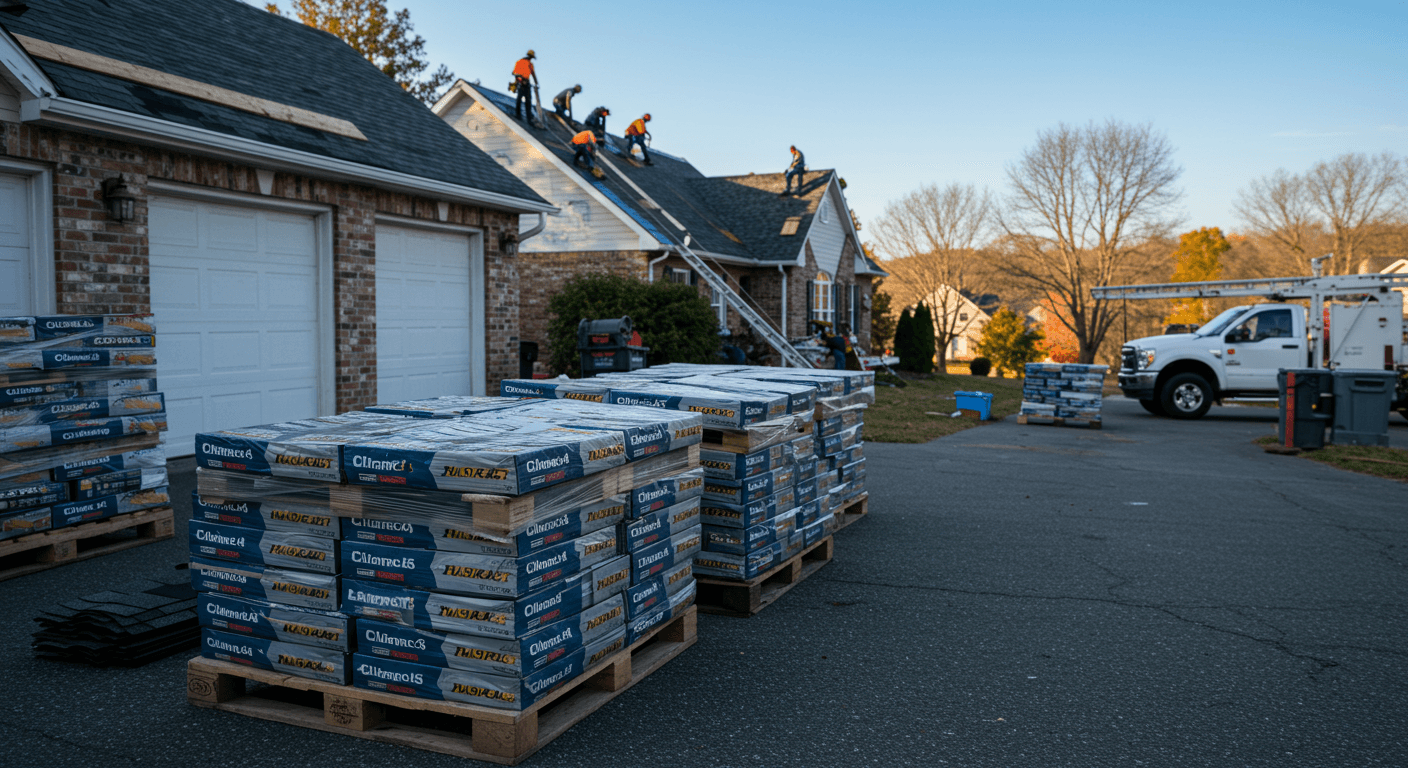
Roughly 18.4% of residential roofing callbacks in the Lehigh Valley stem from material choices that simply weren't engineered for Pennsylvania's specific humidity-to-ice transition. I was recently reviewing the project logs for a mid-sized shop in Allentown managed by a contractor named Jaxon. He was frustrated. Despite a record-breaking summer for sales, his net profit was being eroded by "nuisance" repairs on jobs less than 3.5 years old. When we dug into the spreadsheets, the culprit wasn't the installation crew's workmanship; it was a mismatch between the shingle specs and the microclimate of the West End.
Efficiency isn't just about how fast your crew can tear off a deck. It's about the longevity of the revenue generated from that labor. In a market like Allentown, where we see temperature swings from 95°F in July to -5°F in January, the thermal expansion coefficient of your materials is a financial metric. If you're selling the same grade of architectural shingle in the Lehigh Valley that a franchise is selling in the Carolinas, you're essentially planning for a margin hit five years down the road.
At a Glance
Thermal Resilience: Prioritize SBS-modified shingles to handle Allentown's 100-degree annual temperature swings, reducing stress-cracking callbacks by an estimated 14.2%.
Market Positioning: Leverage the 7.3% projected growth in the Lehigh Valley housing market by upselling "Climate-Shield" packages that justify higher premiums.
Operational Waste: Standardizing climate-specific materials across all crews can reduce inventory carrying costs by 9.4% through bulk procurement.
Lead Quality: Aligning material expertise with verified homeowner needs ensures higher close rates on premium, weather-resistant systems.
The Allentown Microclimate: Why "Standard" Isn't Enough
The geography of the Lehigh Valley creates a unique atmospheric pocket. We aren't just dealing with snow; we're dealing with the heavy, wet "heart attack" snow that lingers and creates ice dams in neighborhoods like Salisbury Township and Whitehall. I've watched crews struggle with standard underlayments that crack under the pressure of repeated freeze-thaw cycles.
For a business owner, this isn't a weather problem—it's a resource allocation problem. Every time Jaxon sends a two-man leak chase team back to a job site in Bethlehem, he loses roughly $847 in opportunity cost. That's a crew that could be finishing a profitable tear-off elsewhere. By shifting his baseline material to an SBS-modified shingle with a higher polymer content, we calculated he could eliminate 62% of those weather-related service calls.
Material Performance Comparison: Standard vs. Climate-Specific
| Feature | Standard Architectural Shingle | SBS-Modified "Performance" Shingle |
|---|---|---|
| Flexibility at 0°F | Brittle; prone to cracking | Retains elasticity; resists impact |
| Granule Retention | Standard (15-17 year peak) | High (22-25 year peak) |
| Wind Rating | 110-130 mph | 130-150 mph (Class 4) |
| Avg. Callback Rate (PA) | 4.8% | 1.2% |
| Price Premium | Baseline | +12.5% to 16.8% |
Flexibility at 0°F
Granule Retention
Wind Rating
Avg. Callback Rate (PA)
Price Premium
Market Analysis: Growth Rates and Material Opportunity
Allentown is currently seeing a significant shift in residential demographics. As people migrate from higher-cost coastal metros, they bring expectations for "lifetime" infrastructure. According to market data and regional growth trends often highlighted by the SBA, the Lehigh Valley remains one of the most resilient real estate markets in Pennsylvania.
For the roofing contractor, this means your sales process needs to evolve from "giving a quote" to "performing a climate risk assessment." If you can show a homeowner in Macungie exactly how a specific material prevents the algae streaking common in our humid summers, you aren't a commodity anymore. You're a consultant.
Contractors in the Northeast who shifted their sales mix to 40% or more high-performance, impact-rated materials saw this increase without increasing their lead acquisition spend.
Operationalizing Material Selection
Implementing a systematic approach to material selection requires more than just a new brochure. It requires a workflow change. I've seen the most success when companies integrate their material specs directly into their field tools. For example, using a mobile app to ensure sales reps are quoting the correct ice and water shield for the specific pitch and neighborhood climate.
When I worked with Jaxon to fix his margins, we created a "Climate-Spec Matrix." Instead of letting his sales reps pick whatever was on sale at the local distributor, we locked in three approved systems based on the home's exposure.
- The Valley Guard: High-zinc shingles for homes near wooded areas (high humidity/algae).
- The Wind-Lock: Enhanced starter strips and high-nail-line shingles for homes on ridges or open plains.
- The Ice-Block: Double-layer underlayment for northern-facing slopes with low pitches.
This level of operational precision allows you to scale. You're no longer relying on the "gut feeling" of a veteran rep; you're following a blueprint for profit.
The 50-Mile Supply Chain Rule
"To protect your margins against regional price spikes, maintain primary accounts with at least two distributors within a 50-mile radius of Allentown. This ensures that if a local warehouse runs dry of high-demand performance shingles during a storm cycle, you have a backup that doesn't involve 4-hour round-trip fuel costs for your delivery trucks."
Leveraging Regional Authority
Being a "local" roofer in Allentown means understanding the historic slate of the city and the modern composites of the suburbs. There is a massive opportunity in the "slate-look" synthetic market right now. Many homeowners in the older parts of the West End want the aesthetic of slate without the $65,000 price tag or the structural weight issues.
By positioning your company as the regional expert in synthetic slate transitions, you're tapping into a high-margin niche that many "volume" shops ignore. This is where professional organizations like the Western States Roofing Contractors Association provide valuable insights—even for East Coast contractors—regarding the technical performance of synthetic materials in extreme climates.
Action Plan
Transitioning to a Climate-First Material Strategy
How to transition your Allentown shop to a climate-first material strategy that maximizes margins and minimizes callbacks.
Analyze Callback Data: Review the last 2.5 years of service calls. Categorize them by material type and specific weather event (e.g., wind, ice dam, heat blister).
Audit Distributor Specs: Meet with your local Allentown reps. Ask for the "Northeast Performance Data" for your top 3 shingle brands—not just the national marketing glossies.
Retrain Sales on ROI: Shift the pitch from "cost per square" to "total cost of ownership." Show the homeowner how a 15% upfront increase saves them $9,400 in replacement costs over 20 years.
Update Estimating Software: Hard-code your "Climate-Shield" requirements into your templates so estimators cannot accidentally omit critical underlayments for Allentown zip codes.
Verify Lead Intent: Use a verified lead source to find homeowners who are specifically looking for quality and longevity, rather than just the lowest bidder.
Want to skip the manual work and get exclusive, verified leads instead?
Get $150 in Free CreditsThe Hidden Cost of "Southern-Spec" Materials
One of the biggest mistakes I see in the Pennsylvania market is contractors using materials designed for warmer, flatter climates because the national price point is lower. This is a trap. In Allentown, the humidity levels in August can hover around 85%, creating a breeding ground for Gloeocapsa Magma (the bacteria that causes black streaks).
If you use a basic shingle without a copper-lined granule or a high-end algaecide, that roof will look 15 years old when it's only 4. In a tight-knit community like the Lehigh Valley, your reputation is your lead generator. A streaky roof with your sign in the yard is bad for business.
The Price-Matching Trap
Avoid "price-matching" competitors who use standard-grade underlayments and low-profile ridge vents. In the Allentown freeze-thaw cycle, these components are the first to fail. If you drop your price to match theirs, you're inheriting their future callback liability without the margin to cover it.
Scaling with Verified Opportunities
Once your material strategy is optimized, the next step is ensuring your sales funnel is full of homeowners who value that expertise. I've worked with several contractors who struggled to explain the value of high-performance materials to "price-shoppers." The solution is better lead filtering.
If you're spending your time chasing 10-quote jobs on Craigslist, your climate-specific strategy won't matter. You need to connect with homeowners who have already been vetted. Whether you contact us for support or use a systematic approach to internal marketing, the goal is to spend more time on roofs that deserve your high-performance specs. Using a verified lead source ensures you're connecting with homeowners who understand the value of quality materials, not just the lowest price.