Yara stared at the heat map of our last 142 jobs, tracing the red clusters that stopped abruptly at the Travis County line. We were sitting in her temporary office off Research Blvd, the smell of fresh shingles and stale coffee hanging in the air, while she did the math that every successful owner eventually faces. For three years, her crews had dominated North Austin, but the I-35 traffic was turning her profit margins into a memory. Every time a lead came in from Georgetown or Temple, her lead technician sighed because he knew 94 minutes of his day would be spent staring at brake lights instead of driving nails. It was a classic "success trap" where the cost of logistics was beginning to cannibalize the revenue of the actual work.
I remember looking at her spreadsheet and seeing the leak. It wasn't in her material waste or her marketing spend. It was in the $4,281 she was losing per crew, every single quarter, just in "windshield time" and fuel surcharges. We realized that if she wanted to hit her $15M enterprise value goal, she couldn't just keep adding trucks to the Austin lot. She needed a satellite operation that could breathe on its own. Scaling a roofing business in Central Texas requires more than just a bigger ad budget. It demands a clinical look at the unit economics of geographic density and the ROI of localized operations.
At a Glance
Average job travel time exceeds 52 minutes consistently, indicating expansion readiness
Local market share in the primary zip code has peaked at 14% or higher, signaling saturation
Cash reserves can cover 7.3 months of fixed overhead for a new facility before expansion becomes viable
Current lead-to-close ratio is stable at 24% or better, ensuring new location can maintain profitability
The Geography Trap in Central Texas
Austin is a unique beast for roofing contractors. You have the aggressive permitting requirements within the city limits, the high-end residential demands of West Lake Hills, and the explosive suburban growth in the surrounding "doughnut" cities. According to professional market research from IBISWorld, the roofing industry continues to benefit from regional population shifts, and nowhere is that more evident than the Austin-Round Rock-Georgetown corridor. However, many contractors make the mistake of trying to service this entire 100-mile stretch from a single hub.
When you look at the ROI of a multi-location move, you have to account for the "Austin Tax." This isn't a government fee, but the cumulative cost of doing business in a city where the infrastructure hasn't kept pace with the 32% population boom of the last decade. If your crews are based in South Austin but you are chasing hail in Cedar Park, you are effectively paying your best guys to sit in a truck for 12.5 hours every week. At a $35 hourly rate plus benefits and overhead, that is thousands of dollars in "dead labor" before a single shingle is pulled.
Analyzing the Unit Economics of a Satellite Office
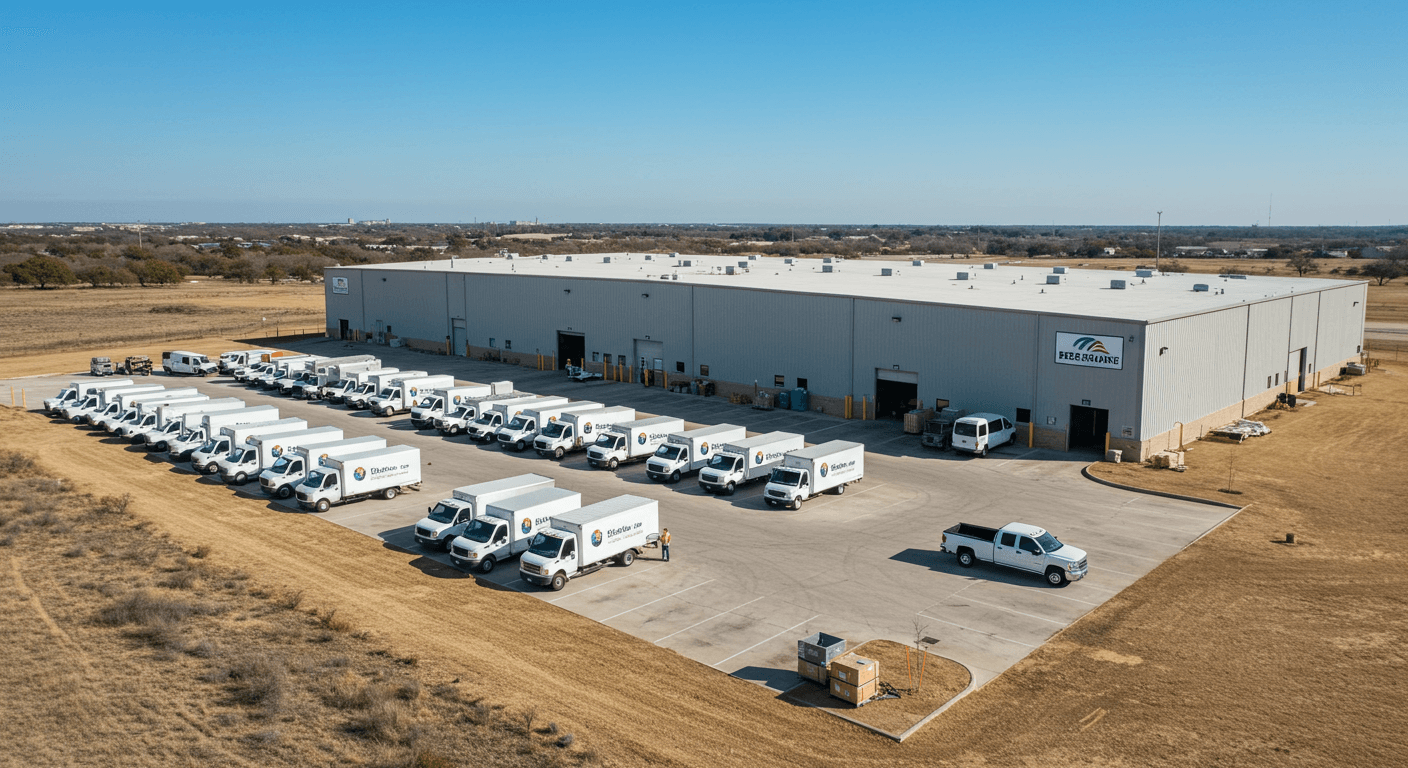
To determine if an expansion makes financial sense, we have to look at the "Point of Neutrality." This is the moment where the cost of opening a second location (rent, a new warehouse manager, local permits, and equipment) is fully offset by the reduction in travel costs and the increase in local close rates. In Yara's case, we looked at a 3,400-square-foot warehouse space in Buda. The rent was $5,120 a month (significantly cheaper than her North Austin spot), but the real win was the labor efficiency.
By basing two crews out of Buda, she reclaimed 48 hours of production time per month. In the roofing world, 48 hours is roughly the equivalent of two full residential reroofs. At an average ticket price of $14,650 and a 38% gross margin, that satellite office was generating an extra $11,134 in gross profit every single month just by existing closer to the job sites. This doesn't even account for the new revenue generated by being "local" to the Hays County market.
Expansion Strategy Comparison
| Factor | Organic Sprawl (One Hub) | Strategic Satellite (Two Hubs) |
|---|---|---|
| Avg. Travel Cost | $1,240 / Week | $315 / Week |
| Local Brand Trust | Low (Outside City) | High (Local Address) |
| Crew Retention | Lower (Long Commutes) | Higher (Local Routes) |
| Admin Overhead | Centralized ($0 Extra) | Added Mgr ($6k/mo) |
Avg. Travel Cost
Local Brand Trust
Crew Retention
Admin Overhead
The Three-Pronged Expansion Model
There are three ways I have seen Austin roofers successfully plant a second flag. The first is the "Shadow Warehouse." This is purely a logistics play where you rent a small storage unit for materials and a parking lot for trucks. There is no front office and no sales staff on-site. It is a way to test the waters without committing to a $12,000 monthly lease. It works well if you can manage everything via a mobile app to keep the communication lines open between the field and the home office.
The second model is the "Sales Hub." Here, you hire a local sales manager and 2-3 reps who live in the target area (like Bastrop or Dripping Springs). They don't need a warehouse initially; they need a presence. They are the face of the company at local chamber meetings and high school football sponsorships. Once they hit a consistent $220,000 in monthly booked revenue, you pull the trigger on a physical warehouse.
The third, and most aggressive, is the "Fully Autonomous Branch." This is what Yara eventually did. She hired a branch manager, moved two veteran foremen to the new location, and gave them their own P&L. This model has the highest ROI but also the highest risk. If the branch manager isn't aligned with your culture, you aren't growing your business, you're just funding someone else's startup.
The 15-Mile Rule
"In the Austin metro area, never expand into a market where your primary office is more than 15 miles away unless you have a dedicated local sales presence. Distance kills trust in residential roofing."
Managing the Lead Pipeline Across Locations
A major hurdle in expansion is the "lead lag." You open a new office, but your SEO is still tied to your old address. Your Google Business Profile shows you are 45 miles away, which is a massive red flag for a homeowner in Liberty Hill who wants a contractor who can "be there in twenty minutes" if a leak starts. While you wait for your local organic presence to catch up, which can take 7 to 11 months, you need a way to feed the new crews.
I have seen many contractors burn through $15,000 a month on Google Ads in a new territory, only to find the "clicks" aren't turning into "contracts" because they are competing with established local players. This is where exclusive lead previews become a tactical advantage. Instead of bidding on broad keywords, you can see the specific details of a job in your new zip code before you spend a dime. It allows you to "cherry-pick" the high-margin residential jobs that justify the expansion costs.
Furthermore, ensuring those leads are actually legitimate is the difference between a profitable expansion and a cash-flow nightmare. Utilizing a 7-point lead verification process ensures that your new branch manager isn't wasting time chasing tire-kickers or "out of area" requests. In a new market, your sales team's morale is fragile. Giving them verified opportunities is how you maintain the momentum needed to hit your Year 1 targets.
The $1.4M Payback Period
When analyzing the ROI of Yara's second location, we used a 24-month horizon. Most owners look at the next 30 days, but expansion is a long-game play for enterprise value. Her total initial investment, including the lease deposit, new signage, two used trucks, and a local hire, was $118,640.
By month six, the Buda location was breaking even. By month 14, it was contributing $32,400 in net profit to the parent company. Over the course of 2.5 years, that second location added an estimated $1.43M to the total valuation of her company. If she ever decides to sell to private equity (a trend we are seeing more of in the Construction Dive reports on industry consolidation), she is no longer a "local roofer." She is a multi-regional operator with a scalable system.
Action Plan
The 18-Month Multi-Location Rollout Plan
A systematic approach to expanding your Austin roofing business into a second zip code, minimizing risk while maximizing ROI.
Months 1-3: Market data analysis and 'Shadow Warehouse' setup to test logistics.
Months 4-6: Hire local sales lead and implement a verified lead flow to seed the pipeline.
Months 7-12: Sign long-term lease and move 25% of existing crew capacity to the new hub.
Months 13-18: Audit P&L for travel savings and reinvest 15% of profits into hyper-local branding.
Want to skip the manual work and get exclusive, verified leads instead?
Get $150 in Free CreditsAvoiding the Expansion Death Spiral
Not every expansion story ends like Yara's. I've walked into shops where the owner opened a second location because their "ego" wanted it, but their "bank account" couldn't handle it. The most common mistake is spreading your existing A-players too thin. If you take your best salesperson and make them a manager 50 miles away, you might gain $1M in the new office but lose $2M in the old one because the "magic" is gone.
Another trap is the "Marketing Dilution." If you take your $10,000 monthly marketing budget and split it $5k/$5k between two offices, you might lose the "top of mind" dominance you had in your primary market. You have to be prepared to increase your total spend, not just reallocate it.
The Cash Flow Trap
Expanding to a second location usually requires 1.8x the cash you think it will. Between payroll taxes for new hires and the delay in insurance payouts, your 'burn' will accelerate significantly in the first 120 days.
Building Long-Term Enterprise Value
The goal of multi-location expansion isn't just to make more money this year. It's to build a business that can function without you. When you have two or three locations operating under a unified system, you have moved from being a "contractor" to being a "CEO." You are building a brand that has geographic "moats" against competitors.
In the Austin market, where competition is fierce and the weather is unpredictable, having multiple hubs allows you to shift resources where the storms are. If a hailstorm hits Pflugerville but misses San Marcos, you can pivot your Southern crews north within 20 minutes. That agility is what separates the $2M shops from the $20M enterprises.
Yara eventually hit her numbers. It took 19 months of grit and a few late nights in that Buda warehouse, but she proved that the math of expansion works if you treat it like a financial investment rather than a "growth gut-feeling."