Everyone in the Hartford roofing circuit seems to believe that shouting about "Quality Craftsmanship" or "Family Owned Since 1994" is enough to stand out in a sea of white vans. It is not. I was standing on a job site in West Hartford last Tuesday, watching a crew wrap up a tear-off near Elizabeth Park, when the owner, Jaxon, pulled me aside. He was frustrated because he had just lost a $24,680 re-roofing bid to a guy who was $1,400 cheaper. Jaxon has better crews, better materials, and a deeper history in the Connecticut valley, but to the homeowner, he looked exactly like the cut-rate competitor.
The myth that "the best work wins" is killing margins for local shops. In a high-competition zone like Hartford, where homeowners are bombarded with mailers and digital ads the second a hailstorm clips Wethersfield, being "good" is just the entry fee. If your brand doesn't immediately signal a unique value proposition that justifies a 12% to 18% price premium, you are effectively a commodity. You are fighting for scraps on price instead of winning on authority. I have seen contractors transform their close rates simply by shifting how they present their identity before they even step onto the driveway.
At a Glance
Stop using "quality" as a differentiator; in the Hartford market, quality is a baseline expectation, not a selling point.
Align your brand identity with the specific psychological profile of Connecticut homeowners—prioritize risk mitigation and local regulatory expertise.
Implement a "Value-First" sales script that addresses regional pain points like ice damming and historic district compliance.
Shift from a generalist positioning to a specialist authority to justify higher margins and reduce price-based objections.
The "Insurance Capital" Identity Crisis
Hartford is known as the Insurance Capital of the World, which means your typical prospect in areas like Avon or Simsbury is analytical, risk-averse, and highly attuned to fine print. They aren't just buying a roof; they are buying a risk mitigation strategy. When you approach a sales call with the same generic "we're the best" pitch, you are failing to speak the language of your specific market.
I remember coaching a rep named Delaney through a series of calls in the North End. She was struggling because she kept emphasizing the speed of the install. In Hartford, speed is often equated with cutting corners on permitting or ignoring the specific snow load requirements dictated by Connecticut building codes. We pivoted her brand narrative to "The Hartford Compliance Specialist." We focused the brand on the complexity of local historic district regulations and the specific structural demands of New England winters.
By narrowing the brand focus, Delaney stopped being "another roofer" and became a "specialist." Her close rate on high-ticket Victorian homes jumped from 19% to 34% in just under four months. This shift didn't require a new logo or a flashy wrap; it required a tactical change in how the company differentiated its expertise during the initial consultation.
Tactical Scripting: From Quote to Consultation
The biggest mistake I see during sales training sessions is the "Price Drop" syndrome. The contractor walks the roof, takes measurements, and hands over a folder. That folder is a death sentence. It allows the homeowner to flip straight to the bottom line and compare your $16,425 number to the $14,800 number they got an hour ago.
You need to differentiate the process of buying. When you use a system where you can preview job details before purchasing, you arrive at the home already more prepared than the competition. You aren't just guessing; you have the data.
Here is a script I've used with crews across the Northeast to kill the commodity comparison:
Contractor: "Most companies in Hartford are going to give you a quote based on the square footage and materials. We don't do that. We provide a 'Structural Integrity Analysis' because houses in the Connecticut River Valley deal with specific humidity shifts that rot decking faster than in other regions. My brand isn't about shingles; it's about ensuring your 25-year warranty actually stays valid under local conditions."
This framing immediately makes the cheaper competitor look risky. You aren't selling a roof anymore; you're selling the preservation of the home's value. This is how you get started with a brand that commands respect.
Local Regulation as a Competitive Advantage
Many roofing business owners view Hartford's permitting process and the strict Connecticut State Building Code as a headache. Smart brands view it as a moat. If you position your brand as the "Local Code Authority," you differentiate yourself from the out-of-state "storm chasers" who flood the area after a heavy wind event on I-84.
Your marketing materials should highlight your relationship with local building departments. Mentioning specific nuances, like the ice barrier requirements in Section R905 of the state code, builds instant credibility. It shows you aren't just a laborer; you're a professional who protects the homeowner from future legal or insurance hurdles. This level of detail is exactly what resources like SCORE recommend when building a sustainable competitive advantage in a crowded service industry.
The "Permit-Proof" Guarantee
"Create a one-page document for your sales folder that outlines exactly how you handle Hartford-specific permitting and inspections. This visual aid differentiates you from "trunk slammers" who might try to bypass official channels, positioning you as the safe, professional choice."
Calculating the ROI of Differentiation
When you differentiate, your Customer Acquisition Cost (CAC) drops because your referral rate climbs and your close rate stabilizes. Let's look at the numbers for a typical mid-sized Hartford shop doing $2.4M in annual revenue.
If you are a commodity, you might need to touch 100 leads to close 20 jobs at a $12,000 average ticket. That's $240,000 in revenue. If your leads cost $150 each, your lead spend is $15,000, or 6.25% of revenue.
If you are a differentiated brand, your close rate moves to 30%. Now, those same 100 leads generate 30 jobs. At the same $12,000 ticket, that's $360,000 in revenue. Your lead spend stays at $15,000, but it's now only 4.16% of your revenue. More importantly, because you are differentiated, you can often bump that ticket price to $13,500. Suddenly, those 30 jobs are worth $405,000.
The gap between being a "me-too" roofer and a differentiated brand in Connecticut is worth roughly $165,000 for every 100 leads you run. That is the cost of being forgettable.
The Commodity vs. Specialist Divide
| Factor | The Commodity Roofer | The Brand Specialist |
|---|---|---|
| Sales Focus | Price and "Quality" | Risk Mitigation & Local Authority |
| Lead Handling | Chasing any phone call | Exclusive, verified opportunities |
| Pricing Strategy | Market average or lower | Value-based premium (12-18% higher) |
| Hartford Context | Generic "New England" pitch | Specific neighborhood/code expertise |
| Customer Perception | Interchangeable labor | Essential professional partner |
Sales Focus
Lead Handling
Pricing Strategy
Hartford Context
Customer Perception
Operationalizing Your Brand Promise
Differentiation cannot stop at the sales pitch. If your brand promises "White Glove Service" to the residents of Glastonbury, but your crew leaves cigarette butts in the mulch, your brand is a lie. Real differentiation is operational.
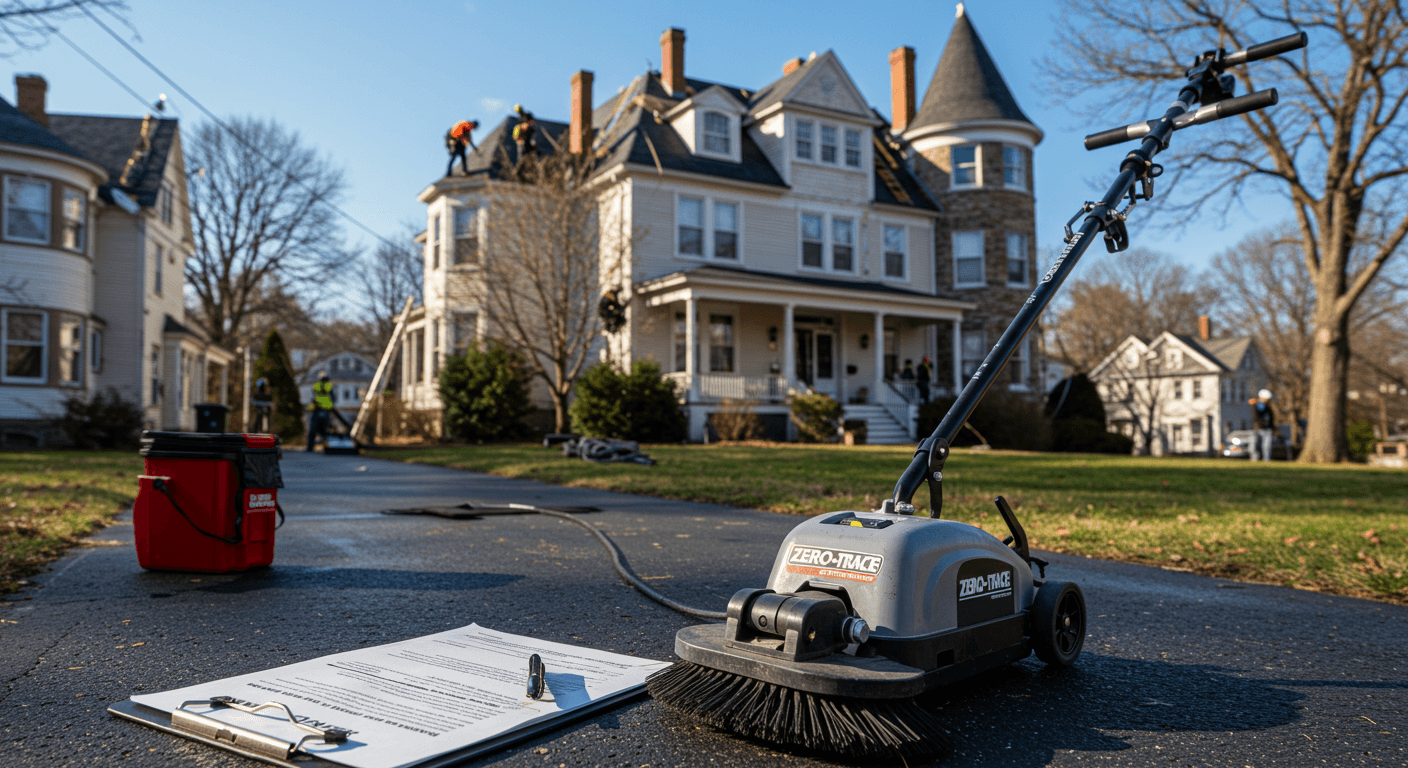
I worked with a contractor named Wesley who operated out of East Hartford. He decided his brand differentiator was "Zero-Trace Installation." He invested in specialized debris management equipment and mandated a three-point magnetic sweep of every driveway. He filmed this process and sent it to every lead before the appointment.
Wesley wasn't the cheapest, but he owned the market for high-end residential roofs in the suburbs. He recognized that for a homeowner in a $700,000 house, the fear of a flat tire or a dead pet from a stray nail was higher than the desire to save $950 on the contract. He solved a specific emotional pain point, and his brand became the solution.
This approach aligns with the SBA's guidance on market research, which emphasizes understanding the specific needs and fears of your local demographic to drive growth. Wesley didn't guess what his customers wanted; he looked at the complaints on his competitors' Yelp pages and built a brand that was the "anti-competitor."
The Psychology of Choice in Saturated Markets
In sales psychology, there is a concept called "Analysis Paralysis." When a Hartford homeowner gets four quotes that all look identical, they freeze. They revert to the only metric they understand: price.
Your job as the business owner is to provide a "category of one" choice. You want the homeowner to think, "I can hire a roofer, or I can hire [Your Company Name]."
One way to achieve this is through specialized certifications that actually matter to the local climate. Don't just show a badge; explain why it matters for Hartford's 45-inch average annual rainfall or the heavy ice loads we see in February. When you explain the why behind your credentials, you differentiate your intelligence from the competitor's muscle.
Scaling Your Identity
As you grow, maintaining this differentiation becomes harder. You have to train every new hire to speak the brand language. This is where many Hartford shops fail. They scale their trucks but not their culture.
Every morning huddle should reinforce the differentiator. If you are the "Cleanest Crew in CT," you talk about cleanup every single morning. If you are the "Permitting Pros," you review the latest code changes. Branding is a daily discipline, not a one-time marketing expense.
I've seen shops double their size in 19 months not by buying more leads, but by converting the ones they had at a much higher margin because their brand became a localized authority. They stopped acting like contractors and started acting like consultants who happen to install roofs.
Winning the Hartford High-Ground
The Hartford roofing market is only going to get more crowded as digital lead costs rise and national franchises attempt to move into the Connecticut valley. The only defense is a brand that local homeowners trust specifically because you understand their homes, their weather, and their regulations better than anyone else.
Stop trying to be the best roofer in the world. Be the only roofer in Hartford that solves the specific problems your neighbors are facing right now. When you make that shift, the price becomes secondary to the partnership. When you leverage platforms like LeadZik to access verified, high-quality leads, you're not just buying contacts—you're investing in opportunities that align with your differentiated brand positioning.