Across the roofline of a brand-new build near the corner of Ten Mile and Amity, Vance pointed to a subtle but unmistakable ripple in the valley flashing. It was mid-August in Meridian, and the thermometer on his truck's dashboard had just hit 103°F. This wasn't an installation error; it was a physics problem. The shingles were expanding at a rate the underlayment couldn't handle, and the resulting "thermal humping" was about to cost his company a $2,400 callback on a job that was supposed to be his cleanest margin of the quarter.
Vance isn't alone. In the Treasure Valley, we deal with a specific brand of climatic volatility that punishes "standard" material selections. We aren't just roofing houses; we're building shields against a high-desert environment that swings 45 degrees between noon and midnight. If your procurement strategy doesn't account for the 2,600-foot altitude and the intense UV radiation of the Boise Basin, you're essentially leaving a ticking financial time bomb on every ridge cap.
At a Glance
Meridian's high-desert climate requires materials with higher thermal expansion coefficients to prevent rippling and premature seal failure.
Upselling Class 4 impact-rated materials isn't just for hail; it's a hedge against the Treasure Valley's high UV index and wind gusts.
Transitioning to synthetic underlayments in the Idaho market can reduce moisture-related callbacks by 31% compared to traditional felt.
Aligning material selection with local climate data allows for a 'premium local expert' positioning that justifies higher bid prices.
The Altitude Upsell
"In Meridian, UV degradation occurs approximately 11% faster than in coastal regions due to our elevation. Use this specific data point in your sales presentations to justify the 14% price premium for Class 4 impact-rated or UV-stabilized shingles."
The Meridian "Thermal Shock" Gap
Why do some shops in Ada County maintain a net profit margin of 18% while others struggle to stay above 9%? Often, it comes down to the callback ratio. I recently audited a mid-sized crew running out of a shop near the Meridian Speedway. They were seeing a 5.2% callback rate related to seal-strip failures and shingle blow-offs.
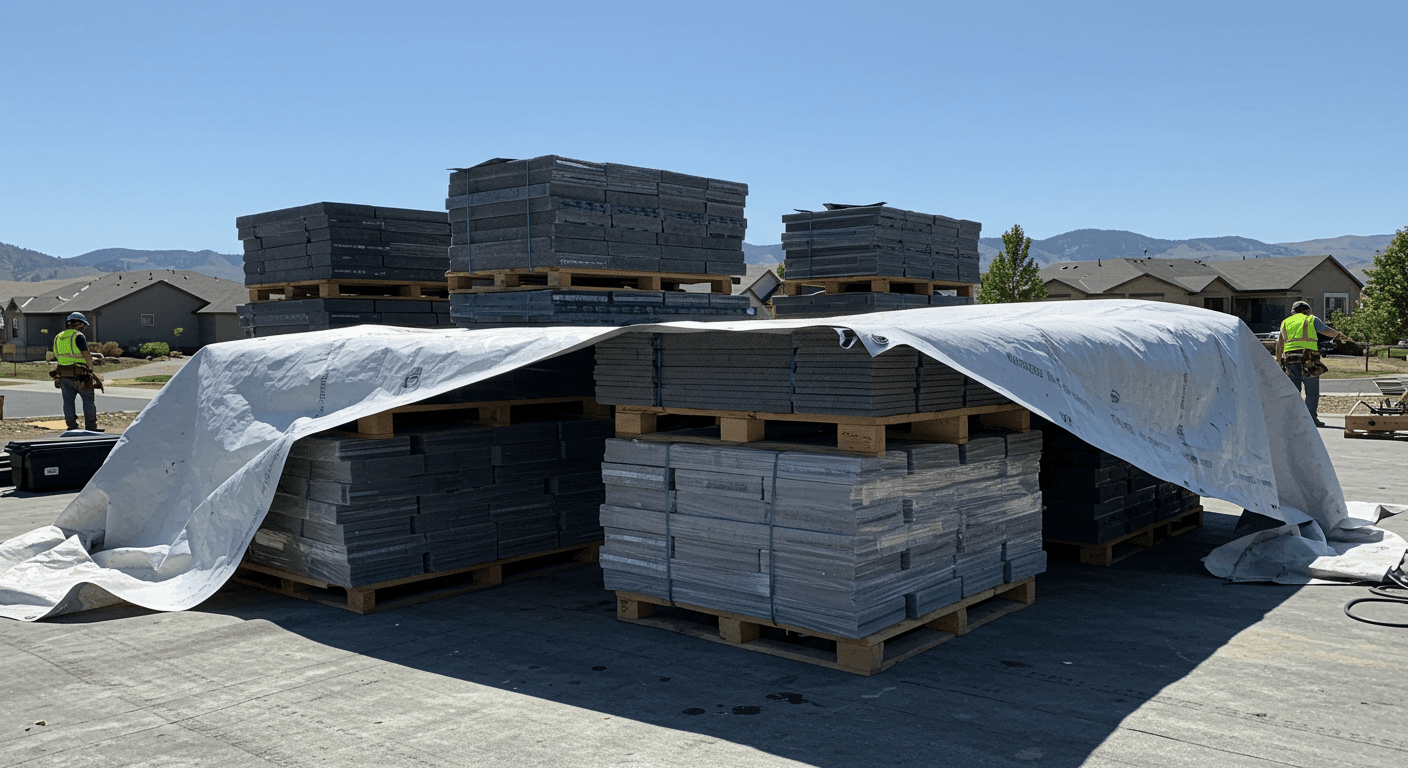
The culprit wasn't their nailing pattern. It was a mismatch between the manufacturer's "standard" storage temperature and the reality of a Meridian summer. When materials sit in a staging yard in 100-plus heat, the adhesive strips can pre-activate or degrade before they ever hit the deck. For business owners, this isn't just a quality control issue; it's a direct drain on your average roofer earnings and overall crew efficiency.
Deep Dive: The High-Desert Climate Data
To understand the ROI of material selection, we have to look at the raw numbers. Meridian experiences an average of 212 sunny days per year. While that sounds great for production schedules, it's brutal on asphalt.
1. UV Radiation: At our elevation, the atmosphere is thinner. This means more short-wave UV hits the roof, oxidizing the asphalt oils faster than in lower-lying areas. I've seen 30-year shingles look like 50-year-old parchment after just 12.5 years in south Meridian.
2. Diurnal Temperature Swings: It's common to see a 98°F day followed by a 54°F night. This 44-degree swing causes constant expansion and contraction. Standard aluminum flashing without proper expansion room will buckle, leading to those "mystery leaks" that haunt your project managers.
3. The Wind Factor: The Treasure Valley acts as a wind tunnel. We regularly see gusts of 45-55 mph coming off the Owyhees. If you're using a standard entry-level shingle with a 60 mph wind rating, you're living on the edge of a localized disaster.
When you're bidding on exclusive roofing leads, showing the homeowner that you understand these specific Meridian stressors sets you apart from the "trunk slammers" who are just quoting the cheapest bundle price.
Contractors in the Mountain West who switched to high-reflectivity 'cool' shingles reported a 19.4% increase in customer referral rates due to lower attic temperatures and reduced cooling costs.
Comparing Alternatives: Metal vs. Composite vs. Premium Asphalt
In the Meridian market, we're seeing a massive shift in homeowner demographics. People moving in from California and Western Washington are looking for longevity and are often willing to pay for it if the data is presented correctly.
Material Comparison for Meridian Climate
| Factor | Standard Asphalt | Premium Options |
|---|---|---|
| Initial Cost | Architectural Shingles ($) | Standing Seam Metal (2.4x cost) |
| UV Resistance | Moderate (degrades faster at altitude) | Excellent (reflects UV) |
| Thermal Expansion | Standard asphalt (prone to rippling) | Metal/SBS (handles 44° swings) |
| Long-term Liability | Higher callback risk | 42% lower liability costs |
| Profit Margin | Standard ($4,500-$7,000) | Composite: $4,500-$7,000 higher |
Initial Cost
UV Resistance
Thermal Expansion
Long-term Liability
Profit Margin
24-Gauge Standing Seam Metal
The initial cost is significantly higher—often 2.4x the price of architectural shingles. However, in the Meridian climate, the ROI is undeniable. Metal handles the thermal swings with ease and reflects a huge portion of the UV rays that cook asphalt. I've analyzed shops that pivoted to 35% metal installs and found their long-term liability costs dropped by nearly 42%.
Composite/Synthetic Slate and Shake
Neighborhoods like SpurWing or the high-end builds near Eagle Road are prime territory for synthetics. These materials are virtually immune to the "dry rot" that plagues traditional cedar shakes in our arid environment. The margin on a composite job is often $4,500 to $7,000 higher than a standard shingle swap.
High-Performance Asphalt
If you stay with asphalt, moving to a polymer-modified (SBS) shingle is the smartest move for a Meridian roofer. SBS shingles are "rubbery"—they can stretch and shrink during those 40-degree temperature swings without cracking the mat. This drastically reduces the granular loss we see during Idaho's spring hailstorms.
The Decision Framework: Selecting for Margin
How do you choose which materials to push? It starts with a "Climate-First" sales process. Instead of asking "What color do you want?", start by showing them a sample of a shingle that has sat in the Meridian sun for 10 years versus a new one.
Action Plan
The Meridian Material Selection Framework
A systematic approach to choosing materials that maximize margin while minimizing callbacks in Meridian's unique climate.
Analyze Your Callbacks: If more than 1.5% of your jobs result in a return trip within the first 24 months, your material/climate match is broken.
Audit Your Suppliers: Are your materials being stored in a climate-controlled warehouse or out in the Idaho sun? Demand better storage or change suppliers.
Tier Your Quotes: Always provide a 'Meridian Shield' option that includes SBS shingles and synthetic underlayment. Explain the 2,600-foot elevation factor.
Leverage Technology: Use the LeadZik mobile app to quickly respond to high-value leads in neighborhoods where premium materials are the norm. Speed to lead is critical when you're competing for $35,000+ composite jobs.
Want to skip the manual work and get exclusive, verified leads instead?
Get $150 in Free CreditsThe projected growth for our industry remains steady, but the "commodity" roofer is going to get squeezed by rising material costs and labor shortages. The shops that survive and thrive in Meridian will be the ones that position themselves as building science experts. Using tools like the LeadZik mobile app helps you respond instantly to high-value opportunities where premium materials are expected.
The Storage Trap
Materials stored in staging yards during Meridian summers can have their adhesive strips pre-activate or degrade before installation. This leads to seal failures that cost thousands in callbacks. Always verify your supplier uses climate-controlled storage.
Implementing the Strategy
I watched a crew last month struggle with a large-scale project in the Paramount subdivision. They were using a standard felt underlayment that had sat out overnight. It absorbed the morning dew, and when the Idaho sun hit it at 10:00 AM, it wrinkled under the shingles. The business owner had to choose between a "lumpy" roof or tearing it all off. He chose the latter, losing $3,150 in labor and materials instantly.
If he had switched to a high-quality synthetic underlayment—a $450 upgrade for that specific roof—he would have saved those thousands. This is the "penny wise, pound foolish" trap of the roofing industry.
When you are starting with free credits on a lead platform, you want every job to be a portfolio piece, not a liability. Your material choice is your signature on the home. In a tight-knit community like Meridian, your reputation for "roofs that last" is more valuable than any marketing budget.
Focus on the science of the Treasure Valley. Use the wind, the sun, and the altitude as your sales tools rather than your enemies. When you prove to a homeowner that you're protecting their investment from the specific threats of the Idaho climate, the price becomes secondary to the value.