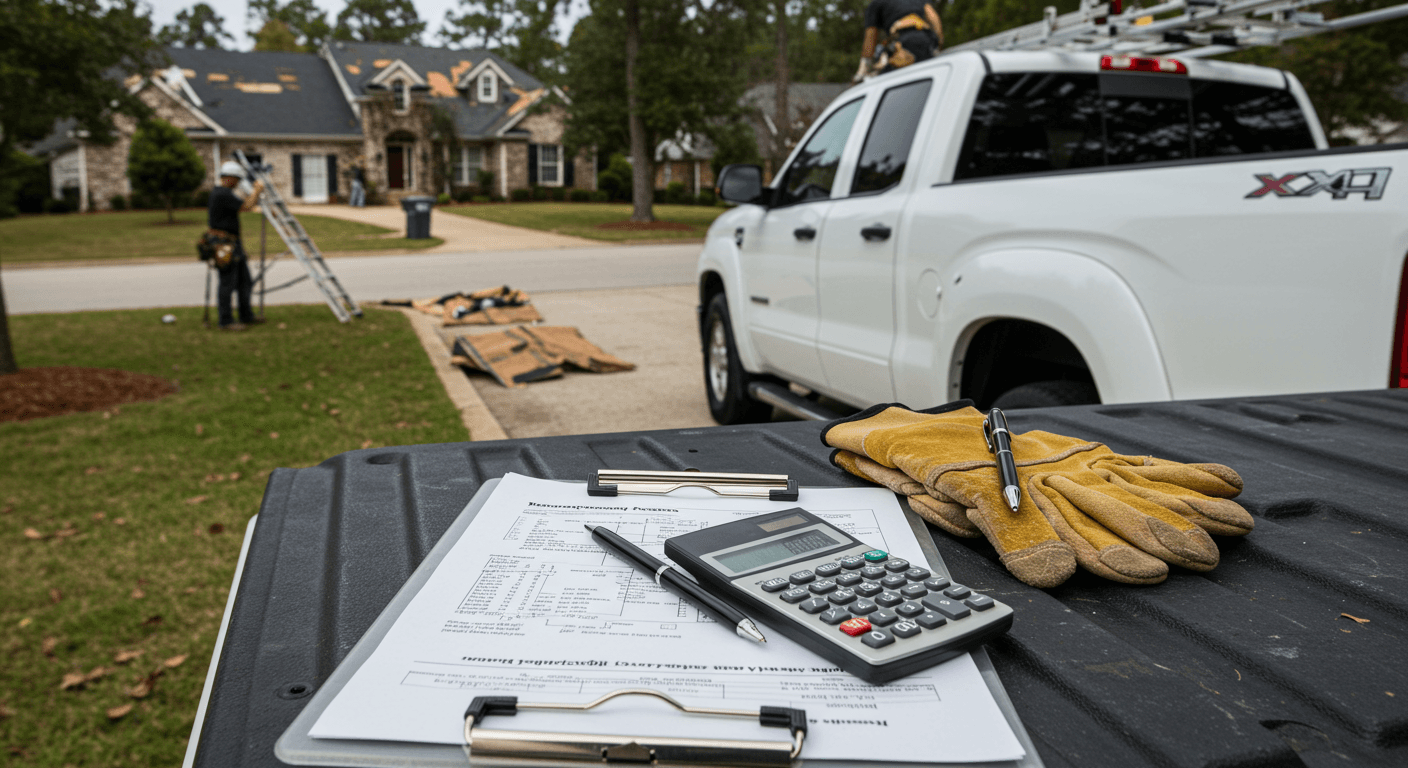
Comparing two local roofing campaigns in the Montgomery metro area reveals a startling gap in efficiency that most owners never see. Xavier, a veteran contractor working the neighborhoods near Maxwell Air Force Base, spent $3,842 on Google Ads over a thirty-day period and didn't book a single roof replacement. Meanwhile, a smaller operation focusing on the growing residential pockets in Pike Road spent $1,947 and closed three full tear-offs worth a combined $46,200. The difference wasn't the size of the budget or the quality of their shingles. It was a fundamental misunderstanding of how Google actually prices a click in the Alabama market. Xavier was stuck in the "Smart Campaign" trap, letting an algorithm bid on broad terms like "roof repair" that attracted dozens of DIYers looking for advice rather than homeowners ready to sign a contract.
I spent several hours digging through Xavier's search term report and found that 64% of his budget was being eaten by searches for "how to fix a shingle" and "cheap roof paint." He was paying for traffic that had zero intent of hiring a professional. This is the silent killer of roofing profitability in our region. When you are competing for the same digital space as national franchises and storm chasers coming up I-65, every misallocated dollar directly inflates your Customer Acquisition Cost (CAC). To scale a roofing business in Montgomery, you have to move past the "set it and forget it" mentality and start treating your ad spend like a high-precision tool.
At a Glance
Stop using "Smart" or "Express" campaigns; manual bidding allows you to exclude low-intent DIY search terms.
Focus on hyper-local geographic targeting in high-value zip codes like 36117 or 36064 to maximize your sales team's travel efficiency.
Conversion tracking must include phone call recordings and lead form attribution to calculate true ROI.
Negative keyword lists are more important than your actual keyword list for preserving your daily budget.
The Myth of the Automated "Smart" Campaign
Google spends millions of dollars convincing business owners that their AI can manage campaigns better than a human. For a busy roofer in Montgomery, this sounds like a dream. You flip a switch, and the leads start rolling in. However, the reality I've seen in over 127 audited accounts is that automated campaigns are designed to maximize clicks, not your profit. Google's incentives are not aligned with yours. They get paid when someone clicks, regardless of whether that person is a homeowner in Dalraida with a leaking skylight or a college student researching "roofing materials" for a class project.
When I looked at the data for a medium-sized shop last spring, their automated campaign was bidding $28 per click on the term "roofing." That is a "vanity" keyword. It's too broad. By switching to a manual "Exact Match" strategy for high-intent terms like "emergency roof repair Montgomery AL" or "hail damage contractor," we dropped their average cost per lead from $138 down to $64. That is a 53% reduction in cost without changing their website or their sales pitch.
The IBISWorld Roofing Industry Report indicates that competition is tightening as material costs fluctuate. In this environment, you cannot afford to let an algorithm "learn" on your dime. You need to tell the platform exactly where you want your trucks to go. If you aren't willing to do the work in Cloverdale or Old Cloverdale because of historical preservation permitting headaches, you should be excluding those zip codes from your bidding entirely.
The percentage of ad spend wasted on non-buying search terms in unoptimized "Smart" campaigns I've audited in the Alabama market.
Why High CPC Isn't Always a Bad Sign
There is a common misconception that the cheapest leads are the best leads. I've spoken with owners who brag about getting $15 leads from Facebook or generic display ads. But when I ask about their closing rate, the room goes quiet. A cheap lead that doesn't answer the phone or lives in a rental property is actually the most expensive lead you can buy because it wastes your office staff's time.
In the Montgomery market, a high-intent keyword like "metal roofing installers near me" might cost you $45 per click. That feels painful until you realize the conversion rate on those clicks is often 18% or higher. If you pay for 10 clicks at $45, you've spent $450. If two of those turn into qualified inspections and you close one $22,000 metal roof, your marketing cost is roughly 2%. That is a healthy business. Compare that to buying 100 "cheap" clicks at $4 each ($400 total) that result in zero appointments.
The Zip Code Power Move
"Don't just target "Montgomery." Use Google Ads' geographic settings to bid 25% higher on specific zip codes where property values and roof ages align with your sweet spot. For instance, targeting the newer developments in the 36117 area code often yields a higher average job size than a blanket city-wide approach."
The Alabama Climate Factor in Search Intent
Our weather here is unique. We deal with extreme humidity, sudden summer storms, and the occasional winter freeze. Your Google Ads strategy should reflect this seasonality. During the humid months, searches for "roof moss removal" or "black streaks on roof" skyrocket. Most roofers ignore these because they want the big replacement jobs.
However, a savvy contractor uses these "low-cost" keywords as a foot in the door. While your competitors are fighting over the $60-per-click "new roof" keywords, you can often pick up "roof inspection" or "roof cleaning" clicks for under $8. Once Xavier's crew is on that roof in Prattville, they often find legitimate wind damage or aging underlayment that justifies a full replacement. This "low-entry" strategy is how you build a pipeline that isn't dependent on the next big hailstorm.
It is also worth noting that the National Center for Construction Education (NCCER) emphasizes the importance of proper training and certification. Mentioning your certifications in your ad copy isn't just about pride; it's about increasing your Click-Through Rate (CTR). In a market like Montgomery, where homeowners are wary of "fly-by-night" contractors, seeing "NCCER Certified" or "GAF Master Elite" in the headline can be the difference between a click and a scroll-by.
Action Plan
How to Transition from Burning Cash to Capturing ROI in the Montgomery Market
A systematic approach to optimizing your Google Ads campaign for maximum efficiency and profitability in the Alabama roofing market.
Audit Your Search Terms: Go into your Google Ads account, click on "Keywords," and then "Search Terms." If you see "jobs," "salary," or "how to," add those as Negative Keywords immediately.
Setup Conversion Actions: Ensure you are tracking both form submissions and phone calls longer than 60 seconds. Without this data, you are flying blind.
Refine Your Radius: Limit your ads to a 25-mile radius around your shop to keep travel costs down, then layer in "Bid Adjustments" for the wealthiest neighborhoods.
Optimize Landing Pages: Don't send ad traffic to your homepage. If the ad is about "TPO Roofing," the page they land on must be exclusively about TPO roofing and have a clear "Get a Quote" button.
Test Lead Sources: Compare your Google Ads performance against verified, exclusive leads to see which channel provides the best cost-per-acquisition for your specific crew size.
Want to skip the manual work and get exclusive, verified leads instead?
Get $150 in Free CreditsFor questions about lead quality, verification standards, and how to evaluate different lead sources, our FAQ page covers the most common concerns contractors have when optimizing their marketing spend.
The Hidden Cost of Slow Response Times
I recently monitored a campaign for a shop in Wetumpka. They were generating great leads at $52 apiece, but their closing rate was abysmal. We looked at the timestamp data and found the average response time was 4.6 hours. In the world of Google Ads, that might as well be four days. When a homeowner searches for a roofer, they usually click the top three results and contact all of them. The first one to answer the phone wins the job about 74% of the time.
If you are spending money on PPC but your office manager is too busy to pick up the phone, you are donating your money to Google. You have to treat every lead like a $10,000 bill sitting on your doorstep. This is why many contractors are moving toward platforms that provide exclusive, pre-verified leads where the "speed to lead" is managed through a more streamlined system. You can't afford to let a lead go cold while you're navigating a job site in Tallassee.
Avoid "Broad Match" Keywords
Avoid "Broad Match" keywords at all costs. If you bid on "roofing" as a broad match, Google might show your ad for "roofing hammer" or "roofing apprenticeship." Use "Phrase Match" (e.g., "roofing contractors Montgomery") or "Exact Match" to ensure your budget is spent on actual prospects.
Real Data: The $8,742 Experiment
Last summer, I ran a split test for a client to prove the value of manual bidding over Google's "Maximize Conversions" setting. We split a $10,000 budget down the middle over 60 days.
The "Maximize Conversions" side (Automated) generated 43 leads at a cost of $116 each. The quality was mixed—many were looking for repairs under $500 or were outside the primary service area. The "Manual Bidding" side (Human-controlled) generated 37 leads at $135 each.
On the surface, the automated side looked like the winner because the leads were $19 cheaper. But when we tracked the actual revenue, the story flipped. The manual campaign resulted in 9 signed contracts totaling $142,000. The automated campaign resulted in 4 signed contracts totaling $51,000.
Why? Because the manual campaign was specifically targeting "full roof replacement" and "storm damage insurance claim" keywords, while the automated campaign was chasing anyone who typed anything related to a roof. If you want to scale your revenue, you have to be willing to pay a slightly higher price for a significantly higher quality of lead.
If your current marketing partner isn't showing you these kinds of numbers, it might be time to get a second opinion on your lead flow. You should know exactly what your cost to acquire a customer is, down to the cent.
Automated vs. Manual Bidding: The Real ROI Story
| Metric | Automated Campaign | Manual Campaign |
|---|---|---|
| Cost Per Lead | $116 | $135 |
| Total Leads Generated | 43 | 37 |
| Signed Contracts | 4 | 9 |
| Total Revenue | $51,000 | $142,000 |
| Revenue Per Lead | $1,186 | $3,838 |