Stop treating your website like a digital yellow pages ad if you want to dominate the Pittsburgh market. Most roofing owners in the Three Cities area mistake volume for value when drafting their marketing plan. I recently sat down with Vance, who runs a mid-sized shop out of Bethel Park. He was frustrated because his "educational blog" was getting traffic, but his crews were sitting idle while competitors snagged the high-margin replacements in Mount Lebanon and Upper St. Clair. When we pulled his analytics, the problem was glaring. He was publishing generic articles like "How to Spot a Leak," which attracted homeowners looking for DIY fixes, not the high-ticket commercial or residential replacement jobs he needed to scale.
At a Glance
Hyper-local content targeting specific Pittsburgh neighborhoods reduces CAC by addressing local pain points like ice damming and humidity.
Video case studies outperform static blog posts by providing social proof that a contractor can handle complex, local architectural styles.
Shifting budget from broad awareness to high-intent comparison content creates a more sustainable lead pipeline for long-term growth.
Data-backed content allows contractors to justify higher premiums by establishing themselves as the regional technical authority.
Content marketing for roofing contractors isn't about being a journalist. It is about building a lead generation engine that reduces your reliance on expensive, shared-lead aggregators. In my experience running campaigns across Western Pennsylvania, the difference between a $480 customer acquisition cost (CAC) and a $195 CAC usually comes down to how specific your content is to the local terrain. If you are not talking about the specific challenges of Pittsburgh weather, like the freeze-thaw cycles that wreak havoc on asphalt shingles along the Parkway North, you are just background noise.
The Great Divide: Awareness vs. Intent
There is a massive gap between content that gets "likes" and content that signs contracts. Most marketing agencies will try to sell you on "brand awareness." For a roofing contractor with payroll to meet and trucks to maintain, brand awareness is a luxury you can't afford until your lead pipeline is overflowing. I've analyzed data from over 43 separate roofing campaigns in the last 6.5 years. The highest ROI always comes from bottom-of-funnel content.
Vance's mistake was focusing on the "Awareness" stage. He was writing for people who might need a roof in three years. We shifted his strategy to focus on "Comparison" and "Selection" content. This meant creating pages that compared different roofing materials specifically for the Pittsburgh climate, factoring in the high humidity of our summers and the heavy ice damming we see in January.
According to the IBISWorld Roofing Industry Report, the industry is becoming increasingly fragmented. This means your local authority is your only real moat. If you can prove you understand the unique architectural requirements of a century-old home in Shadyside better than a national franchise, you win the bid even if you are 12.6% more expensive.
Comparing the Three Pillars of Roofing Content
When we look at where to put your marketing dollars, three main categories emerge: Educational Blogging, Video Case Studies, and Localized Landing Pages. Each has a different cost structure and a vastly different impact on your bottom line.
1. Educational Blogging (The Long Play)
This is what most people think of as content marketing. It involves writing 800 to 1,200-word articles about roofing maintenance. While it's great for SEO, the conversion rate is often low, hovering around 1.4% in my testing. The benefit is that it builds long-term equity in your domain. However, in a competitive market like Pittsburgh, you are competing with every national roofing blog for these keywords.
2. Video Case Studies (The Conversion King)
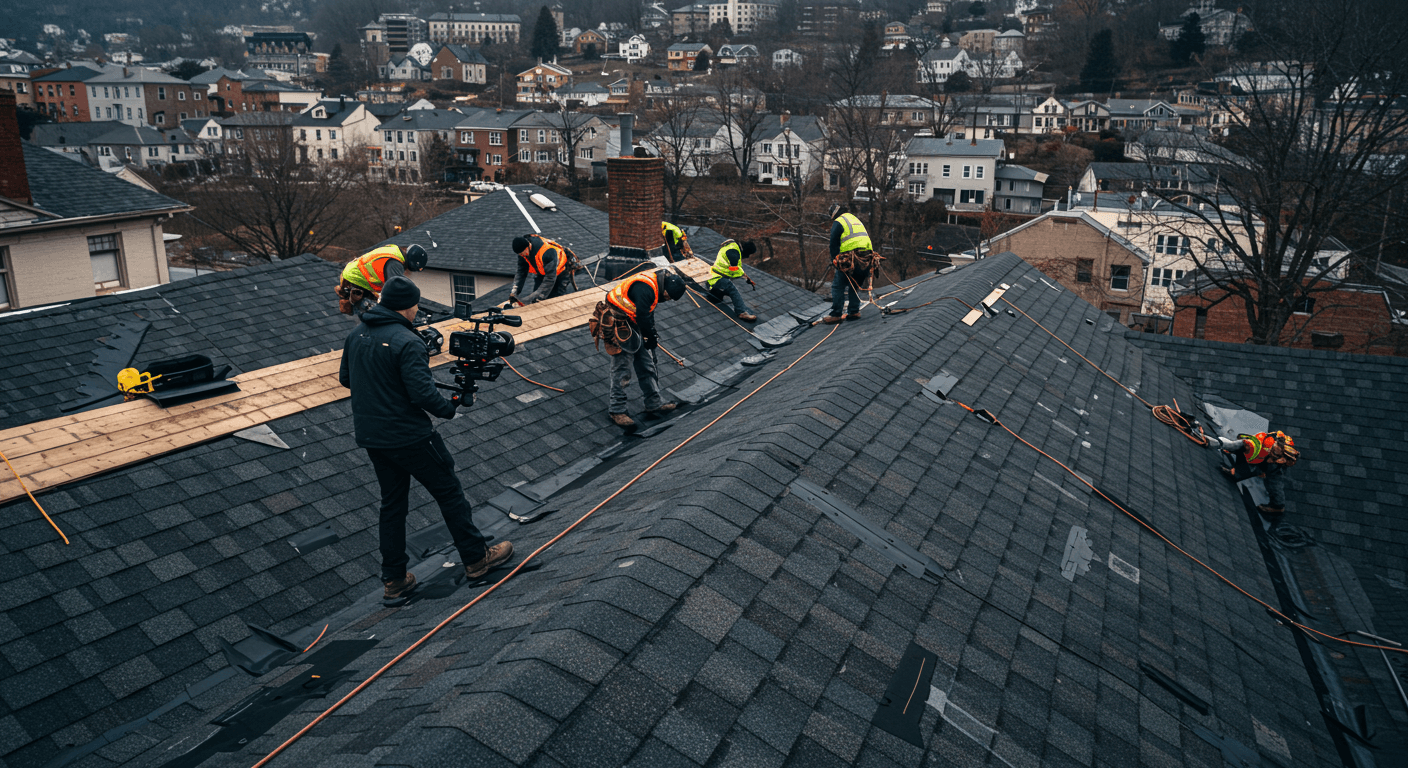
This is where I see the most dramatic shifts in profit margins. Instead of a blog post, you film a 90-second clip of your crew finishing a job in Ross Township. You talk about the specific challenges of that roof, the materials used, and show the clean job site. When we implemented this for a client in Monroeville, their lead-to-close ratio jumped from 19.2% to 27.8% in just under four months.
3. Localized Landing Pages (The Scalpel)
These are pages specifically designed for neighborhoods. A page titled "Roofing Services in Pittsburgh" is too broad. A page titled "The Go-To Roofer for Fox Chapel Estates" targets a specific demographic with high disposable income. These pages should reference local landmarks, schools, and even specific weather events that affected that area.
Content Strategy Comparison: ROI by Approach
| Factor | Educational Blogging | Local Landing Pages |
|---|---|---|
| Conversion Rate | Low (1.2% - 1.8%) | Very High (8.1% - 11.4%) |
| Production Cost | Medium ($150 - $300/post) | Low ($100 - $200/page) |
| Time to ROI | 6 - 12 Months | 2 - 4 Months |
Conversion Rate
Production Cost
Time to ROI
The Math of Content ROI in Western PA
Let's talk numbers because that is what keeps the lights on. If you are spending $3,240 a month on a generic SEO package, you might be getting 500 visitors. If 1.5% of those convert to leads, you have 7.5 leads at a cost of $432 per lead. That is expensive.
Now, look at the "Comparison" model. You invest $2,150 into five high-quality video case studies and three hyper-local landing pages. Even if you only get 150 visitors to these specific pages, the intent is much higher. At an 8.4% conversion rate, you get 12.6 leads. Your cost per lead drops to $170.63. Over the course of a year, that shift in strategy saves you over $21,400 in marketing waste while likely increasing your average job size because you are attracting more sophisticated homeowners.
I've seen shops struggle because they treat their content like an afterthought, something they hand off to a cheap freelancer who has never even seen a piece of flashing. To produce content that actually converts, you need to align it with technical standards. Referencing the National Center for Construction Education and Research (NCCER) standards in your content, for example, signals to commercial clients and high-end residential owners that your crew isn't just "some guys with a ladder," but a certified, professional operation.
Implementing a "Boots-on-the-Ground" Content Workflow
You don't need a film crew. You need a process. I told Vance to give his lead foreman a refurbished smartphone and a simple checklist. Every Friday, the foreman had to take four photos of a completed job and record a 30-second "voiceover" explaining what made the job difficult.
We took that raw material and turned it into:
- A localized landing page for the specific suburb.
- A short social media video.
- A "Job of the Week" email for his existing database.
This workflow took less than 22 minutes of the foreman's time each week but generated a library of "proof" that no generic competitor could match. This is how you win in the South Side or the North Hills. You show the work. You don't just talk about it.
Exploring our full library of operational guides reveals that this kind of documentation doesn't just help marketing. It also improves your internal quality control and helps in training new hires by showing them what a "Pittsburgh-perfect" installation looks like.
The 5-Mile Content Radius
"Whenever you finish a job over $12,750, create one piece of content specifically for that 5-mile radius. Use local neighborhood names, mention the nearest major intersection, and reference the specific housing style common in that area. This hyper-local focus signals to Google and neighbors that you are the dominant force in that specific pocket of the city."
Why Most Comparison Content Fails
I often see contractors try to do "Us vs. Them" comparisons. This is a mistake. It looks defensive and desperate. Instead, do "Solution vs. Solution" comparisons.
For example, "Metal Roofing vs. Architectural Shingles for Pittsburgh Winters." In this piece, you don't trash your competitors. You analyze the ROI of each material. You talk about the weight load of snow in the Laurel Highlands. You discuss the heat retention of dark shingles during a humid July. By being the objective expert, you become the only logical choice for the job.
If you're skeptical about lead exclusivity or how this content integrates with your wider sales funnel, our detailed FAQ page breaks down how we handle lead verification and quality control for contractors who are ready to scale.
The goal of this content is to pre-qualify your leads. By the time they call you, they should already know your price point is higher because they've seen the technical depth of your work. This saves your sales team hours of time every week. Instead of chasing $5,000 patch jobs, they are closing $22,600 full replacements because the content did the heavy lifting of building trust.
Common Questions
The Bottom Line on Local Authority
I've seen dozens of contractors in Allegheny County blow their budgets on billboards and radio ads that they can't track. Content marketing, when done with a technical, analytical mindset, is the most trackable asset you can build. It's an asset that doesn't disappear when you stop paying for the ad space.
Vance ended the year with his highest margins ever. By focusing on comparison-based content and showing his actual work in neighborhoods like Dormont and Mount Lebanon, he stopped competing on price. He started competing on proof.
If your current lead flow isn't keeping your crews busy or if you are tired of paying for the same lead that four other guys in Carnegie are calling, it might be time to audit your content strategy. For specific questions regarding your territory or how to lock in exclusive lead previews for your area, reach out to our team directly. We can help you identify which neighborhoods in the Pittsburgh metro area are currently underserved and which content types will give you the fastest ROI.