Jaxon stared at the fuel pump in Santa Fe, watching the digits climb past $114 for a truck that spent more time idling on St. Michael's Drive than at actual job sites. He was a seasoned owner with a decent crew, but his profit margins were being eaten alive by the geography of Northern New Mexico. One lead would take a rep out to Eldorado, the next would be up toward Tesuque, and by the time they hit a third appointment in Rio Rancho, they had burned five hours of daylight just sitting behind a windshield. This was the moment Jaxon realized his traditional sales model was broken. He wasn't just selling roofs, he was running an expensive, inefficient courier service that happened to carry shingles.
I met Jaxon during a high-desert summer when the monsoons were hitting particularly hard. He was frustrated. His best closer was burnt out from the commute, and his customer acquisition cost (CAC) had spiked to $412 per signed contract. Most of that cost wasn't marketing, it was the raw overhead of physical movement. We sat down and looked at the data. Out of every ten "look-see" appointments his team ran, four were for simple repairs that didn't justify a two-hour round trip, and two were "tire kickers" who just wanted a ballpark figure they could have gotten over the phone.
We decided to flip the script. We implemented a virtual-first sales presentation model that eliminated the need for an initial site visit for 68% of his incoming leads. The results over the next 13 months were staggering. Jaxon didn't just save money on fuel, he reclaimed the most valuable asset in his business: time.
At a Glance
Slash CAC by 19% to 24%: Virtual presentations remove the massive overhead of fuel, vehicle maintenance, and "windshield time" for sales reps.
Double Your Pitch Volume: By eliminating travel, a single rep can handle 6-8 presentations a day instead of 3, significantly increasing top-line potential.
Improved Lead Qualification: Virtual touches act as a filter, ensuring your physical inspections are reserved for high-intent homeowners ready to sign.
Higher Precision Estimates: Utilizing aerial measurement tools often provides more accurate data than a quick manual tape measurement on a steep pitch.
The Hidden Drain of the Physical First Impression
In a market like Santa Fe, the "physical first" approach is a legacy habit that kills growth. Think about the logistics. If you send a rep from a warehouse near the airport to a residential street in the South Capitol neighborhood, you are fighting narrow streets and parking. If the homeowner isn't there, or if they just want a "rough idea," you've lost $85 in labor and overhead before you even open your mouth.
According to business insights from the Harvard Business Review, small businesses that fail to optimize their service delivery routes and methods often see a 12% to 15% erosion in net profit. For a roofing company doing $2.4M a year, that is nearly $300,000 vanishing into thin air.
Jaxon was losing exactly that. He thought being "old school" and showing up at the door was his competitive advantage. In reality, it was his biggest liability. Modern homeowners, especially the professionals commuting to Los Alamos or working remotely in the Railyard District, actually value their time more than a firm handshake on a Tuesday afternoon. They want answers fast.
We started by categorizing his leads. Instead of a "drive-to-all" policy, we moved to a "virtual-by-default" strategy. If a lead came in through our mobile app, the rep immediately triggered a virtual meeting invite rather than scheduling a drive-time.
Traditional vs Virtual Sales Model
| Metric | Traditional On-Site Model | Virtual Presentation Model |
|---|---|---|
| Cost Per Estimate | $158 - $192 (Gas + Labor + Wear) | $14 - $22 (Software + Brief Prep) |
| Daily Pitch Capacity | 2 - 3 Appointments | 6 - 8 Appointments |
| Average Prep Time | 45 mins (including drive) | 12 mins (using aerial tools) |
| Homeowner Commitment | High (must be home) | Low (can join via phone/work) |
| Close Rate (Avg) | 34.2% | 31.8% (with 3x the volume) |
Cost Per Estimate
Daily Pitch Capacity
Average Prep Time
Homeowner Commitment
Close Rate (Avg)
Building the Digital Showroom in Northern New Mexico
Transitioning to virtual sales isn't just about jumping on a FaceTime call. It requires a structured digital showroom. Jaxon had to learn that the "wow factor" didn't come from his truck wrap, it came from the data he could show on a screen.
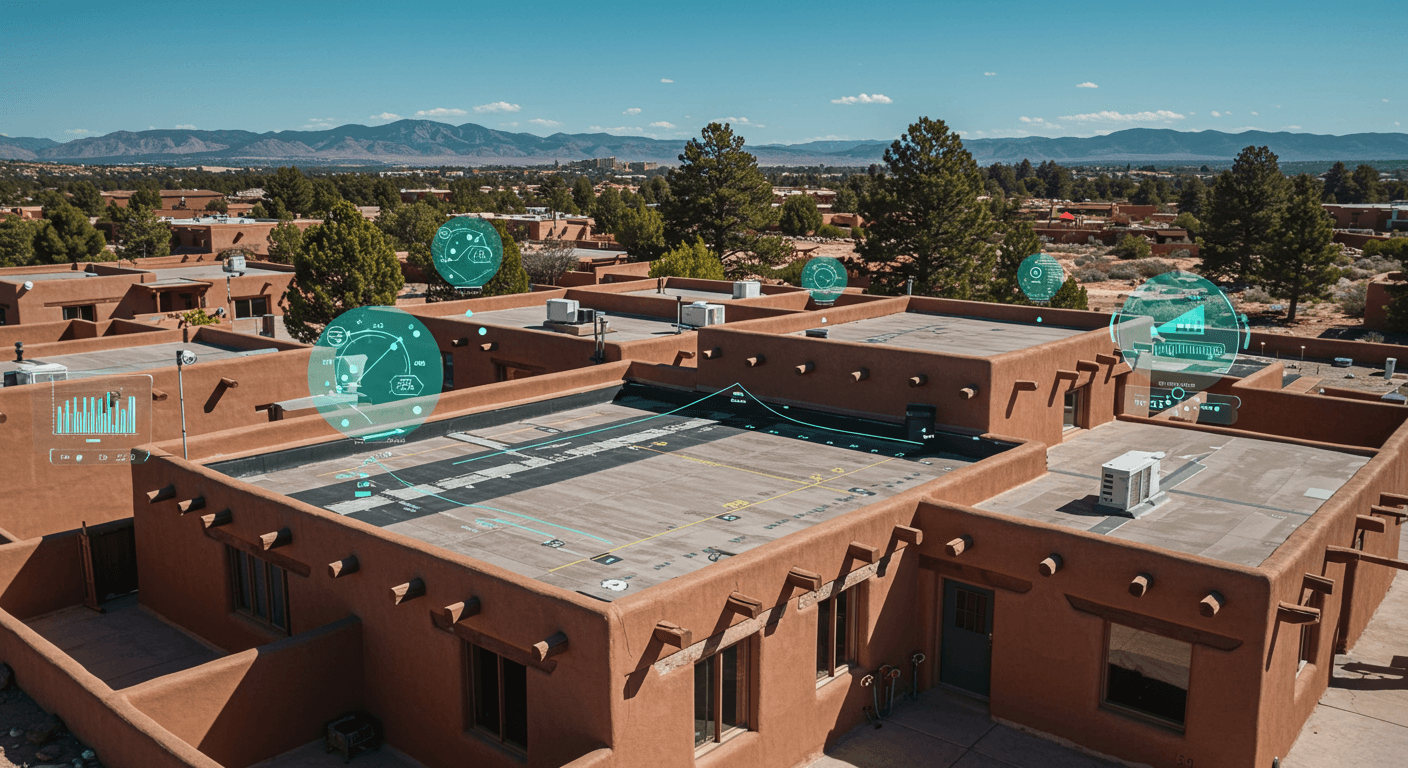
We equipped his team with high-resolution aerial measurement software and a presentation deck that focused on the specific challenges of Santa Fe roofing. We talked about the intense UV degradation at 7,000 feet and the specific needs of TPO membranes for the flat-roofed Adobe styles common in the area.
"Noah, how do I build trust if I'm not standing on their porch?" Jaxon asked me during a training session.
I told him the same thing I tell every contractor: Trust isn't built by your physical presence, it's built by your expertise and your ability to solve their problem faster than the guy down the street. When you can show a homeowner a 3D model of their roof, highlight the drainage issues around their canalis, and provide a line-item quote in 20 minutes while they are sitting in their office, you aren't just a roofer. You're a professional consultant.
If you are struggling to build this kind of authority, seeking guidance from organizations like SCORE can provide the business mentorship needed to transition from a "laborer" mindset to a "tech-forward owner" mindset.
The Script That Saved the Sale
The biggest hurdle for Jaxon's team was the initial phone call. They were used to saying, "I'll be out there at 4 PM." We had to retrain them to sell the efficiency of the virtual model.
Here is the exact talk track we developed for his reps:
Rep: "Hi Mrs. Gutierrez, I see you're looking for an assessment on that flat roof in Las Campanas. Instead of making you wait until Friday for me to drive out there, I've already pulled the high-res satellite imagery for your property. I can actually walk you through a 3D breakdown of your roof's health right now over your phone. It takes about 15 minutes, and you won't even have to leave your living room. Does that work, or would you rather wait a few days for a physical visit?"
Nine times out of ten, the homeowner chose the immediate virtual option. It feels like a concierge service, not a shortcut. By using our verification process, Jaxon knew these homeowners were the actual deed-holders, which meant his virtual pitches were landing on the right ears every time.
The 'Second Screen' Psychology
"During a virtual pitch, always ask the homeowner to open the presentation on a tablet or laptop rather than a phone if possible. When they are looking at a large-scale 3D model of their own home, they become emotionally invested in the "health" of the structure. It transforms the roof from an abstract expense into a protected asset they can see clearly."
Implementation: From "Look-See" to "Signed Contract"
Jaxon's implementation followed a four-step framework that any Santa Fe shop can replicate.
Action Plan
The Virtual-First Sales Framework
A four-step process to transition from physical-first to virtual-first sales presentations, reducing overhead while maintaining close rates.
Digital Triage: Every lead is vetted. If the roof is visible via satellite and the homeowner is responsive, it starts as a virtual appointment.
The 3D Reveal: Use tools like Hover or EagleView to create a visual centerpiece. Don't just send a PDF estimate. Walk them through the "why" of the price.
The "Local Expertise" Layer: Mention regional specifics. In Santa Fe, that means discussing the wind loads near the Sangre de Cristo foothills or the historical district requirements for specific color palettes.
The Hybrid Close: For complex jobs, the virtual pitch closes the concept and the price range. The physical visit is then just a 10-minute "technical verification" to check for hidden dry rot or specific flashing details before the crew arrives.
Want to skip the manual work and get exclusive, verified leads instead?
Get $150 in Free CreditsThis hybrid approach meant Jaxon's top rep, a guy we'll call Brandon, went from closing $82,000 a month to $144,000 a month. Brandon wasn't working more hours, he was just spending those hours pitching instead of navigating the traffic on Cerrillos Road.
Measuring the ROI of the Virtual Pivot
After 13 months, we sat down to look at the hard numbers. Jaxon's fuel bill had dropped by $1,142 per month. His vehicle maintenance costs were down 27% because his fleet wasn't racking up "dead miles." But the biggest win was the margin.
Because his CAC had dropped so significantly, Jaxon was able to keep his pricing competitive while actually taking home an extra 6.4% in net profit on every job. In a competitive market where everyone is undercutting each other to win the bid, that 6.4% is the difference between struggling to pay subs and having the cash flow to scale.
Fuel savings, reduced vehicle maintenance, and reclaimed sales rep time combined to create a significant margin improvement.
If your current sales process feels like a race to the bottom of your gas tank, it might be time to reach out to our support team to discuss how to better align your lead flow with a high-efficiency sales model.
Common Questions
Jaxon's story isn't an outlier. It is the new blueprint for roofing profitability in expansive territories. By the end of that first year, he had replaced one of his aging trucks with a smaller, fuel-efficient "tech vehicle" for his project managers and moved his entire sales force to a remote-office model. He stopped being a victim of the Santa Fe geography and started using it as a reason to innovate.
The transition wasn't overnight. There were some awkward Zoom calls and a few missed measurements in the beginning. But the momentum of a 22% reduction in overhead is impossible to ignore. If you're still measuring your success by how many miles you put on your odometer, you're missing the bigger picture of where roofing is headed.