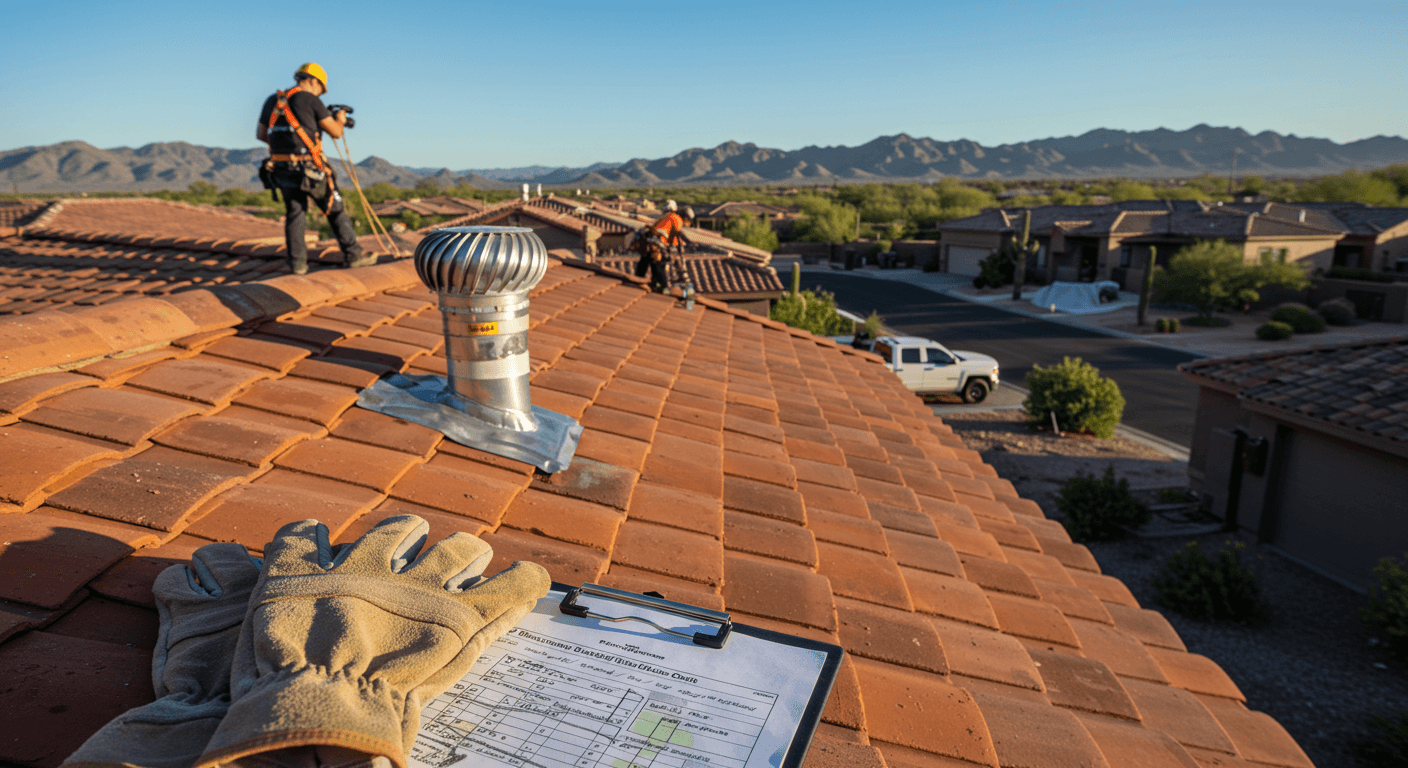
Recently, I found myself staring at a rejection letter from a major carrier that felt like a punch to the gut for a client of mine. Xavier, who runs a mid-sized operation near the Scottsdale Airpark, had submitted what he thought was a "bulletproof" hail claim for a high-end property in Silverleaf. He had sent over 94 high-resolution photos, a drone video, and a detailed satellite report. The adjuster's response was a flat denial, citing "granule loss consistent with age and thermal expansion" rather than impact damage. Xavier was furious because he knew that roof was toast after the micro-burst that ripped through North Scottsdale three months prior. We sat in his office, looking at the same photos the adjuster saw, and that is when it clicked for me. The sheer volume of evidence was actually burying the proof. We were providing a haystacks worth of data and expecting the adjuster to find the needle.
That moment changed how I look at storm damage assessment protocols. In a market like Scottsdale, where the sun cooks shingles to a crisp before the first hailstone even hits, the standard "take a picture of everything" approach is a recipe for high overhead and low margins. If your crews are spending two hours on a roof just to get a 42% denial rate, you aren't running a roofing business, you are running an expensive photography hobby. We had to pivot Xavier's team away from the "more is better" myth and toward a surgical, data-backed protocol that adjusters couldn't ignore.
At a Glance
Precision in documentation reduces the 'denial loop' and cuts down on time-wasting supplements.
Scottsdale's unique thermal climate requires specific evidence to distinguish between sun damage and storm impact.
Standardizing the walk-through sequence prevents crew errors and ensures 100% compliance with carrier requirements.
Safety protocols during assessments are non-negotiable for protecting your workforce and your insurance premiums.
The Myth of Documentation Volume
Most contractors in the Valley believe that if they flood an insurance company with enough photos, the claim will eventually get pushed through. I have watched companies scale their "storm teams" by hiring anyone with a smartphone, but without a specific protocol, they are actually hurting their reputation with adjusters. In Scottsdale, where we deal with intense UV degradation, an adjuster's default setting is to blame the sun. When you send 100 photos of general wear, you are giving them 100 reasons to say "no."
The reality I have seen in the field is that three perfect photos are worth more than fifty mediocre ones. A perfect photo shows the impact, the collateral damage, and the surrounding context in a single, clear narrative. When Xavier shifted his team to focus on "quality over quantity," his approval rate on initial submissions jumped from 58% to 84% in just under five months. This saved his office staff roughly 14 hours a week that they used to spend fighting denials and filing appeals.
Navigating the Scottsdale Thermal Variable
You cannot talk about storm damage in Arizona without talking about the heat. A roof in Scottsdale reaches temperatures that would melt asphalt in other parts of the country. This creates a specific type of "scabbing" and thermal cracking that often looks like hail to an untrained eye, or a "new" salesperson. If your protocol doesn't explicitly account for identifying the difference, you are wasting your time on leads that will never close.
When training new hires, it is helpful to reference resources like the Bureau of Labor Statistics guide on roofing which highlights the physical demands and technical knowledge required for the job. Assessment is a technical skill, not just a sales tactic. Your team needs to understand the chemistry of the shingle. In Scottsdale, we look for "spatter" marks on lead jacks and soft metals first. If the spatter is there but the shingle marks look "healed" or rounded, it is likely old damage or heat-related. A protocol that forces the technician to document the soft metal damage before the shingles creates a logical flow that adjusters find difficult to refute.
Critical Protocol Error
Never lead an assessment with shingle photos. Adjusters look for 'collateral' first. If your protocol starts with the roof field instead of the gutters, downspouts, and soft metals, you are setting yourself up for an immediate uphill battle.
The Financial Impact of a Standardized Walkthrough
Inconsistency is the silent killer of roofing profits. I worked with a shop near the 101 and Pima Road that had four different sales reps, each doing inspections their own way. One guy used a pitch gauge, another just "eyeballed" it, and the third was obsessed with drone shots but forgot to check the attic for leaks. This lack of a system meant their supplement revenue was all over the place, ranging from $1,200 to $6,400 on nearly identical homes.
By implementing a rigid, step-by-step assessment protocol, we turned that chaos into a predictable revenue stream. We broke the inspection down into 14 specific checkpoints. No one leaves the roof until those 14 boxes are checked and uploaded to the CRM. This isn't just about winning claims; it is about business valuation. A company with a standardized, repeatable sales and inspection process is worth significantly more to an investor than a "lifestyle" business where all the knowledge lives in the owner's head. If you are looking to scale, you need a system that works whether you are there or not. You can find more insights on building these kinds of scalable operations on our growth blog.
The 360-Degree Context Rule
"Always require your team to take a 'context shot' from 10 feet back before the close-up of the damage. Adjusters often deny photos because they can't verify the location on the roof. This simple step reduced one client's photo-rejection rate by 19%."
Safety and the Hidden Costs of Inexperience
Storm season in Scottsdale often brings a sense of urgency that leads to corner-cutting, especially with safety. I have seen it a hundred times: a big storm hits, and suddenly there are "inspectors" crawling all over steep-pitch tile roofs in tennis shoes. This is where the real business risk lies. According to the 2025 BLS report on fatal falls, roofing contractors had 110 fatal falls in 2023, the highest in the construction industry.
A proper assessment protocol must include a safety check-in. If your protocol doesn't mandate tie-offs on anything over a 6:12 pitch, you are one accident away from losing your business. Beyond the human cost, your workers' comp premiums will skyrocket, eating every bit of profit you made from that storm. High-performing shops in Scottsdale use this commitment to safety as a selling point. They tell the homeowner, "We do things the right way, which is why we are still in business while the 'storm chasers' disappear." This builds trust and justifies a higher contract price.
Action Plan
The 5-Step Scottsdale Precision Protocol
A systematic approach to storm damage assessment that maximizes claim approval rates while minimizing time on the roof.
Identify Collateral: Document soft metals (gutters, AC fins, vents) first to establish storm presence.
Directional Mapping: Mark the North, South, East, and West slopes clearly to show wind-driven impact patterns.
Thermal Filtering: Identify and exclude areas of obvious UV degradation to maintain credibility with adjusters.
The 'Test Square': Document a 10x10 area on the most affected slope with chalked hits for clear visibility.
Metadata Verification: Ensure all photos are GPS-tagged and timestamped within your CRM to prevent fraud disputes.
Want to skip the manual work and get exclusive, verified leads instead?
Get $150 in Free CreditsMaximizing the ROI of Your Lead Flow
Everything we have discussed assumes you have a steady stream of roofs to inspect. But even the best protocol in the world won't save you if you are wasting time on "junk" leads or competing with six other contractors for the same homeowner's attention. I often see contractors spend $5,000 on a shared lead service, only to find that the "storm damage" was actually just a missing shingle from 2012.
The team at LeadZik started this platform because they were frustrated with that exact scenario. They wanted to provide roofers with exclusive, verified opportunities where the damage potential is already vetted. When you combine a high-quality, exclusive lead with a precision assessment protocol, your conversion rate doesn't just go up; your cost per acquisition drops off a cliff. Instead of your sales reps running 10 appointments to get two builds, they are running five appointments to get three. That is how you grow a roofing company in Scottsdale without burning out your best people. If you have questions about how we verify these opportunities, our FAQ page covers the specifics of our refund and exclusivity policies.
Reframing the Sales Conversation
The final piece of the protocol isn't technical; it is emotional. In Scottsdale, homeowners are bombarded with "free inspections." Your protocol should be presented as a "Professional Forensic Roof Analysis." This change in language shifts the dynamic from a salesperson looking for a job to an expert providing a service.
When Xavier started using this terminology, he noticed a shift in how homeowners treated his team. They weren't "getting a quote" anymore; they were "receiving a report." This allowed him to maintain higher margins even when competitors were offering to "cover the deductible" (which we all know is a legal minefield in Arizona). By sticking to a data-driven protocol, you position your company as the authority. You aren't guessing if there is damage; you are proving it with a system that has been refined through hundreds of successful claims.