Most roofing owners in the 419 area code are convinced that the only way to win a bid in West Toledo or Perrysburg is to be the lowest number on the table. There is this pervasive belief that the local market is purely price-driven, and that if you try to add a single dollar for ventilation or upgraded underlayment, you'll lose the contract to a guy with a truck and a ladder who is willing to do it for pennies.
I know this is wrong because I spent three days last October sitting in a sales office near Maumee, analyzing the closing data of a local crew. They were winning 22.4% of their bids, which isn't terrible, but their average ticket was hovering around $9,780. They were selling "just a roof." When we adjusted their presentation to focus on the total protection system, specifically addressing the high-moisture climate we get off Lake Erie, their average ticket jumped to $12,627 within six weeks. The homeowners weren't looking for the cheapest price; they were looking for the solution that meant they wouldn't have to call a roofer again for 28 years.
At a Glance
Shift from 'order taking' to consultative selling to increase average project margins by 12% to 18%.
Leverage regional Toledo climate factors, such as Lake Erie humidity, to sell high-value algae-resistant shingles.
Implement a mandatory attic ventilation audit to identify cross-selling opportunities for insulation and baffles.
Focus on 'The Full System' approach rather than just a shingle swap to build long-term referral value.
The Cost of the "Basic Bid" Trap
When your sales reps walk onto a property in a neighborhood like Old Orchard, they often go into "estimation mode" instead of "diagnostic mode." They look for the square footage, check for soft spots, and write a number. This is the fastest way to commoditize your business. If you are only selling shingles, you are competing with every other contractor in Lucas County on price alone.
I recently looked at a dataset from a client who was frustrated with their net profit. We found that on 64% of their jobs, the sales rep didn't even mention gutter replacement or attic insulation, despite the fact that the existing systems were clearly failing. By failing to offer these extras, they weren't just losing revenue; they were actually doing the customer a disservice. A new roof on a house with clogged, undersized gutters is a recipe for a callback when the first heavy spring rain hits.
Toledo contractors who shift from basic bids to full-system presentations see significant revenue growth.
Regional Upsells: Using the Toledo Climate to Your Advantage
In Northwest Ohio, we deal with specific environmental stressors that provide natural openings for upselling. If you aren't training your team to spot these, you're leaving a massive chunk of change in the homeowner's bank account.
Algae Resistance and Aesthetic Longevity
The humidity coming off the lake leads to significant black streaking (Gloeocapsa magma) on many roofs in Sylvania and Oregon. Selling a standard shingle without mentioning algae-resistance technology is a missed opportunity. I've seen contractors successfully upsell 74% of their clients to premium, streak-resistant shingles simply by showing a side-by-side photo of a 5-year-old "budget" roof versus a premium one in the same neighborhood.
The Ventilation Cross-Sell
According to the National Roofing Contractors Association (NRCA), proper attic ventilation is one of the most overlooked components of a roofing system. In Toledo, where we see temperature swings from -5°F in January to 95°F in July, an unventilated attic will kill a roof in 12 years.
I tell my clients to make an "Attic Health Check" a mandatory part of every lead interaction. If your rep gets into the attic and finds compressed insulation or blocked soffit vents, that is a cross-sell that adds $1,400 to $3,200 to the job. It also ensures the manufacturer's warranty stays valid, which is a major selling point for the homeowner.
Action Plan
The 4-Step 'Full System' Pitch
A systematic approach to transforming basic roof quotes into comprehensive protection system sales.
Perform a diagnostic walk-around focusing on peripheral damage (gutters, fascia, soffits).
Enter the attic to document heat retention and insulation levels.
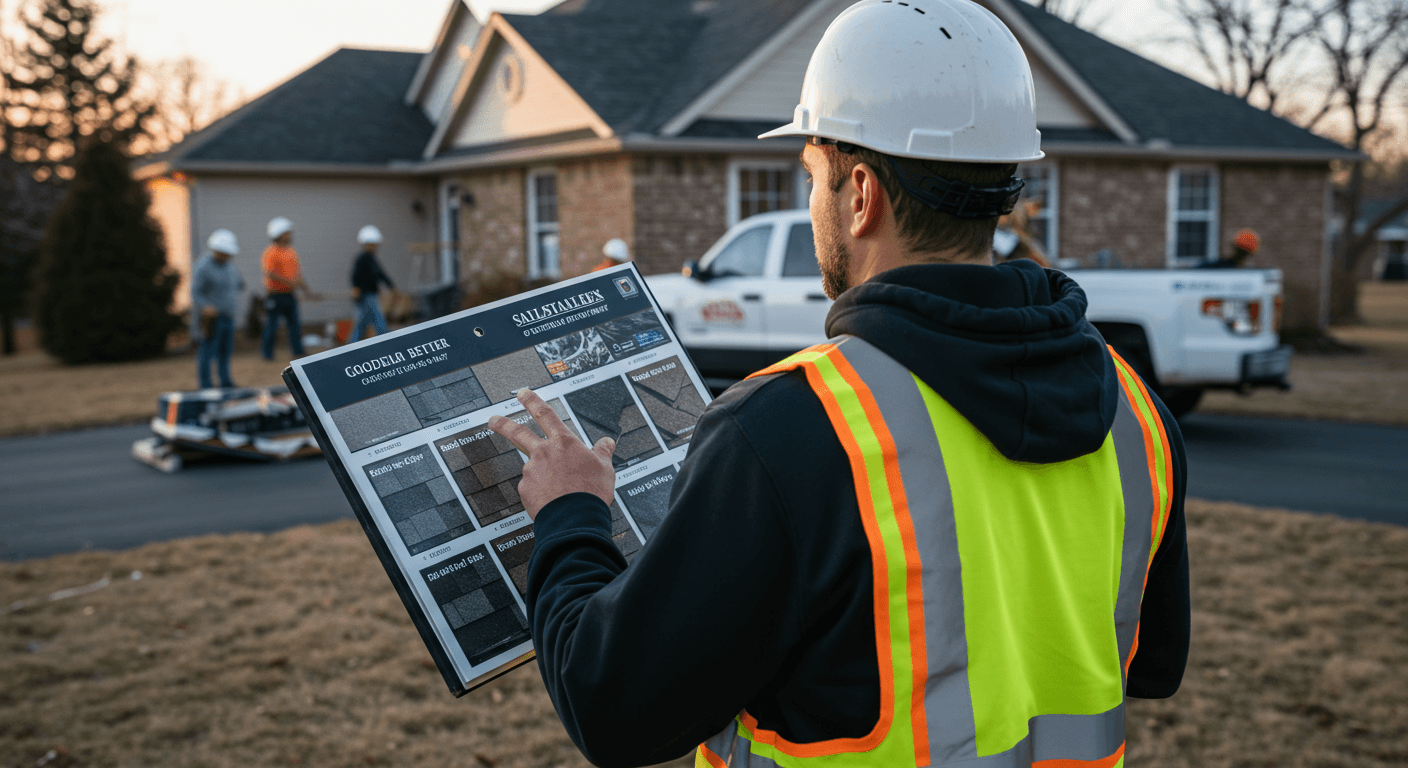
Present three options: The 'Minimum Code' (The price-match), The 'Regional Standard' (The upsell), and The 'Lifetime Shield' (The premium cross-sell).
Explain the ROI of the top-tier option in terms of energy savings and warranty protection.
Want to skip the manual work and get exclusive, verified leads instead?
Get $150 in Free CreditsTraining Your Team to Stop "Ghosting" High-Margin Add-ons
The biggest hurdle isn't the customer; it's your sales team's fear of rejection. I worked with a sales manager named Deon who realized his guys were "ghosting" the gutter and siding options because they wanted to keep the quote "clean." They thought adding more items would scare the buyer away.
We ran an A/B test. For half the leads, the reps gave a standard roofing quote. For the other half, they used a "Good-Better-Best" model that included mandatory gutter inspection and an option for chimney cricket installation. The results were clear: the "Better-Best" quotes had a 4% lower closing rate, but the profit per lead was 26.8% higher. You can afford to lose a few "bottom-feeder" jobs if the ones you land are $5,000 more profitable.
Basic Shingle Swap vs. Glass City Protection System
| Component | The Basic Shingle Swap | The Glass City Protection System |
|---|---|---|
| Shingles | Standard 30-year shingles | Algae-resistant shingles |
| Underlayment | Basic underlayment | Synthetic high-temp underlayment |
| Flashings | Re-using old flashings | New flashings |
| Gutters | No gutter inspection | New seamless gutters |
| Attic | No attic assessment | Blown-in attic insulation |
Shingles
Underlayment
Flashings
Gutters
Attic
Cross-Selling Maintenance Plans
One strategy I rarely see Toledo roofers use effectively is the post-job maintenance plan. After you've just installed a $14,750 roof, the homeowner is in "protection mode." This is the perfect time to cross-sell a yearly inspection and gutter cleaning service.
Even if you only charge $249 a year for this, it keeps you on the property. It builds a "moat" around your customer so that when a hail storm hits 6.5 years from now, you are the only person they call. In a market as competitive as ours, the lifetime value (LTV) of a customer is what separates the companies that scale from the ones that just survive.
The 'While We Are Here' Close
"Remind the homeowner that the mobilization cost of bringing a crew, trailer, and permits to their house is already paid for. Any work added now—like skylight replacement—is significantly cheaper than doing it as a standalone job later."
Managing the Technical Details
When you start upselling more complex systems, your project management needs to keep up. I've seen many Toledo shops stumble because they sold a "Full System" but their crews weren't briefed on the specific ventilation baffles or the upgraded starter strips. This is where utilizing a platform that scores and organizes your lead data becomes vital. If you have all your site notes, photos, and upsell requirements in one place, the handoff from sales to production is seamless.
It also helps to ensure you are working with leads that have been pre-screened for project scope. There is no point trying to upsell a $30,000 full-envelope restoration to a lead that was only looking for a $500 patch job.
Avoid the 'Sales Pressure' Trap
Never present an upsell as a 'required' fix unless it truly is a code violation. Instead, frame it as a 'long-term savings' opportunity. If the homeowner feels backed into a corner, they will stop trusting your primary recommendation.
Measuring the Impact on Your Bottom Line
If you implement these strategies, you shouldn't just look at your bank balance; you need to track the specific metrics. I recommend tracking "Revenue Per Lead" rather than just "Close Rate."
For example, if you get 100 leads and close 20 at $10,000, your revenue per lead is $2,000. If you close 18 at $14,000 by upselling gutters and insulation, your revenue per lead jumps to $2,520. You are doing less physical work, dealing with fewer job sites, and making 26% more money. That is the definition of working smarter in the roofing business.
Research published in Roofing Contractor Magazine suggests that companies focusing on high-margin specialty installs see a significantly higher valuation when it comes time to sell the business. You aren't just building roofs; you are building an asset.
Conclusion: The Difference Between a $9,000 Job and a $13,540 Job
The next time your rep heads out to a lead in Point Place or Maumee, make sure they aren't just taking a tape measure. Make sure they are taking a thermal camera for the attic and a sample of a seamless gutter. The difference between a $9,000 job and a $13,540 job isn't the house; it's the presentation.
When you shift from "order taking" to consultative selling, you're not just increasing revenue—you're building a business that homeowners trust and refer. The 19.4% revenue increase isn't magic; it's the result of understanding your market, training your team, and presenting solutions that solve real problems. Start working with leads that match your full-service approach and watch your average ticket climb.