Homeowner skepticism and shifting carrier behavior have pushed the cost of a qualified roofing lead through a typical digital funnel up by 24.3% since last spring. This is not only a seasonal swing. It reflects how people evaluate five-figure capital improvements before they sign. When someone is staring at a $15,700 architectural shingle replacement, the pattern we see is they are about 3.2 times more likely to contract with a company they have seen backing a local youth program than with whoever simply won the auction for the top Google slot. The market keeps steering back toward proximity authority, where physical presence and neighborhood familiarity matter more than another loud digital impression.
Most owners still file community spend under goodwill or charity instead of acquisition. That is expensive. If you are not measuring cost per lead on sponsorships with the same discipline you use on pay-per-click, you are probably bleeding margin. When community cohorts are modeled end to end, the customer acquisition gap versus broad digital mixes often lands near 28% once labor, follow-up, and no-shows are included.
Treat that number like a production problem, not a dashboard footnote. If digital CPL rises while close rates stall, your mix is telling you to rebalance toward channels where trust is already partly built.
The hidden math behind a digital-only habit
I recently reviewed marketing for a Midwest shop doing about $6.4M a year. Paid digital leads were averaging near $192 each, which looked tolerable on a spreadsheet. Then we layered in close rates and selling time.
Leads from broad aggregators and cold search were closing at 11.4%. Leads tied to a structured neighborhood program, think local events, visible projects, and repeat exposure in a tight radius, were closing at 34.7%. After we added sales labor, drive time, and admin, each signed job sourced from the digital bucket was costing about $1,684 all in. The community-sourced work landed closer to $547 per signed contract. That is a 67% swing in acquisition cost for the same crews, simply by shifting weight from the screen to the street.
Broad digital buys vs. a tight local footprint program
| Signal | Cold digital / aggregators | Neighborhood footprint program |
|---|---|---|
| Observed close rate | 11.4% | 34.7% |
| Typical reported CPL | ~$192 | Varies (track fully loaded) |
| All-in cost per signed job (example shop) | ~$1,684 | ~$547 |
| Buyer context | Price shopping, multi-bid | Pre-seen, neighbor adjacency |
Observed close rate
Typical reported CPL
All-in cost per signed job (example shop)
Buyer context
Figures come from one audited operator and will not match yours line for line. The point is to model signed-job economics, not channel CPL alone.
Sponsorships that work versus sponsorships that evaporate
The National Roofing Contractors Association (NRCA) has been clear that reputation is a balance-sheet asset. Too many contractors still buy visibility that cannot be tied to conversations. A $2,800 gym banner that hangs for a few weeks is often a donation with a logo on it, not a funnel.
Logo-only buys rarely clear the bar
If you cannot name the next step you want a homeowner to take, and you cannot track it, pause the check. Community spend should create a conversation, a classroom moment, or a visible repair, not another piece of vinyl nobody remembers.
High-friction venues are the ones where people already talk about maintenance, insurance, or property values: HOA boards, resilience workshops, welcome programs in tight subdivisions. I watched a Pacific Northwest crew fund a school STEM lab for $4,250 and negotiate a monthly parent newsletter column on attic airflow and efficiency. Nineteen inspections showed up in the first quarter from that column alone, and six turned into full steep-slope replacements.
Own a fix people walk past
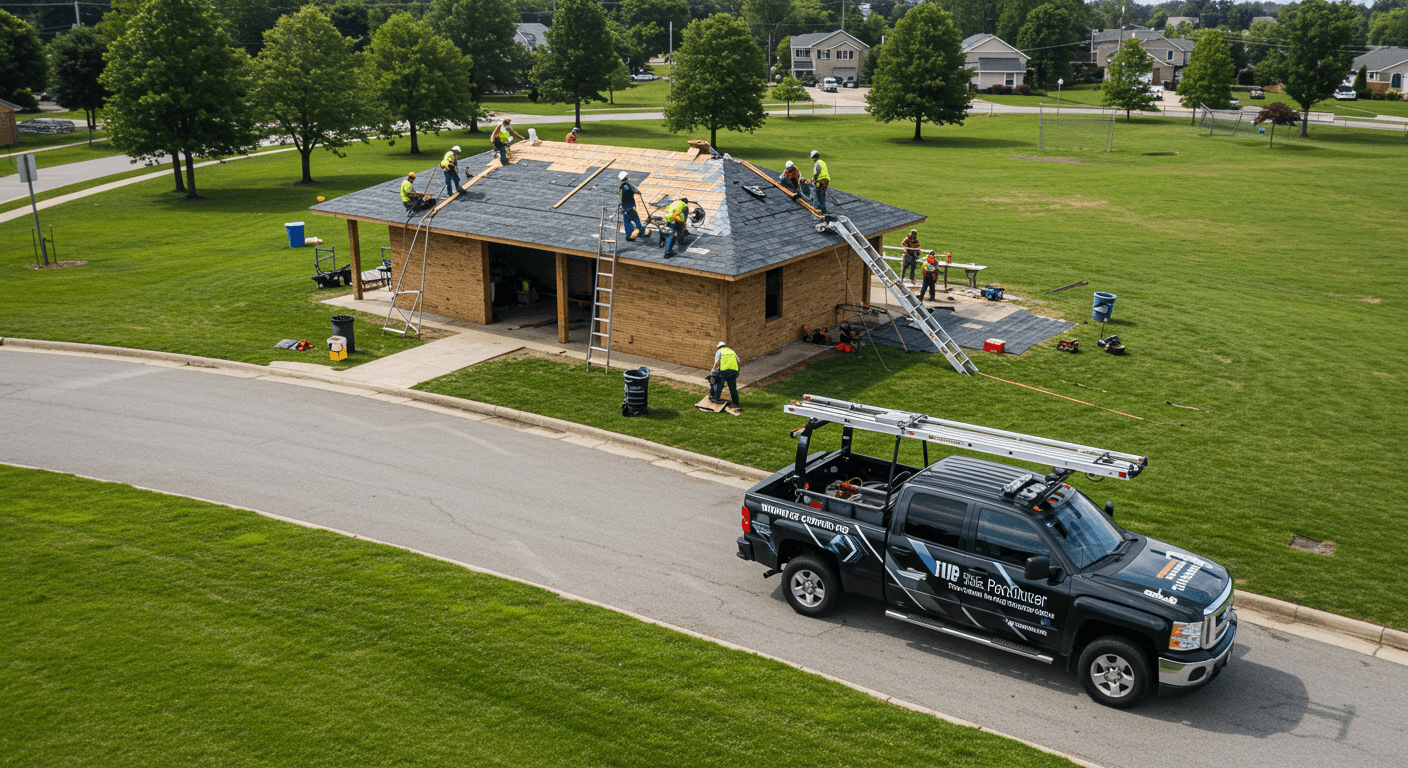
"Instead of sponsoring another forgettable mixer, repair the worn community gazebo or the leaking shed roof with material you already stock. Neighbors see the workmanship every week, which builds more trust than a five-star screenshot they scroll past once."
Paid leads still have a role, but the trust curve is different
Buying leads can fill a slow week or spike after hail, yet the conversation starts colder. A neighbor who has seen your yard signs and heard your name closes faster because the skepticism gap is smaller.
Compare that to shared leads where five companies get the same ping. Winning that race usually means fastest response or lowest price, and neither builds a twenty-point net margin on purpose. That is why more growth-focused shops pair street-level presence with lead verification that confirms real homeowners and live projects before money leaves the account. You can supplement local work without feeding a race to the bottom.
Measuring the ROI of local presence
Treat community equity like a metric, not a vibe. A few numbers usually tell the story:
- Referral multiplier: for each job tied to a community touchpoint, how many organic calls arrive from the same zip code in the next ninety days?
- Sales velocity: days from first contact to signed contract for community-sourced leads versus cold digital. In my files the local cohort averages about 4.2 days faster.
- Average ticket: trusted buyers negotiate less on the ventilation upgrade or the wind-rated package because the decision is about outcomes, not squeezing the bid.
Coverage from Roofing Contractor on business strategy keeps pointing to the same operational truth: crews that dominate a micro-market log tighter routes, less windshield time, and denser referrals. Shops in that posture often report double-digit lifts in average job profitability because logistics finally match the map.
You feel it in fuel receipts, callback density, and referral radius before it shows up in marketing dashboards.
If you only remember four things
Model community spend on signed-job economics, not on how the sponsorship makes you feel at the banquet.
Prioritize venues where homeowners already discuss maintenance, insurance, or property values.
Pair neighborhood visibility with verified paid demand so digital fills gaps instead of eroding price.
Tag CRM sources to specific events or blocks so you can defend or cut programs with data.
Action Plan
Build a community ROI engine in about sixty days
This is operational, not a one-off donation season. The goal is repeatable conversations inside a radius your crews can serve without living on the interstate.
Map the five HOAs, civic groups, or employer campuses that actually steer work inside a twelve-mile ring of your shop.
Offer a concise Roofing 101 session for boards: maintenance cues, wind damage patterns, and how carriers view deferred upkeep.
Publish a neighborhood-only value add, such as complimentary gutter cleaning with a qualifying repair, and track it with a dedicated code.
During production week, place signage at the community entrance when permission allows, not only at the job address.
Force CRM source fields to reference the exact event, block, or sponsorship, then review that cohort monthly next to LSA and paid search totals.
What rebalancing spend actually looked like on the ground
Xavier runs four crews in the Southeast. He was spending $9,400 a month on Google LSA and another $3,000 on social ads. The calendar looked full, but profit thinned because crews were crossing forty-five miles between jobs and reps were burning roughly twelve hours a week on callbacks that went nowhere.
We trimmed digital by 40% and moved that $4,960 into a five-mile saturation plan around three existing customers. Six months later his drive time dropped about 22%, referrals climbed from 8% to 21.4%, and net profit rose roughly $12,400 a month. He was not doing more volume for the sake of busy. He was aligning work with geography. A lead that comes from a neighbor's sign carried more margin than four cold searches that went nowhere.
Keep digital honest while the neighborhood carries trust
Local presence is the long arc. Paid channels should still move the pipeline, but only when intake is clean. If you are funding leads that fall apart on the first call, it is worth getting a second opinion on how those requests are qualified. Our team is happy to talk through your current mix and handoff process.
Competitors can always raise bids on search, but they cannot manufacture the trust you earn by fixing the dugout roof or showing up to the neighborhood safety night with something useful to say. LeadZik stays in the background here: use it when you want previews and credits to test demand without guessing on cold intake.