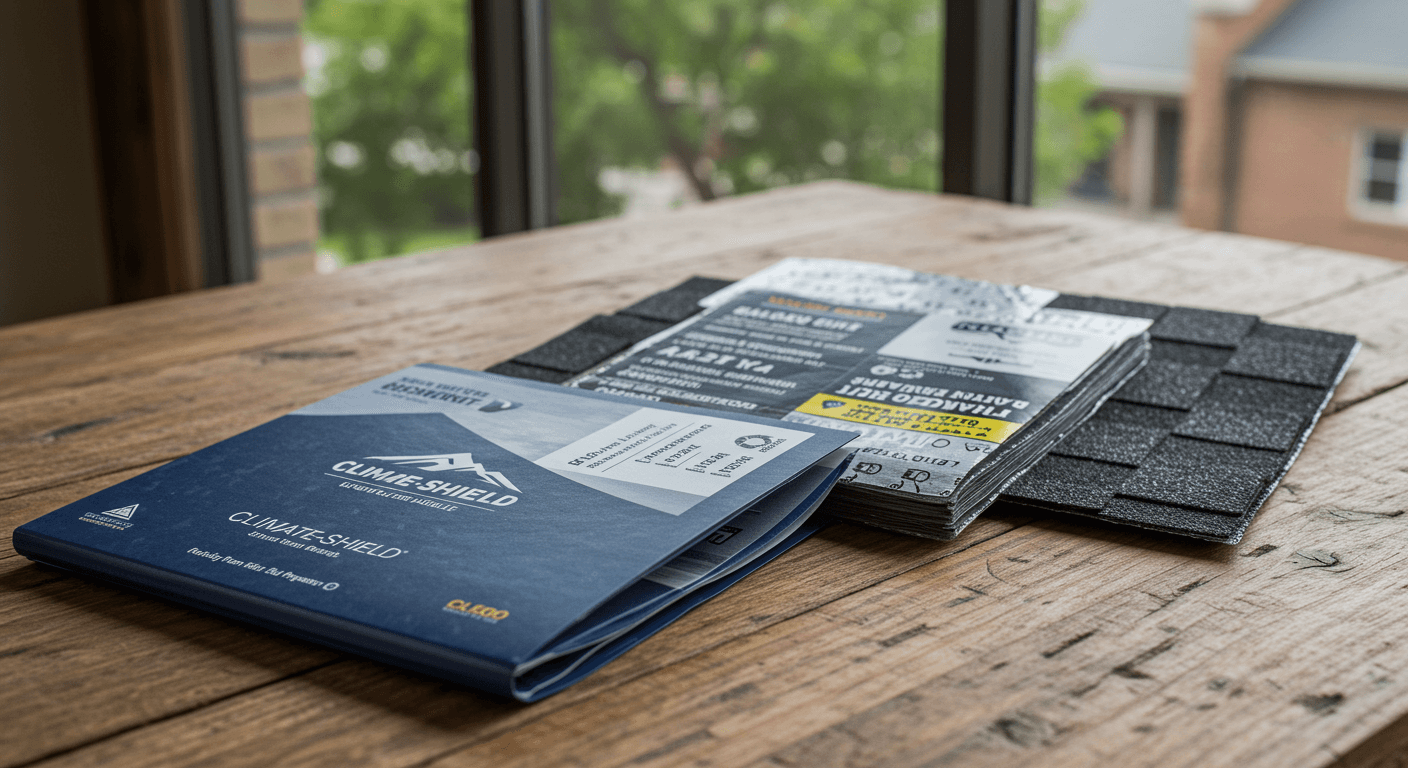
About $4,892 in lost ticket value is the quiet tax Madison roofing firms pay when they treat a fast estimate like a complete sales process. Across the Isthmus and out toward Middleton, buyers are roughly 38% more likely to invest in upgraded ventilation and ice-shield membranes when those details are framed as climate defenses tied to warranty performance, not as optional add-ons. Many owners still worry a higher bid will tank win rate, yet the competitive reality in Southern Wisconsin is that race-to-the-bottom pricing often reads as uncertainty to a homeowner who has already done homework online. The gap between assumed price sensitivity and real demand for a proper assembly is where the strongest Dane County shops are holding around 22.4% net margins.
Madison buyers respond when the conversation is about freeze-thaw risk and airflow, not a menu of parts.
The fear of a high bid is slowing your growth
I recently reviewed a rep named Jaxon who works for a mid-sized company near Monona. He was friendly, thorough on shingles, and careful to keep the proposal lean. He was convinced that if he mentioned ridge ventilation or a higher-grade underlayment, the homeowner would end the appointment early.
When we audited his last 14 contracts, the story was clear. He closed at 32%, which is not awful, but his average job size sat at $11,340. He was selling a stripped-down assembly and calling it savings. In Madison, weather swings from humid July heat near 95 degrees to nights around negative 15 in January. That cycle punishes decks, fasteners, and attic airflow. If you are not recommending a full system, you are not doing the homeowner a favor, you are deferring failure. Government guidance on growing a service business consistently points to moving past one-off transactions, which matches what roofers need here. See the SBA Grow Your Business guide for the broader management lens, then bring it home as protection, not fluff.
The 15% ventilation rule
"Do not present ventilation as a nice-to-have. Present it as code alignment and warranty protection. I have watched close rates lift about 12.8% when reps explain that shingle coverage can be compromised without proper airflow. The talk track stops sounding like upsell and starts sounding like stewardship."
Why line-item estimates quietly kill the sale
The most common failure I see locally is the grocery-list proposal. Shingles, nails, flashing, then a separate dumpster line. That layout trains the customer to treat your bid like a buffet. They shave a line here, delete a line there, and still expect the same finished roof.
When ice and water in the valleys sits on its own row, it becomes a target. When you move to a bundled system, you shift psychology. You are no longer selling shingles plus parts. You are selling a Madison winter-ready assembly with matched components and a single story about performance.
I coached a Sun Prairie team off line-item quoting. Average contract value moved from $12,870 to $15,912 in four months. Same neighborhoods in Fitchburg and Verona, same lead flow, different presentation discipline.
Line-item bidding vs. system bundling
| Decision factor | Line-item bidding | System bundling |
|---|---|---|
| How the homeowner shops your proposal | Line-by-line haggling | Whole-system performance |
| How the rep shows up in the home | Order taker energy | Consultant energy |
| What the roof represents in the conversation | A commodity swap | A protective asset |
| Risk on critical components | Easy to delete "optional" rows | Harder to strip without breaking the story |
How the homeowner shops your proposal
How the rep shows up in the home
What the roof represents in the conversation
Risk on critical components
Bundles are not about hiding numbers. They are about aligning components so the warranty narrative stays intact.
The good-better-best trap in real life
Most training pushes three tiers. That beats a single price, but it can still land people in the muddy middle. Many buyers pick "better" because it feels safe. In roofing, the top tier is often where the real protection and margin live, so a weak "best" package trains customers to ignore it.
Zoe, a contractor I work with, saw her platinum option chosen only 8.3% of the time. The package was basically more material without a clear reason to care. We rebuilt it around a maintenance rhythm and a 50-year non-prorated labor warranty story that matched how she actually served customers. Selection jumped to 27.2%. The incremental cost was modest because the value was service-based, not just more squares of shingle. If you want sharper thinking on how a premium tier anchors the rest of the ladder, skim Harvard Business Review's small business topic hub and translate whatever fits into language that still sounds like you on the driveway.
The discounting death spiral
If a Madison homeowner pushes for a cheaper number, do not start shredding your core margin. Trade secondary scope instead, like gutter guards or downspout extensions. That keeps the roof system price credible and shows labor and primary materials are stable, not negotiable because someone got nervous.
Cross-selling while you still have attention
If you are already inspecting decking and intake paths, you have a rare moment of trust. Acquisition cost in the Madison metro is not getting cheaper. When you send a rep to DeForest, the economics get easier if the visit can justify more than shingles alone.
One McFarland crew added a simple attic health pass to every roof inspection. Revenue per lead rose about 14.6% without a gimmicky pitch. The language sounded like this: while we verify shingle life, we also measure intake balance and insulation near the eaves. A lot of ice dam callouts in Madison trace back to heat loss, not shingle brand. Fix the roof on a hot attic and you often invite the same symptom next winter.
Add-ons that pair naturally with a roof replacement
Seamless gutters and oversized downspouts for spring rainfall volume
Blown-in attic insulation where R-value is thin at the plate
Soffit and fascia repair before new edge metal goes on
Skylight replacement instead of re-flashing an aged unit
When intake is cleaner, those cross-sells feel like continuity, not a detour. Teams that lean on verified homeowner leads tell me the conversations start closer to "solve the whole property" instead of "win a bid war on one trade."
What to change on Monday
Bundle critical climate components so homeowners cannot cherry-pick airflow or ice shield out of the assembly without breaking the logic.
Rebuild your top tier around service and warranty clarity, not only heavier shingle weights.
Protect core roof margin by trimming secondary scope when price pressure shows up, not by discounting the system story.
Pair roof work with attic and water management checks so the ticket reflects real risk you already see.
Action Plan
The Madison Climate-Shield consultation
A four-step flow we installed for a shop in Oregon, Wisconsin, that tightened premium closes without turning reps into robots.
Visual evidence: high-resolution photos of intake chokes, nail pops, and ice dam staining that tie to airflow and melt patterns.
Cost of inaction: plain math on deferring deck protection versus mold, interior repair, and repeat winter damage.
Single-system presentation: one bundle price with matched components and a unified warranty narrative.
Maintenance anchor: include a two-year tune-up visit on the premium tier so long-term performance is part of the purchase.
Handling the price objection without folding
When Jaxon started presenting bundled assemblies, a Waunakee homeowner told him he was $3,500 above another quote. Old Jaxon would have cut scope or slashed margin. New Jaxon used a tight script: some Dane County contractors will swap shingles for less, but that approach often skips intake ventilation and reuses questionable flashing. His goal was not to be the cheapest name this month, it was to be the crew that does not get called back in seven years for plywood rot.
After the coaching block, his close rate climbed to 39% and average ticket landed near $14,210. Commissions doubled for him, and the company kept north of 21% net on those jobs because the assembly stayed intact.
Lead quality matters for upsell room
You cannot consult a buyer who only needs a number for a lender or a quick patch before a sale. High-margin work needs homeowners who care about the property and will sit through education. Shared lists that blast five companies at once often reward whoever shouts the lowest price first, which is a rough way to train your sales floor.
If your pipeline is full of people who hang up when you mention airflow, it is worth looking at how you source demand. You can contact LeadZik support to talk through territory fit, credits, and how verification fits your Madison workflow. In a reputation-heavy market, the goal is fewer mismatched appointments and more conversations where a bundle actually makes sense.
Common Questions
Scaling margin in Madison without sounding like a pitch deck
The difference between a roofing company that barely covers payroll and one that can add capacity often comes down to average ticket, not heroics on install day. You already pay mileage, labor burden, and insurance to put a crew on a roof. Dollars added through consultative bundling and honest cross-sells usually carry more margin than the first line on the contract.
Stop treating estimates like a race to the bottom. Start treating them like a defense of the home. When the story matches the climate here, the profit tends to follow without sounding desperate.