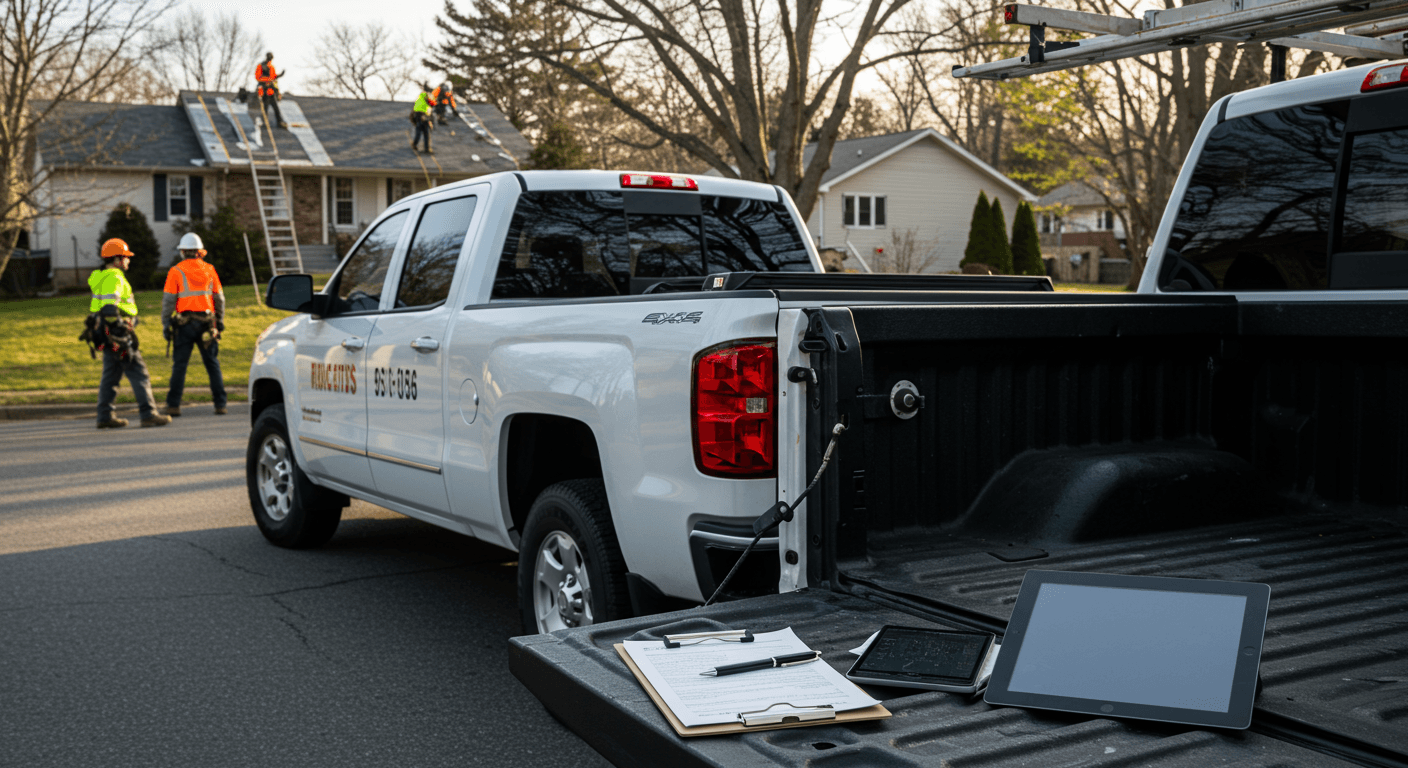
About $14,728 a year can walk out the door per estimator when a multi-generational shop in Grand Rapids or Lansing treats sales like a family habit instead of a written system. If your cost to acquire a booked job runs roughly 22% higher than the competitor that just hung a new yard sign three miles away, the gap compounds fast. Plenty of owners believe they are building something to hand down, yet without clean data and a single intake path, the operation often feels more like a stressful inheritance than an asset. Reporting summarized in ConsumerAffairs roofing statistics points to a busier, more consolidated market, which squeezes shops that still run on memory and charisma alone. The real question is whether you are building something that still closes when you step back, or whether you are the highest-paid admin in a company that stalls the week you stop answering every call.
Modeled across Michigan family shops where one rep carried most of the closes, the spread against better-documented peers showed up as profit left on the table, not a lack of leads on the board.
What the family shop is really competing against
| Operating lens | Typical family crew habit | Buyer-ready competitor habit |
|---|---|---|
| How wins get repeated | Whoever is strongest at the table carries the lore | Recorded calls and a shared script tied to local weather pain |
| Lead intake | Texts and personal cells with notes on paper | One CRM queue with timestamps and owner on every record |
| Follow-up discipline | We will circle back when we get a slow afternoon | Timed callbacks tied to spouse review and budget milestones |
| What buyers remember | A friendly visit and a round number | A scope that names ventilation, ice history, and warranty math |
How wins get repeated
Lead intake
Follow-up discipline
What buyers remember
The lake effect on your pipeline
Michigan weather does part of the marketing for you. Lake-effect snow out west and humid summer heat in Detroit both remind people that roofs age faster than they want to admit. Phones still ring, which breeds a risky calm. I have sat with owners from Muskegon to Ann Arbor who called their process a system when it was really whatever the senior rep felt like doing that week.
Pull the IBISWorld roofing contractors industry outlook and the story is familiar: consolidation, tighter operations, and buyers who compare more than two bids. The family name still earns trust at the door. It does not, by itself, protect margin when a national brand shows up with a trained closer and a spreadsheet for every neighborhood. In Flint I worked with a rep, call him Jaxon, who could own a kitchen table conversation yet never logged a follow-up because the office was supposed to handle it. The office turned out to be a relative with sticky notes and no shared calendar. The shop was bleeding an estimated $9,430 a month simply because nobody could prove who owned the next touch.
Complacency wears a friendly face
When inbound feels automatic, owners postpone the boring work: CRM rules, recorded trainings, and weekly close-rate reviews. That delay is where the 19.4% gap hides, not in shingle cost.
From memory to a playbook anyone can run
If your best closer gets sick or walks, the business should still know how the pitch sounded when it worked.
Durable revenue means retiring the idea that sales live only in someone's head. If Jaxon disappears, his closing percentage should live in a module, not in stories at the holiday party. We recorded three of his winning presentations and realized he was not moving shingles first. He was selling a Michigan-specific ventilation story that connected ice dam damage from last January to a scope homeowners could picture. That became training for junior reps in the 810, so new hires followed a path that already worked instead of inventing their own half-formed pitch.
Winter-proof your margin line
"Add about 4.2% to the estimate when you bundle heavier underlayment and improved soffit venting as an ice-dam prevention package. In Michigan, homeowners sign more often when you tie dollars to the exact ceiling stain or gutter ice they remember from last winter, not to a generic upgrade list."
Professionalizing the pipeline without doubling head count
Family teams try to vet callers while crews wait on materials and the owner jumps between voicemails. That split attention is expensive. Roughly fourteen hours a week on homeowners who were never the decision-maker is fourteen hours you did not spend coaching closers or tightening scopes.
Shops that tighten fastest usually pair a documented talk track with lead verification before the site visit. Qualification happens once, upstream, so the rep who pulls into the driveway is working a file that already names budget range, timeline, and who signs. Small crews punch above their weight when calendars are filled with conversations that can actually convert.
Action Plan
Turn the family roofing shop into a transferable asset
Four moves that shift you from heroic selling to a business a buyer or PE group can underwrite with real numbers.
Record your top closer on three real appointments, then strip the talk track to a script with room for personality but no missing steps.
Route every inbound lead through one number or form so timestamps, source, and next owner live in a single CRM view.
Define verification rules with your office manager: budget band, decision-makers named, and project timing before an estimator is dispatched.
Review close rate by rep every Monday; if someone slips under 28%, diagnose one friction sentence in the track before you blame marketing.
The spouse objection, handled like a pro
When Jaxon's close rate dipped, he was letting people drift without a scheduled second conversation. Family businesses often want to be liked. Buyers still need help deciding. Here is the language we installed:
Rep: "I get that completely. Most of my Grand Rapids clients want to sit down together before they commit. Since we are looking at about $16,842 on the structure, when do you both have fifteen minutes to walk the sample board? I will call then and stay on the line for the warranty and venting questions."
It stays consultative, sets a time, and respects the joint decision. Jaxon's second-call close rate climbed 18.3% in six weeks because the calendar, not hope, owned the follow-up.
What Michigan owners should steal from this file
Treat seasonal inbound as a warning sign, not proof that your sales machine is fine without documentation.
Build training from real winning appointments so Michigan-specific ventilation and ice history stay in every bid conversation.
Centralize intake and verification before estimators block their week on conversations that never had a signer in the room.
License and entity structure matter for exit timing; keep credentials with the company you might sell, not only with individuals.
Building for a real exit, not a heroic story
A durable shop means predictable acquisition cost and stable close rates across reps. If a regional buyer toured tomorrow, they would want the machine, not a scrapbook of past jobs. Shifting from reactive hustle to an organized sales org protects the legacy and changes how you show up Monday morning. You stop being a roofer who happens to own a company and start operating like an owner whose crews deliver a repeatable product.
If you want help mapping verification and intake to your territory, talk with LeadZik about how previews and credits fit a family shop that is ready to professionalize without sounding like a franchise.