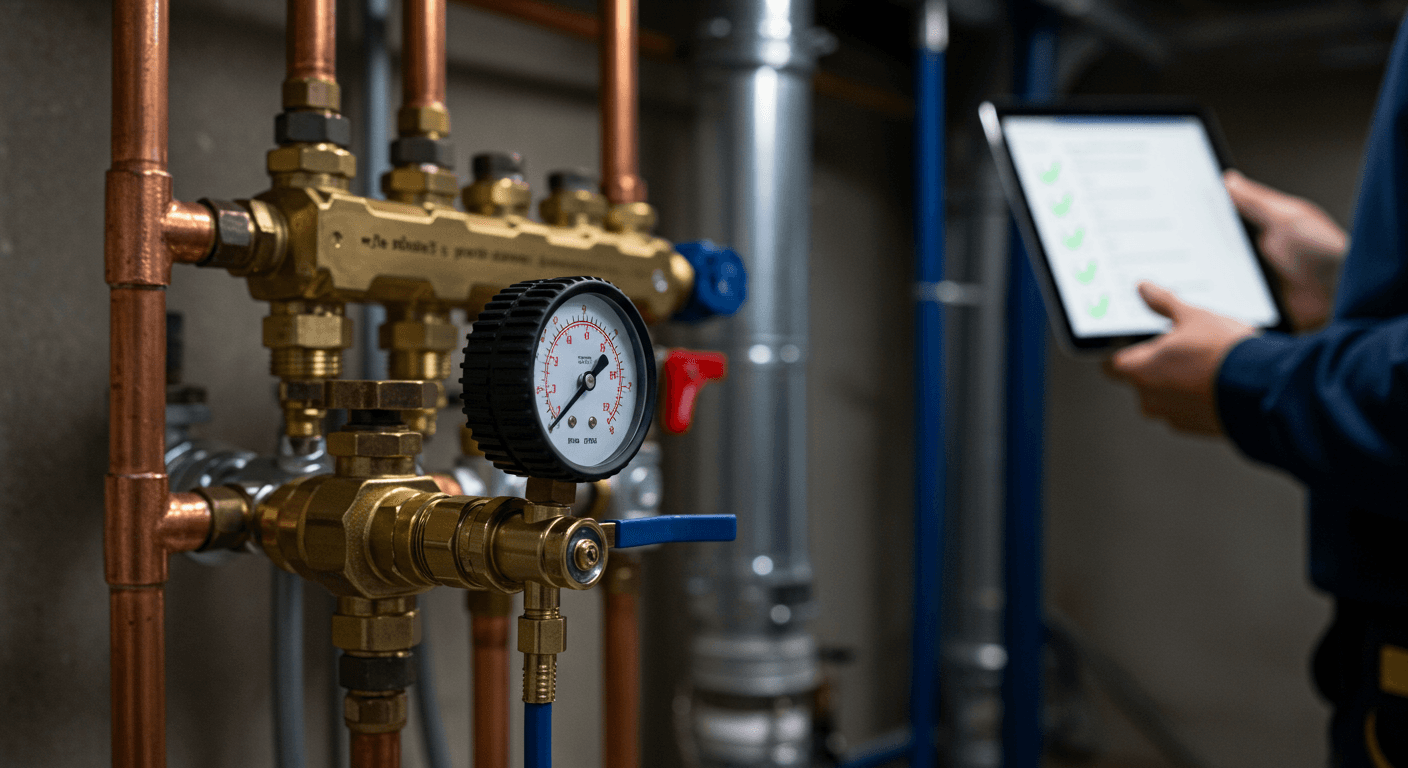
One group of Connecticut plumbing owners treats the post-job walk-through as a five-minute formality, while a smaller, more profitable cohort views the final 22 minutes of an install as their most valuable revenue protection window. This choice represents a sharp decision crossroads for any shop trying to scale in a high-cost market like Fairfield or Hartford County. You either invest in a rigorous, documented inspection process on the front end, or you accept a permanent 14.8% "callback tax" on your annual gross revenue.
I have spent the last 6.4 years analyzing the backend metrics of service companies, and the data is consistent. Shops that rely on a technician's "good word" rather than a photo-verified checklist lose an average of $347 per return visit when they have to go back to a site for a preventable leak or a minor code violation. In Connecticut, where the cost of a licensed journeyman is significantly higher than the national average, those wasted hours aren't just an annoyance. They are a direct drain on the cash reserves you need for fleet expansion or marketing.
The financial weight of the second trip in Connecticut
Aging infrastructure, seasonal pipe stress, and strict DCP licensing make preventable callbacks especially expensive here.
The plumbing industry in the Northeast faces a unique set of pressures. We deal with aging infrastructure in cities like New Haven, aggressive seasonal temperature swings that stress pipe joins, and some of the most stringent licensing requirements in the country through the Department of Consumer Protection (DCP). When a crew finishes a water heater install in a basement in Stamford and leaves without a multi-point pressure test or a thorough check of the thermal expansion tank, they are gambling with your profit margin.
I recently worked with a shop owner named Xavier who was frustrated by his stagnant net profit despite a record year for lead volume. When we audited his last 142 jobs, we found that 19.4% of them required a return visit within the first 30 days. Most of these weren't catastrophic failures. They were small issues: a slow drip at a p-trap, a slightly misaligned vent pipe, or a gas shut-off valve that wasn't fully seated.
Each of those callbacks cost him roughly $312 in labor, fuel, and opportunity cost. That is money that should have been spent on securing exclusive leads to keep his other crews moving. By the time we implemented a mandatory "digital sign-off," his callback rate dropped to 3.2% within four months.
The 15-Minute Profit Guard
"Require technicians to upload five specific photos (supply lines, drainage pitch, venting, gas connections, and the workspace area) to your FSM software before they can clock out of a job. This adds 15 minutes to the task but prevents hours of unbilled rework."
Designing a localized inspection framework
Your standards need to be binary, not vague, and tuned to Connecticut water and code realities.
Standardization is the enemy of the "lazy" technician but the best friend of the business owner. Your inspection standards should not be a vague set of suggestions. They need to be a binary checklist. Either the pressure held at the required PSI for 15 minutes, or it didn't. Either the pitch on the drain line is 1/4 inch per foot, or it isn't.
In Connecticut, our inspections must also account for specific water quality issues. High mineral content in certain regions can lead to premature failure of components if they aren't flushed or seated correctly during the initial install. Furthermore, for commercial projects or multi-family housing, following CDC guidance on water systems is becoming a standard expectation for risk management, especially regarding Legionella prevention in larger plumbing loops.
Speed-First vs. Inspection-Led Operations
| Factor | Speed-First Model | Inspection-Led Model |
|---|---|---|
| Daily job volume per tech | Higher daily job count | 1-2 fewer jobs per week |
| Callback rate | 14-18% | 2-4% |
| Customer reviews | Inconsistent ratings | 4.9-star average |
| Technician morale | High burnout from rework | Higher accountability and pride |
Daily job volume per tech
Callback rate
Customer reviews
Technician morale
The Final 14: standards that protect your margin
Static pressure test confirmed and logged.
All mechanical joints checked with a dry cloth after 10 minutes of use.
Proper support and strapping (vibration is a silent killer of Connecticut copper systems).
Full cycle of all fixtures involved in the repair or install.
Gas leak detection fluid or electronic sensing on all new connections.
Verification that all local municipal codes (Hartford, Bridgeport, etc.) are met.
Thermal expansion tank pre-charge matches the home's static pressure.
Water heater temperature set to a safe, compliant range.
Workspace cleaned to a "better than I found it" state.
Homeowner walk-through and education on the new system.
Shut-off valves clearly labeled for the customer.
Photo documentation of the serial and model numbers for warranty tracking.
Final tool inventory check (losing a $400 press tool on a job site is a callback of a different kind).
Signed customer acceptance form.
The "Good Guy" Trap
Avoid letting senior technicians bypass the inspection process just because they are experienced. In my experience, the most expensive mistakes often come from overconfident veterans who skip the "basic" checks because they've done the job 1,000 times.
Training technicians to value the audit
Handing someone a clipboard is not enough. They need a reason to care about the final 20 minutes.
You cannot simply hand a technician a clipboard and expect results. You have to sell them on why the audit matters to them. In most shops, rework is a morale killer. Technicians hate going back to a job they've already finished, especially when they could be out earning commission on a new project.
I recommend tying a portion of their performance bonus to their callback rate. If a tech keeps their rework below 4.5% for the quarter, they earn a "Quality Premium." This shifts the dynamic from "the boss is checking up on me" to "I am protecting my own paycheck."
According to recent industry insights from Contractor Magazine, shops that implement peer-to-peer audits see an even faster adoption of standards. Occasionally having a lead tech audit a junior tech's work (and vice versa) builds a culture of accountability that doesn't rely solely on the owner's oversight.
Measuring the ROI of inspection time
The math is straightforward once you compare inspection cost to callback drag.
Let's look at the math. If your average journeyman rate in Connecticut is $115 per hour and an inspection takes 25 minutes, you are investing approximately $47.92 per job in quality control.
If you do 500 jobs a year, that is a total investment of $23,960.
Now, consider the alternative. Without that inspection, if you have a 12% callback rate (60 jobs), and each callback takes 3 hours of total time (travel + repair), you are losing 180 hours of production. At a billable rate of $225 per hour, that is $40,500 in lost revenue, plus the $20,700 in direct labor costs, totaling over $61,000.
Investing that $23k to save $61k isn't just a good idea; it is a fundamental requirement for a healthy balance sheet. This is why having a reliable lead flow is so important. When your pipeline is full of verified, high-intent jobs, you don't feel the "panic" that leads to rushing through the final inspection. You have the breathing room to do the job right because you know the next profitable job is already waiting in your queue.
What the Connecticut numbers tell you
Shops without photo-verified sign-offs lose roughly 16.8% of revenue to unbilled rework before callbacks even show up on a P&L.
A 25-minute inspection costing under $48 per job can offset callback drag that easily exceeds $61,000 annually on a 500-job shop.
Peer audits and callback-linked bonuses shift inspections from owner policing to technician self-interest.
Documented quality control raises both day-to-day margins and long-term business valuation.
Action Plan
Implementing a new standard in 4 steps
Follow this timeline to roll out a rigorous inspection protocol without causing a revolt among your crews.
Audit the Last 90 Days: Identify your top three callback reasons. Is it leaks, noise, or code compliance?
Build the Digital Checklist: Create a simple form in your FSM (ServiceTitan, Housecall Pro, etc.) that requires photos.
The "Soft Launch": Run the checklist for two weeks without penalties to find friction points in the workflow.
Full Accountability: Tie the checklist completion to payroll or performance bonuses. No completed audit means the job isn't closed.
Want to skip the manual work and get exclusive, verified leads instead?
Get $150 in Free CreditsBeyond the checklist: the long-term impact
Inspection standards compound into reputation, referrals, and exit value.
The most overlooked benefit of high inspection standards is the impact on your company's valuation. If you ever decide to sell your plumbing business, a buyer is going to look at your warranty reserves and your callback data. A shop with a documented, repeatable quality control system is worth significantly more than one that relies on the "tribal knowledge" of a few key employees.
By focusing on these standards, you are building a brand that stands out in a crowded Connecticut market. Word spreads fast in communities like Greenwich or West Hartford. Being known as the shop that "gets it right the first time" is the most effective marketing strategy you can employ. It reduces your customer acquisition cost over time because your referral rate will naturally climb as your callback rate drops.