Sacrificing high-grade synthetic underlayment to squeeze under a competitor's price point is a strategic failure that guarantees long-term liability over short-term liquidity. Why are your sales reps still treating ventilation like an optional accessory instead of the engine that protects your labor warranty? New Mexico roofing owners face a binary choice: you can either race to the bottom by bidding on "shingles and felt," or you can secure your net margins by positioning whole-roof systems as the only viable solution for high-altitude UV exposure.
Choosing the former might keep your crews busy this week, but it creates a recurring $9,430 profit leak through callbacks and brand erosion. Choosing the latter requires a fundamental shift in how you frame project value during the initial inspection.
I have spent the last 13 years watching shops in Albuquerque and Santa Fe struggle with the commodity trap. They think the homeowner only cares about the bottom line because that is all the rep knows how to talk about. But the reality in our high-desert climate is that a cheap roof is a ticking time bomb. When you approach a sale as a consultant rather than a catalog-thumper, you stop upselling and start prescribing.
The Margin-Crushing Myth of "Price-Sensitive" New Mexico Homeowners
There is a persistent myth in the Rio Grande Valley that homeowners are strictly looking for the lowest number on the page. I have coached hundreds of reps who use this as an excuse for why they did not even mention a ridge vent upgrade or a high-temp ice and water shield. They assume the customer will say no, so they pre-reject the sale for them.
The reality is that New Mexico homeowners are not price-sensitive, they are risk-averse. Our state presents some of the most brutal conditions for asphalt shingles in North America. Between the 5,000 plus feet of elevation in the Duke City and the intense UV radiation that cooks attics to 155 degrees by mid-afternoon, a standard roof is under constant assault. When a rep fails to explain this, they are not being nice or saving the customer money. They are failing to provide a professional recommendation.
I recently worked with a rep named Xavier who was closing at a respectable 31%, but his average job size was stuck at $11,340. He was terrified that adding $1,428 in system upgrades would blow his close rate. We looked at his pitch. He was mentioning the underlayment as a better option if you want to spend more. That is a death sentence in sales. It frames the upgrade as a luxury, like leather seats in a truck, rather than a mechanical necessity.
We shifted his approach to focus on the Heat Trap effect common in Las Cruces and Santa Fe homes. Within six weeks, his average ticket jumped to $13,105, and his close rate actually ticked up to 33.4% because he sounded like the only expert who understood why the previous roof failed.
High-Altitude Realities: Why New Mexico Climate Is Your Best Sales Tool
If you want to sell ventilation without sounding pushy, you have to let the climate do the heavy lifting for you. In New Mexico, we do not just have heat, we have thermal shock. The temperature swing from a 98 degree afternoon to a 62 degree night causes rapid expansion and contraction. Standard organic felt underlayment cannot keep up with that for 17 years. It becomes brittle, cracks, and leaves the deck vulnerable.
When your reps are on the roof, they need to be looking for the scars of poor ventilation. This includes curled shingle edges, granular loss that is localized over hot spots, or brittle decking. Instead of saying you need new vents, the conversation should sound like this:
"Yara, I am looking at the way these shingles have aged over the center of your garage. Do you notice how they are significantly more brittle here than over the eaves? That is a classic symptom of a heat trap. In our Albuquerque sun, if we do not increase the airflow by about 28%, the new shingles will essentially bake from the inside out, potentially voiding the manufacturer's wind warranty."
This is not a sales pitch, it is a diagnostic finding. You are identifying a problem that already exists and offering the only logical solution. This shift from selling to solving is what separates the $5M shops from the $1M shops.
Action Plan
The 4-Step Diagnostic Sales Framework for New Mexico Roofers
Use physical evidence from the roof and attic to prescribe system upgrades instead of pitching optional add-ons.
Identify the climate scar: find physical evidence of heat or wind damage that a premium component would have prevented.
Translate to dollar risk: explain how that damage shortens roof life from 25 years down to 14 years.
Present the mechanical solution: introduce the upgrade (synthetic underlayment, ridge vent) as the engineer-specified fix for the high-desert environment.
Link to warranty protection: tie the upgrade directly to long-term protection of the homeowner's largest investment.
The Psychological Pivot: From Selling Upgrades to Engineering Solutions
Most roofing sales training focuses on the close, but the real money is made in the framing. If you present a bid with three tiers (Good, Better, Best), you are inviting the customer to pick the cheapest one. Why? Because you have framed it as a choice of how much extra do you want to give me?
Instead, I advocate for a system-based bid. There is no good option that includes 15lb felt in a state where the wind regularly hits 55 mph during monsoon season. According to the SBA Grow Your Business Guide, scaling a service company requires consistent quality and risk management. For a roofer, that means refusing to install systems that you know will fail.
I tell my coaching clients to use the doctor analogy. If you went to a surgeon for a knee replacement, and he offered a standard version or a premium version that actually stayed attached to your bone, you would walk out. You expect the professional to recommend the version that works. Your sales reps need to carry that same conviction.
Shingle-Only Bid vs. System-Based Bid
| Factor | Shingle-Only Bid | System-Based Bid |
|---|---|---|
| Underlayment | 15lb organic felt | High-temp synthetic underlayment |
| Ventilation | Basic box vents (if mentioned) | Continuous ridge vent + balanced intake |
| Sales framing | Good / Better / Best tiers | Single climate-resilient system |
| Rep positioning | Catalog salesperson | Diagnostic consultant |
| Typical callback risk | Higher heat-related failures | Roughly 42% lower heat-related failure risk |
Underlayment
Ventilation
Sales framing
Rep positioning
Typical callback risk
When Xavier started telling homeowners, "I actually won't install the standard felt because I've seen it fail 100% of the time in this neighborhood," his credibility skyrocketed. He was no longer a salesman trying to pad a commission, he was a contractor protecting his reputation. This level of transparency builds the kind of trust that allows you to maintain higher prices even when a truck-and-ladder competitor is $2,400 cheaper.
The Attic Temperature Test
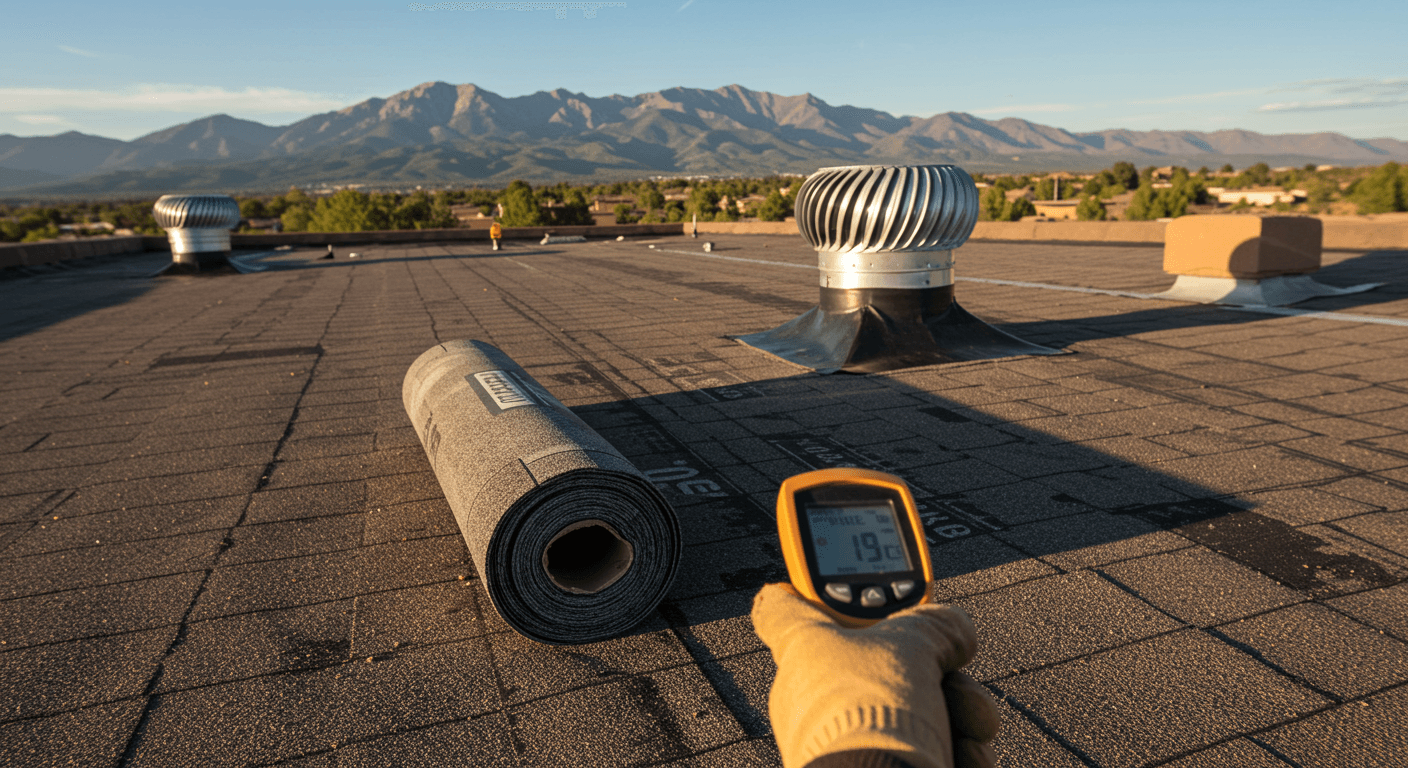
"Have your reps carry an infrared thermometer. On a 90 degree day, take a reading of the attic ceiling and the exterior shingles. If the attic is within 15 degrees of the roof surface, you have a ventilation crisis. Showing the customer a digital reading of 142 degrees in their attic is more persuasive than any brochure you could ever hand them."
Operationalizing the Upgrade: Training Your Field Reps
To truly move the needle on your revenue per lead, you need to bake these upgrades into your operational DNA. It starts with the lead itself. If your rep knows they are walking into a neighborhood with high-pitched roofs and complex ridge lines, they should already be prepared to discuss advanced ventilation. I have seen shops transform their pipeline by using exclusive, verified leads that provide enough detail to let the rep pre-calculate ventilation requirements before they even pull into the driveway.
Training your team is not a one-time event. It is a recurring process. You should be role-playing these conversations weekly. Focus on the transition phrases that move the conversation from shingles to the hidden components.
Example transition: "Most people focus on the color of the shingle, which is important for curb appeal, but what actually determines if this roof lasts 20 years or 10 years is what we put underneath it. Especially here in New Mexico, the underlayment is your second line of defense against the wind-driven rain we get in August."
This is also where your mobile tech comes into play. If your reps are using a mobile app to manage leads and upload photos of damaged underlayment in real-time, they can show the homeowner the exact why behind the recommendation while they are still on-site. This immediacy prevents the let me think about it objection.
Research into high-growth firms suggests that price is rarely the primary driver for long-term customer loyalty, a sentiment echoed in strategic management pieces from Harvard Business Review. In the roofing world, loyalty comes from the roof not leaking and the house staying cool. Both of those are functions of the upgrades your reps are currently too scared to sell.
Avoid the Feature Dump
Do not talk about permeability ratings or tear strength unless the customer is an engineer. Focus entirely on the benefit: this underlayment won't get brittle in the sun, which means your roof stays water-tight even if a shingle blows off during a spring windstorm.
The Math of the System Upgrade: ROI for the Contractor
Let's look at the numbers. On a typical 30-square roof, moving from a standard 15lb felt and basic box vents to a high-performance synthetic underlayment and a continuous ridge vent system might cost you an extra $540 in materials and $180 in labor.
If you sell that system package for a $1,425 premium:
- →You've added $705 in net profit to the job.
- →You've reduced the probability of a heat-related shingle failure by roughly 42%.
- →You've extended the life of the roof, leading to a happier customer who provides more referrals.
If you do 100 roofs a year and hit that upgrade on 65% of them, you are looking at an additional $45,825 in pure profit. That is the difference between struggling to make payroll in the winter and having the capital to invest in a new crew or a better marketing budget.
I have seen owners get so caught up in getting the lead that they forget the goal is to maximize the lead. Every time you send a rep to a home in Rio Rancho or Los Lunas, you have already paid for the fuel, the insurance, and the lead acquisition cost. Leaving $700 in profit on the table because the rep didn't want to sound pushy is a waste of your company's resources.
Common Questions
Ultimately, the transition from being a shingle flipper to a system provider is a mental one. Your team needs to believe that they are doing the homeowner a disservice by not offering these upgrades. When that belief is in place, the pushiness disappears, replaced by a professional obligation to do the job right.
Look at your last 20 invoices. If the material mix is 90% shingles and 10% everything else, you have a sales training problem. If it is 70% shingles and 30% system components, you are building a real business that will survive the next market downturn.