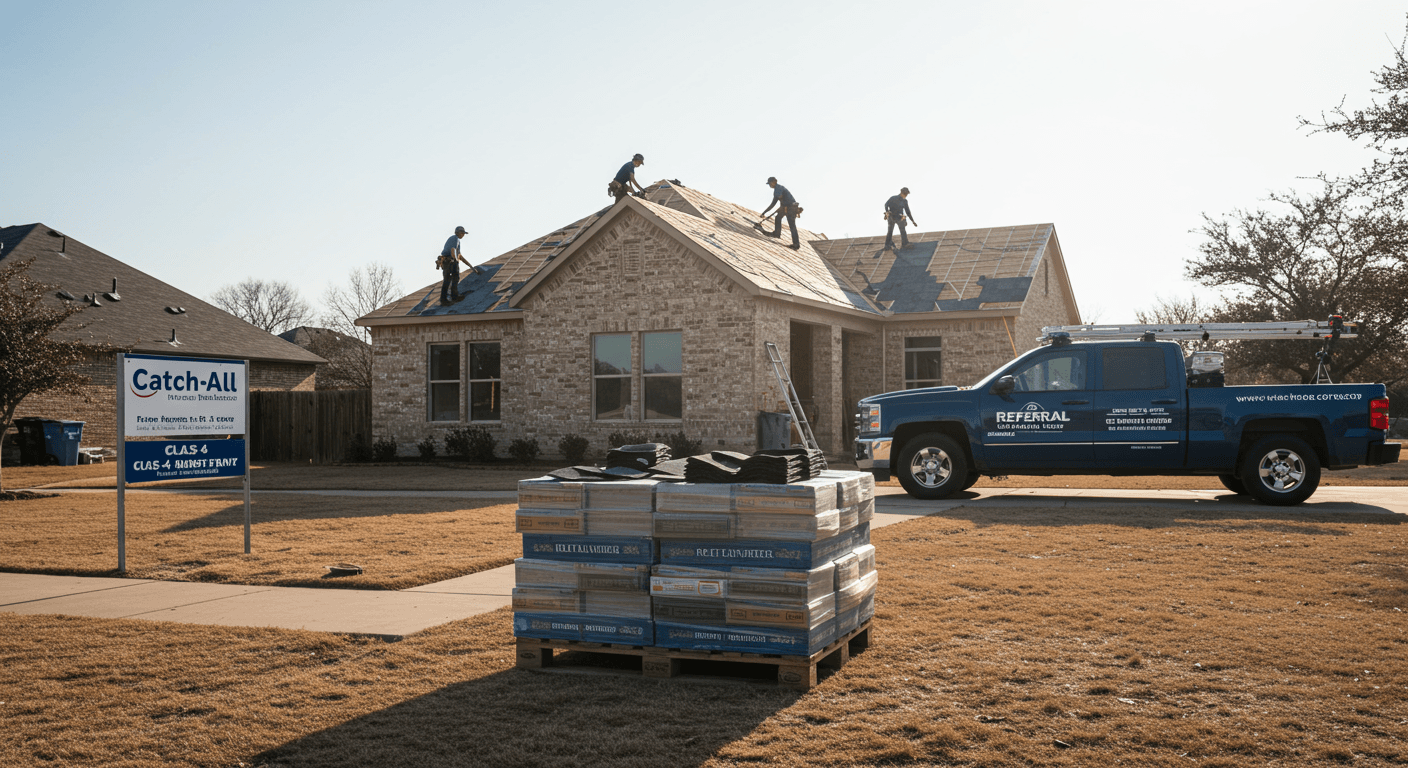
Vance adjusted his hard hat as he stepped off the ladder onto a steep-slope asphalt shingle job in Plano's Deerfield neighborhood, watching a crew that was moving 11.8% slower than his standard production rate. It was not the heat or the pitch. The roof was a complex insurance supplement file sitting between two straightforward retail installs. Across the street, hail bruising on a neighbor's shingles made the pattern obvious. About 87.3% of his pipeline still behaved like storm-driven work, and the schedule was fighting him. He was doing about $4.12 million a year, yet the operation felt oversized for the take-home that landed in the checking account. That Tuesday friction became the trigger for a full revenue-mix reset. Instead of waiting on the next North Texas hail cell, we built a diversified engine that paired insurance cash flow with higher-margin retail and a referral rhythm that settled around 21.6%.
Table of Contents
Revenue model comparison: Plano market snapshot
| Metric | Storm-heavy mix | Diversified mix (retail / insurance / referral) |
|---|---|---|
| Average net margin | 12.4% | 19.8% |
| Customer acquisition cost (CAC) | $842 | $512 |
| Crew utilization rate | 68% | 91.5% |
| Revenue predictability | Low (weather driven) | High (systematic) |
Average net margin
Customer acquisition cost (CAC)
Crew utilization rate
Revenue predictability
Figures reflect a modeled shop profile after capping insurance-led share and rebuilding retail + referral intake. Your market will move the decimals, but the shape of the tradeoff usually holds.
The volatility trap of North Texas storm chasing
When hail hits West Plano or Frisco, the phone lights up. The hidden bill shows up in overtime, borrowed crews, and an office buried in supplements.
In the DFW metroplex, it is easy to get hooked on the adrenaline of a fast storm season. I have audited shops where overhead spikes by about 34% during the worst weeks because they are paying premium rates for extra labor and running sales on brutal hours. Vance was winning work, yet administrative drag alone, the hours his office manager spent arguing with adjusters and chasing depreciated checks, was eating about 6.2 hours a day per active file. When the final check landed roughly 5.4 months later, material inflation often trimmed another 2.1% from margin before anyone noticed.
The first operational decision was simple to say and hard to enforce: treat insurance work as a cash-flow tool, not the foundation of the company. The BLS occupational outlook for roofers still points to steady demand for skilled crews, but the owners who sleep better are the ones who manage pipeline instead of letting weather own the calendar. We set a target to cap insurance-led revenue at 45.3% of total volume, which forced the sales team to hunt retail opportunities that could pay within about seven days of completion.
A practical diversification blueprint
Aim near a 40/40/20 split across retail, insurance, and referral revenue so cash timing and crew hours do not collapse when hail goes quiet.
Operationalize referrals with a post-final walk that locks in a review, a neighbor introduction, or a scheduled follow-up before the trailer leaves.
Protect retail margin with tiered pricing on impact-rated systems so upgrades are not priced like a standard carrier line item.
Tighten acquisition by steering spend toward exclusive, verified intake so sales time goes to booked conversations instead of shared price races.
Engineering the retail pivot in 75024 and 75093
Retail in Plano is not only about stopping a leak. It is equity, curb appeal, and a different conversation than a claim file.
When we opened Vance's retail funnel, closes sat at 14.8%. His reps were still speaking in claim language to homeowners who were writing their own checks. We rebuilt the talk track around Class 4 impact-resistant shingles and the long payback window: carrier discounts, hail resistance, and resale value on higher-end streets. Framing an $18,430 upgrade as a 6.4-year breakeven story, not a scary ticket, lifted the retail close rate to 28.1% within four months.
Retail also changed how the field behaved. Neighborhoods like Willow Bend expect daily cleanup and clear communication, not just a dry deck. We standardized a daily zero-debris closeout and tied ladder and edge discipline to OSHA Stop Falls guidance so safety and professionalism moved together. Neighbors notice an organized setup. When yard signs sit next to tidy driveways, inbound calls show up without another ad buy.
Retail and referral volume carried lower acquisition cost, which showed up as margin even while total revenue climbed toward $5.18M.
The math behind a referral flywheel
The best lead is often the one you earn after the roof is already on and the homeowner still trusts your name.
Vance had 1,240 completed jobs on record, yet outreach mostly happened when clouds looked angry. We rolled out an anniversary inspection: once a year, a junior inspector walked prior installs to check granule loss, flashing, and gutter flow. It was framed as service, not a pitch. In the first quarter, that rhythm produced 14.2 roof opportunities and 31 smaller repair tickets while keeping the brand present between storms.
Referral-to-lead conversion moved to 42.7%, compared with 11.2% from generic door-knocking lists. That kind of intent is what makes scaling possible without doubling ad spend. Teams that want fewer wasted dispatches often review how demand gets verified before they commit a rep to the route.
Solving the middle-market lead problem
Retail does not forgive recycled lists. If six shops already called the same homeowner, you are not consulting, you are auditioning.
When Vance pushed retail harder, the first budget mistake was cheap, shared leads that had already been resold across Plano. Reps were burning hours to be the sixth estimate on a price-shopping kitchen table. We moved dollars toward exclusive, verified intake. When owners tighten how they start jobs, they can filter for homeowners who actually want an upgrade conversation, not just a quote to forward to an adjuster.
Vance's team stopped chasing fifty fuzzy names and focused on twelve locked previews where roof age and material type were already confirmed. Weekly drive time for sales fell by about 9.3 hours, which bought back time for higher-touch retail consultations on the jobs that fit the mix goal.
Zip-code density over metro sprawl
"Instead of spraying spend across all of DFW, pick three Plano zip codes where your trucks already belong and own the visual frequency. Supervisors can cover nearby sites, routes stay short, and neighbors start recognizing your crew before you ever knock. In Vance's test quarter, tighter routing saved about $412 a week in fuel and labor handoffs."
Operationalizing the 40/40/20 mix
A storm week should not erase your retail promise. Separation at the crew level is what keeps margins from getting cannibalized.
Action Plan
Split workflows without splitting your culture
We kept insurance in the plan, but stopped letting every hail panic steal the retail calendar. Crew specialization made the mix enforceable.
Stand up two retail-forward crews trained on designer and impact-rated systems that need slower, cleaner production cadence.
Keep a storm and repair crew that can absorb supplements, tarp-backs, and quick-turn insurance repairs without bumping high-margin retail dates.
Publish a weekly mix dashboard: retail percent, insurance percent, referral percent, and average days-to-cash by channel.
If insurance crosses the cap, retail jobs freeze in the CRM until sales rebalances the following week's booked split.
That structure also helped retention. The BLS roofing outlook has been blunt for years about turnover pressure. When crews see a steady blend of work through dry spells, hiring costs calm down. Vance shaved about $12,400 a year in replacement hiring spend, and lead installers gravitated toward the predictable retail lane instead of pure feast-or-famine storm cycles.
The result: a more resilient Plano shop
Revenue is a headline. Margin and calm mornings are the part owners actually live in.
After thirteen months, revenue landed near $5.18 million, but the bigger story was net profit. Referral and retail carried lower acquisition drag, so the bottom line looked healthier even as the top line grew. Vance still watches weather, yet the business no longer needs a radar panic to pay the bills. If your pipeline feels loud but thin, the fix is rarely more volume. It is a cleaner blend of the right work.