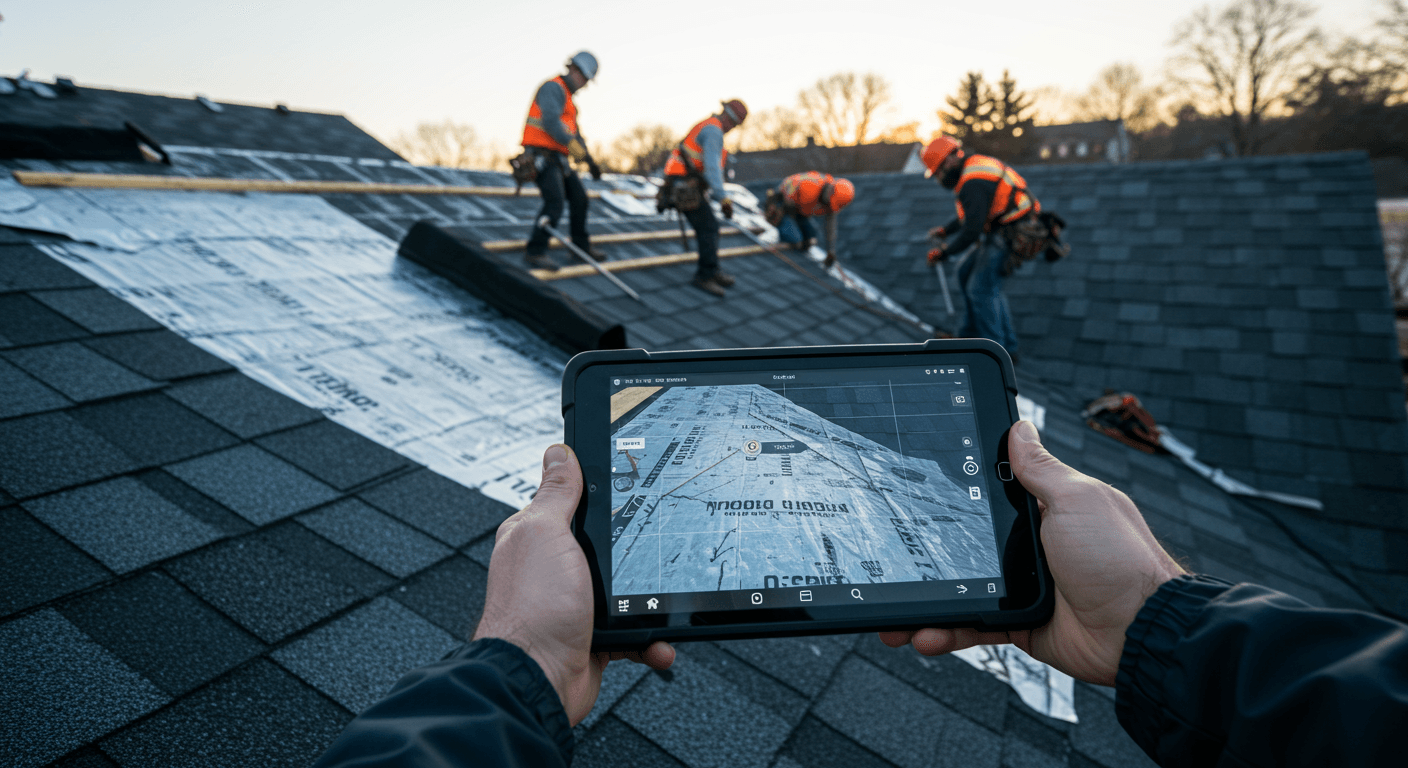
Ignoring a 7.4% margin leak from undocumented supplements is the same as mailing part of your net profit to a carrier. Most owners file missed shots under noise, yet benchmarks keep showing the same gap: a typical residential replacement leaves $842 to $1,165 in legitimate supplement value on the table when crews never prove the second layer, the soft perimeter board, or the valley metal that failed during tear-off. That loss does not stay in production. It lifts customer acquisition cost because marketing dollars are buying jobs you never fully invoice.
Moving from a loose "trust but verify" habit to a forced-path photo system is where shops start clawing back roughly 13.7% in margin over a year when supplements, callbacks, and office rework are counted honestly. The change is boring on paper and loud on the bank statement.
Table of Contents
The math behind undocumented supplements
Supplements do not fail because the damage is fake. They fail because the proof arrives too late.
In roofing P&L reviews, the most consistent drain is the forgotten supplement. When metal in a valley is cooked or dry-in needs six more sheets of OSB, the crew is racing weather, not building a court file. Without a forced capture moment, the before frame never happens. The office learns about the wood after the deck is covered, and you are left arguing over something an adjuster cannot see anymore.
In one mid-sized portfolio I reviewed last year, that single failure mode stacked to more than $43,000 in unrecovered material and labor across 57 jobs. That is owner margin, not a carrier discount program.
What changes when capture is structured
| Decision point | Informal photos | Forced-path capture |
|---|---|---|
| Before damage is covered | Sometimes captured, often skipped | Required frames before dry-in closes |
| Adjuster narrative | Office rebuilds the story from memory | Timestamped evidence in order |
| Supplement packet quality | Thin, easy to deny | Thick, hard to dispute |
| Training signal for new crews | Tribal knowledge only | Visual standard everyone sees |
Before damage is covered
Adjuster narrative
Supplement packet quality
Training signal for new crews
Composite from shops that moved from optional shots to mandatory capture tied to job phases. Your market will differ, but the slope is consistent when files look like evidence, not anecdotes.
Make the file read like evidence
"Pair every upload with job number, phase, and GPS when your vendor allows it. Adjusters are not swayed by artful angles. They respond to a dated sequence that matches the build order."
A real documentation stack is insurance for profit, not a social gallery. When a supplement lands with a dozen sharp images of soft decking from three sight lines, approval rates jump from roughly 62% to nearly 94% in the data sets I trust. That swing is the difference between financing growth and financing rework.
Case study: from paper files to digital precision
Midwest operator, $4.8M revenue, net stuck near 9%. The fix was discipline, not a new brand.
Xavier ran a solid shop, yet profit felt like it belonged to crews and carriers. His team fought adjusters who treated every replacement as a commodity line item. He rolled out a 55-image protocol with a checklist that had to clear before a job could close: starter, ice and water, ridge vent, penetrations, and cleanup, each with a named slot in the app.
Inside 6.5 months, average claim value rose $1,247 because supplements that used to evaporate were now visible. His production manager reclaimed most afternoons because the argument moved from phone volume to a folder everyone could open.
What the photo stack actually buys
Higher supplement approvals because adjusters see dated, multi-angle proof instead of a late story.
Fewer warranty fights when critical flashings and penetrations are captured at install, not reconstructed from memory.
Lower liability on perimeter damage when pre-arrival photos time-stamp dents that existed before the first bundle dropped.
Faster office cycles when every job ships with one digital folder instead of a scavenger hunt across texts.
Quality assurance and the labor shortage
Documentation is not only billing. It is how you keep standards when crews churn.
Turnover makes informal training expensive. The BLS outlook for roofers still points to tight demand for skilled crews, which means your best foreman cannot sit on every steep. Photo rules give production a remote set of eyes on valleys and penetrations so quality does not depend on who showed up Tuesday.
When a leak call comes in three months later, you are not guessing about chimney counter flashing. You open the file, zoom one frame, and decide the next move without a second debate. Pair that habit with field proof that harnesses are in use, and you align with the OSHA Stop Falls campaign, which matters for workers and for the story your insurer reads after an incident.
Callbacks, proof, and pre-arrival surveys
Most margin leaks here are communication failures dressed up as craftsmanship problems.
Callbacks are quiet margin killers. Sending a crew back for a small flashing fix can burn $350 fast once you count labor, fuel, and the job that did not get started that afternoon. Many calls are not install errors. They are pre-existing dings that show up after the new roof steals the attention.
One shop I dug into sat near a 12% callback rate. Forty percent of those tickets traced to siding cracks, gutter dents, and deck scuffs that were already there. A simple pre-arrival survey, twenty perimeter frames before material hits the driveway, cut non-job liability about 85%. When a homeowner claimed a pricey grill was damaged, the owner opened a dated frame from the day before work started. The dispute ended on the first screen share.
Personal threads are not a document vault
If evidence lives in crew texts or chat apps, it walks out the door when people leave. Centralize uploads in a company-owned system with permissions, retention, and export that your attorney can defend.
Integrating documentation into your lead flow
Sales and production are one chain. Weak handoffs show up as margin loss, not as a CRM bug.
Shops often silo lead buying from field execution. When exclusive roofing demand is steady, the constraint moves to how cleanly jobs run. If marketing buys strong opportunities but production gives back 10% on the back end, you are quietly overpaying for growth you already funded.
Tighten the bridge by letting crews see the first inspection context while they are on the deck. A lightweight mobile workflow for alerts and job notes keeps the office and field aligned so the chimney leak the rep flagged becomes the first frame the crew checks instead of a voicemail detail.
Action Plan
Building a scalable production framework
Growth from $2M to $10M does not reward one overloaded project manager. It rewards a spine everyone can repeat.
Review jobs remotely so supervisors spend time on exceptions, not windshield time.
Package a homeowner-facing album of key milestones to build trust and referrals without extra ad spend.
Submit carrier packets with ordered evidence so supplements read like audits, not arguments.
Train rookies on good versus bad installs using real frames from your own roofs, not stock photos.
The long-term value of your digital asset
Buyers do not pay a premium for trucks. They pay for repeatable quality and clean records.
Five years of searchable job files is an asset separate from equipment. It proves quality, supports warranty defense, and shows a buyer that the owner is not the only container of truth left in the business.
Software cost is usually smaller than one unrecovered supplement. At 200 roofs per year, an extra $500 captured per job through better evidence is $100,000 straight to margin, which funds the next hire or truck without touching ad spend.