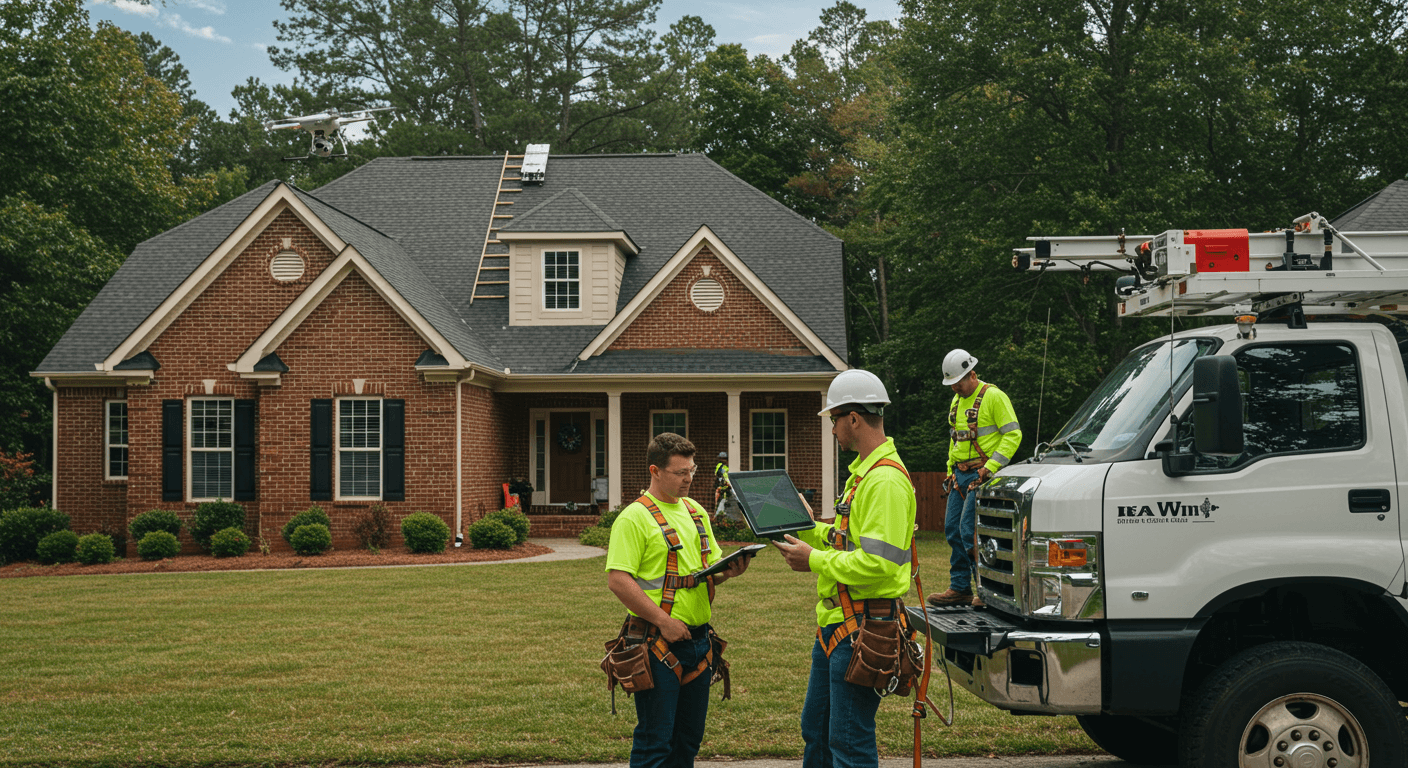
Jaxon stared at the iPad while his foreman paced the gravel driveway in Gastonia. The foreman had been swinging hammers for decades; to him, a twenty-four-year-old with glass in hand looked "distracted" instead of diligent. "Put the toy down and get on the ladder," the foreman barked. Jaxon complied, but his shoulders slumped. Three weeks later he ghosted for a Charlotte solar company that sold a tech-forward shop floor.
That single departure cost the contractor roughly $9,642 after recruitment fees, lost production, and training overhead.
From Wilmington to Asheville, the loudest complaint I hear is about the "new generation." Owners say younger crews lack grit. Here is what sixteen years of sales coaching has shown me: the labor crunch across North Carolina roofing is often a management crunch wearing a generational mask. Running a modern company with a playbook from the nineties guarantees friction—and turnover.
If your trucks are hard to staff, you are not only fighting stereotypes. You are fighting a shift in how people measure respect, progress, and safety on the job. The contractors winning the talent battle around the Research Triangle stopped venting and started calibrating communication to how today's workers actually decide whether to stay.
What This Means for Your Shop
Replace pure command-and-control with a coaching rhythm—explain why the standard matters—and you can materially improve crew retention.
Treat tablets, drones, and streamlined apps as professional tools, not toys, so Gen Z talent sees your company as competent, not dated.
Publish career ladders tied to certifications and mentoring so people visualize a future without job-hopping to find it.
Trade annual-only feedback for fast, specific recognition and course-corrections so employees feel seen instead of surveilled.
Table of Contents
Every ghosted laborer forces you to re-run onboarding, redistribute work, and absorb mistakes while new hires find their footing.
Myth 1: They Only Care About the Paycheck
Purpose, safety, and visible impact routinely outrank base pay when younger roofers choose where to invest their careers.
During a Greensboro training block, a newer rep named Ethan was closing around 37%—roughly nine points above seasoned teammates. The owner shrugged: "Guess we pay him enough." Ethan told a different story. The driver was a system that showed his contribution to growth in near real time. He felt tied to a winning build, not trapped in a shingle grinder.
Millennial and Gen Z roofers still care about money, but meaning and safety signal whether you are serious about their longevity. According to the 2025 BLS summary on fatal falls, roofing contractors logged 110 fatal falls in 2023—more than any other construction trade. Leading with your safety record, harness standards, and training budget is how you prove the job is worth their twenties and their forties.
When you interview in Raleigh, move past the hourly rate. Walk through how you fund NRCA credentials, mentor new hires, and document near-miss reviews. Young talent stays when they believe you are investing in their craft—not just renting their backs for the season.
Myth 2: Tech Is a Distraction on the Job Site
Digital fluency is baseline expectations for workers who grew up coordinating everything from their phones.
Phones and tablets are not toys to a twenty-year-old in 2025—they are how problems get solved. Handing them carbon-copy paperwork signals that your process is frozen in amber, and frozen companies bleed talent.
In Winston-Salem, one crew cut re-work roughly 14.3% by letting younger techs fly a drone for mid-job inspections. Flashing photos landed in the project file instantly, the veteran saved his knees, and the specialist on the sticks finally felt ownership.
Sales teams echo the same pattern. Reps stick when they get real-time alerts, clean territories, and verified opportunities instead of chasing mystery lists. Give them tools that connect effort to outcomes and they will out-hustle crews still debating whether email is "too corporate."
Old School vs. High-Performance Crew Leadership
| Factor | The 'Yelling' Model | The 'Coaching' Model |
|---|---|---|
| Focus after mistakes | Punishment first | Coach for growth |
| Feedback cadence | Annual (if ever) | Daily digital + in-field cues |
| Incentives | Base pay only | Performance bonuses + documented career steps |
| Communication style | Top-down orders | Collaborative explanations of why |
| Technology | Treated as a nuisance | Embedded for roughly 22% higher efficiency on reporting |
Focus after mistakes
Feedback cadence
Incentives
Communication style
Technology
Swap the narrative from disciplining devices to deploying them, and you remove a major reason younger roofers scan Indeed on lunch break.
Myth 3: They Are "Job Hoppers" by Nature
Jumping ship is expensive—but so is an untrained employee who never leaves.
North Carolina owners often ask, "Why invest if they will leave for a dollar more?" I answer with another question: "What if they stay untrained?" Job hopping is usually a ceiling problem. When the only path to a raise is quitting, people quit.
A Durham shop launched a Step-Up Program: laborer → lead → foreman → project manager, each gate tied to field certifications and curated reading from our library of roofing operations articles. Eleven months later turnover fell 41%. Visible ladders beat blind loyalty every time.
The Psychological Trigger: Immediate Feedback
Silence feels like rejection to workers who grew up with constant signal.
Veteran leaders often assume quiet approval. Younger crews read silence as disinterest. Waiting until day three of a tear-off to critique edging lands as a character attack; correcting ten feet in buys trust.
Action Plan
Six-Minute Daily Huddle (Owner-Led)
Borrow this micro-format before trucks roll so praise, priorities, and standards stay human-sized.
Open with a measurable win from yesterday tied to homeowner impact.
Name one quality focus for today (for example, ridge vent alignment) and why it protects warranty exposure.
Connect that focus to schedule or backlog so the crew sees how precision creates breathing room.
Invite one question or constraint from the field—solve it in under ninety seconds or assign a follow-up owner.
Close with appreciation that references a person, not a vague great job.
Hard-stop at six minutes—respect for time signals respect for craft.
Building a Culture That Lasts in North Carolina
Coastal humidity, mountain pitch, and Research Triangle growth all demand crews who feel rooted locally.
Young roofers chase authenticity, not laminated values. Share how you scraped through your first Charlotte roof, the estimate that almost sank you, and why you still walk job sites. That story does more for retention than any slogan. It mirrors why LeadZik's origin story resonates—we lived the shared-lead frustration we now help owners solve.
The 48-Hour Feedback Loop
"Never let a standout install or a blown sales moment sit unmentioned for more than 48 hours. Push jobsite photos to the group chat within two hours after a tough valley turns out tight. After a bad call, run a 10-minute film review the next morning. Speed of feedback equals speed of growth."
Handling the "Safety vs. Speed" Conflict
Bridging veteran pace with modern risk awareness keeps insurance sane and young talent engaged.
When 'how we did it in the 90s' undermines trust
Veterans who joke about skipping harnesses tell Gen Z recruits that leadership tolerates hidden risk. Flip the script: outfit crews with comfortable, premium kits—think the $412 harness that feels professional, not punitive. Make compliance visible pride, not a lecture, and you keep both generations pulling the same direction.
Professional-grade safety branding also protects margins. Fewer near-misses, lower mod rates, and crews who post behind-the-scenes content that sells your standards for you.
Scaling Your North Carolina Shop with the Next Generation
Delegation only works when the bench trusts the playbook—and the playbook trusts them back.
Stop treating Gen Z and Millennials as a repair ticket. They are the multiplier if you coach instead of ridicule, adopt modern workflows, and run transparent scoreboards. Shops have jumped from three crews to a dozen in under two years simply by pairing psychological safety with operational clarity.
Whether you are chasing Raleigh storm work or Asheville architectural upgrades, people stay where they feel valued, stretched, and equipped. The kid on the gravel driveway holding the iPad is not the problem—the absence of a clear path is. Fix the path, then make sure your lead pipeline can keep those upgraded crews busy. Trucks parked from thin job flow make every culture initiative feel hollow.