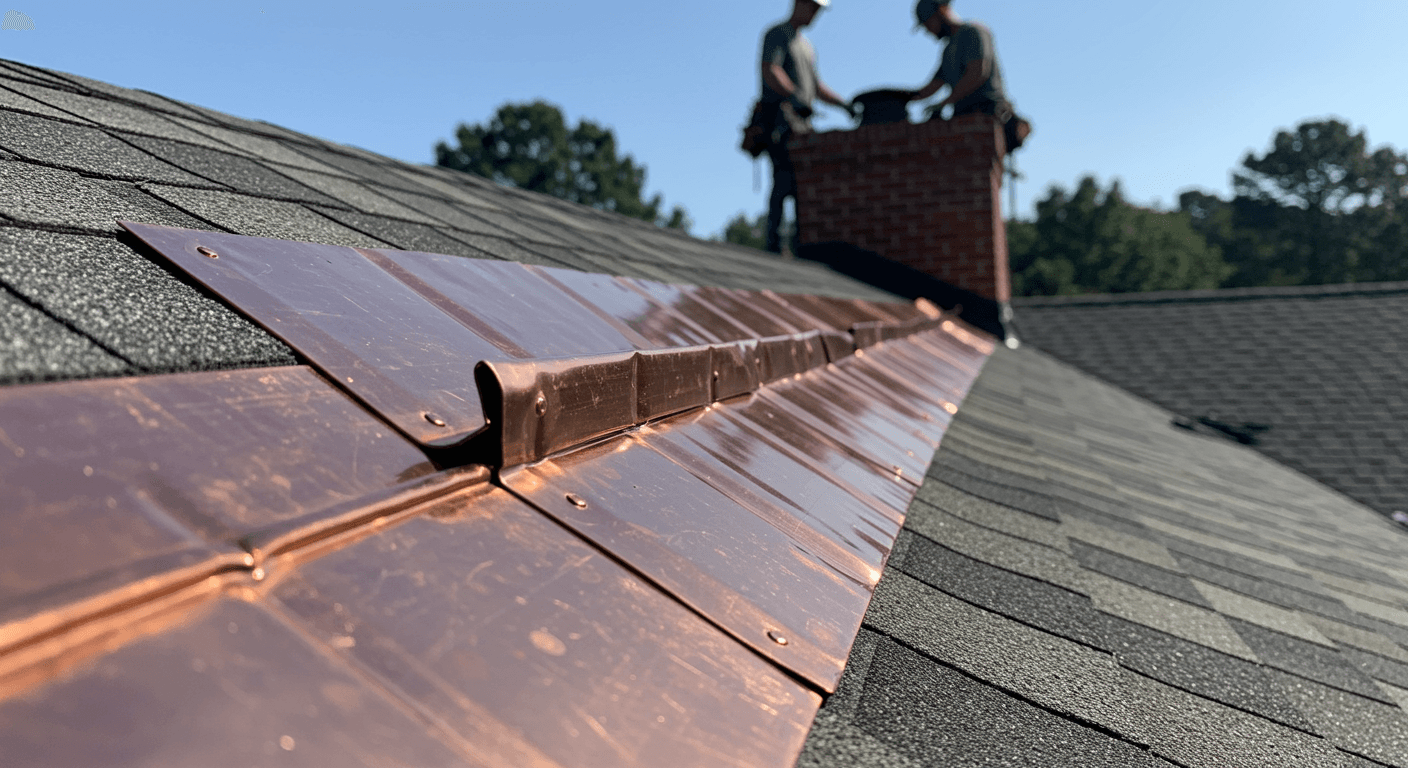
Most owners in the Heart of Dixie believe that as long as they are following basic building code on flashing, their liability ends once the crew climbs down the ladder. I was sitting across from Jaxon, a sharp operator running a $3.7M shop out of Birmingham, who was staring at a $4,840 repair bill for a job his team "finished" only 14 months prior. It was not a material failure. It was a systemic misunderstanding of how Alabama's 56-plus inches of annual rainfall interacts with high-heat thermal expansion. Jaxon thought his veteran crew knew the nuances of counter-flashing, but the reality was that they were treating a Huntsville luxury home the same way they would treat a basic ranch in a dry climate. This is not just about water. It is about the $12,700 average annual loss per crew due to avoidable waterproofing callbacks.
At a Glance
Premium flashing techniques reduce callback rates by 34%, protecting your net profit margins on high-ticket residential jobs.
Training crews on Alabama-specific thermal expansion prevents sealant fatigue in the 90-degree-plus summer heat.
Using waterproofing as a USP (Unique Selling Proposition) allows estimators to justify bids that are 12% to 18% higher than "tailgate" competitors.
Documenting superior flashing stages via photo apps provides a powerful closing tool during the final sales presentation.
The High Cost of "Good Enough" in the Alabama Climate
When I consult with shops from Mobile to the Tennessee Valley, I see a recurring pattern. Owners focus heavily on the shingle brand but treat flashing as an afterthought, often letting the youngest guy on the crew handle the most sensitive transition points. In the Alabama market, this is a recipe for financial bleeding. Our state faces a unique cocktail of high humidity, intense UV exposure, and rapid temperature swings that can cause metal and wood to expand at vastly different rates.
If you are using standard plastic cement as your primary defense around a chimney in Montgomery, you are essentially gambling with your reputation. I have looked at P&L statements for dozens of local firms where the "Warranty Labor" line item was eating 6.3% of their total revenue. By shifting to a high-performance flashing strategy, those same companies can drop that number below 1.5%. That delta represents pure profit that belongs in your pocket, not in a repair truck's gas tank.
The Alabama Armor Method: Beyond Step Flashing
During a training session with a crew in Hoover last month, I noticed they were skipping the crucial step of "kick-out" flashing at the gutter line. They figured the underlayment would handle it. In our region, where a single afternoon thunderstorm can dump 3 inches of rain, that lack of a $15 piece of metal leads to rotted siding and structural claims.
We need to talk about the "Alabama Armor" approach. This involves moving beyond the bare minimums. For example, instead of relying on a single bead of caulk, top-tier Alabama shops are moving toward two-piece counter-flashing systems. This allows the roof and the masonry to move independently without breaking the water-tight seal. When you explain this level of detail to a homeowner in Mountain Brook or Madison, you are no longer a commodity. You are an expert.
I often tell my trainees that the best sales tool is a piece of copper or heavy-gauge aluminum flashing that has been properly bent. When you show a prospect the difference between a "standard" install and your "weather-locked" system, the price objection often disappears. They aren't buying shingles; they are buying the fact that they won't have to call you back when the next hurricane remnant rolls through.
The "Wet-Seal" Sales Close
"Keep a "failure kit" in your truck containing a piece of dried, cracked cheap sealant and a rusted, thin-gauge flashing. Contrast this with your high-spec materials during the estimate. I have watched sales reps increase their close rate by 22% simply by letting the customer feel the difference in material weight and flexibility."
Training for Zero-Defect Transitions
You cannot expect a crew to master these details without a structured framework. I am a big believer in the NCCER training standards because they provide a universal language for craftsmanship. In Alabama, where the labor market is as tight as a drum, bringing in a green roofer and putting them through a specific "Waterproofing Certification" within your company builds loyalty and reduces errors.
Safety and quality are two sides of the same coin. While your team is focused on the technical aspects of the valley or the rake edge, they must remain anchored in safety protocols. Following the OSHA Stop Falls Campaign guidelines ensures that your most skilled workers—the ones who actually know how to wrap a chimney correctly—stay on the job and out of the hospital. A single fall doesn't just hurt the worker; it can freeze your operations for weeks during peak season.
Action Plan
Implementing the Alabama-Specific Waterproofing Protocol
A systematic approach to waterproofing that eliminates callbacks and protects your profit margins through Alabama-specific installation techniques.
The Thermal Gap Audit: Inspect every masonry transition for a 1/4-inch expansion gap before installing the counter-flashing to account for Alabama heat.
Double-Layer Valley Protection: Install a self-adhering ice and water shield 36 inches wide under the metal valley lining, regardless of the pitch.
Kick-Out Mandate: Require kick-out flashing on every wall-to-gutter transition. No exceptions.
The Photo-Finish Verification: Crews must upload a close-up photo of the finished flashing at three key points (chimney, valley, and rake) before the job is marked complete in your CRM.
Want to skip the manual work and get exclusive, verified leads instead?
Get $150 in Free CreditsThe ROI of Superior Craftsmanship
I recently worked with a contractor named Adrian in Baldwin County. He was struggling with the high winds off the Gulf. We revamped his entire flashing spec, moving to a heavier 26-gauge metal and a triple-seal process for pipe boots. His material cost per job went up by about $315.
However, his sales team used this "Coastal Guard" package to justify a $2,400 price increase per roof. Not only did his margins improve by over $2,000 per job, but his referral rate from neighboring homeowners jumped by 31%. People talk. When a neighborhood gets hit by a tropical depression and only one roof isn't leaking, everyone wants to know who the contractor was.
If your current lead flow is not giving you enough high-margin opportunities to showcase this kind of quality, you might need to rethink your acquisition strategy. I have seen shops transform their pipeline by focusing on exclusive, verified leads rather than fighting over the same low-margin scraps.
The Caulk-Only Trap
Never use "caulk-only" flashing solutions in Alabama. The high UV index in cities like Mobile and Montgomery will degrade standard silicone or thermoplastic sealants in as little as 3.5 years, leading to "ghost leaks" that are nearly impossible to track down.
Changing the Conversation from Price to Performance
The goal is to move your business away from being a "shingle installer" and toward being a "building envelope specialist." This starts with the estimate. If your proposal looks like everyone else's, you will always be judged on price.
When you sit down with a homeowner, don't just talk about the color of the roof. Talk about the "critical transition zones." Explain how you handle the dead valleys and the dormer tie-ins. If you are worried about how to price these premium services, check our frequently asked questions about lead costs and market positioning.
By the time Jaxon, the owner I mentioned earlier, implemented these changes, his company's reputation in Birmingham did a 180-degree turn. He stopped being the "guy who's okay" and became the "guy who does it right." His crews are happier because they aren't spending Friday afternoons fixing mistakes, and his bank account is healthier because he's finally charging what his expertise is worth.
If you're ready to see how a more consistent flow of high-quality leads can help you scale these better practices, feel free to get in touch with our team.