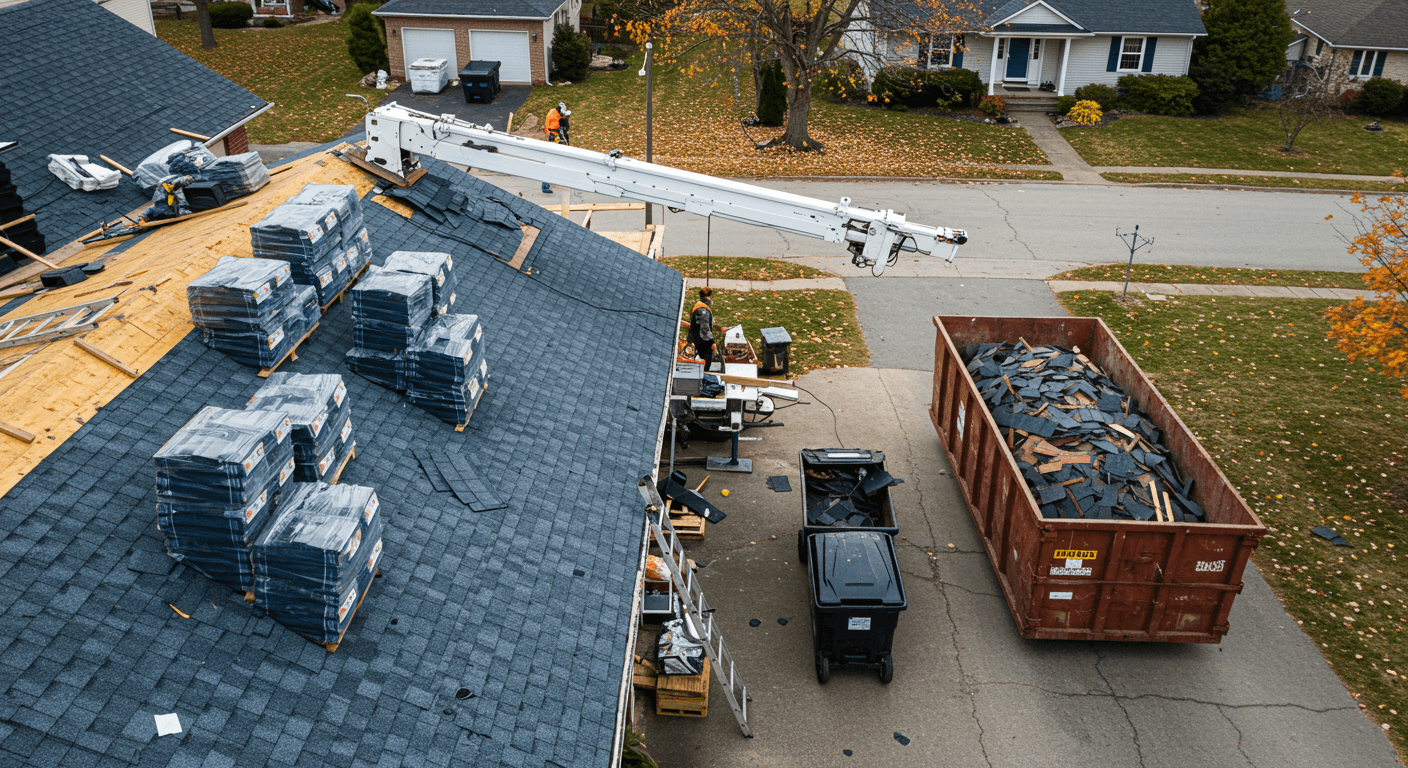
One approach to a 28-square roof in Lansing is ordering 33 squares so nobody runs short, which can throw hundreds in shingle cost into the dumpster before the first nail. Another model, common among tighter Michigan shops, uses 3D aerial measurements to land near 29.4 squares and leaves a small stack for ridge, starter, and odd cuts. That kind of gap in material overhead can eat the entire net margin on a mid-sized company if you let it ride all season.
Stop calling the overage a safety net and start calling it margin recovery. Over-ordering is not insurance against a second supplier run. It is a quiet tax on growth, and it shows up on every statement whether you name it or not.
High-volume markets forgive a lot until someone lines up supplier invoices against installed squares.
The hidden cost of "just in case" ordering
A lot of Detroit metro crews treat a 10% to 15% waste factor like gravity. Valley cuts, starter, and the occasional mashed bundle feel like they require a double-digit cushion. The IBISWorld roofing contractors industry report frames materials as one of the most volatile cost lines in the trade. When you are paying up for architectural laminate or heavy ice-and-water detail for Michigan winters, that extra 15% is not scrap in a pile. It is cash.
I recently walked procurement for a Grand Rapids shop that averaged 16.4% variance between estimates and actual burn. On a typical $14,500 insurance scope, that habit was costing roughly $942 in profit tied to bundles that walked, got damaged, or never opened. After we tightened measurement and ordering, the same crew band landed near 5.1% inside four months.
Material efficiency benchmarks
Tight takeoffs usually pull the old 15% cushion down under 5% without sacrificing install quality.
A simple return-to-warehouse rule for unopened bundles can put four hundred dollars or more back per job.
Cleaner intake (verified dimensions, pitch, layers) removes the hidden tax of surprise cut-ups.
Lower waste lets you bid sharper on retail work without sneaking labor downward.
Why Michigan weather compounds waste issues
Freeze-thaw markets like Traverse City or Ann Arbor do not let you cheap out on accessories. You run more ice and water, more drip edge, and ventilation that can handle cold snaps. Those parts cost more than basic felt and three-tab, which means over-ordering hurts faster.
When synthetic underlayment or specialty ridge vent sits in the excess pile, you pay three times: the part, the handling time, and the haul when it ages out unused. Recent roofing market statistics from ConsumerAffairs echo what owners already feel in the field. Demand stays busy, but the shops that float through slow patches are usually the ones with disciplined ops. In Michigan, where the season is short, every extra return run or dumpster full of bad cuts is an hour you did not sell somewhere else.
Ordering strategies: guesswork vs. precision data
| Metric | Safety factor habit | Precision data habit |
|---|---|---|
| Average waste factor | 14% to 17% | 4% to 6% |
| Net profit per square (illustrative) | $82 | $118 |
| Annual material loss at $2M revenue (illustrative) | $124,000 | $38,500 |
| Inventory posture | Chronic overbuy | Just-in-time with guardrails |
Average waste factor
Net profit per square (illustrative)
Annual material loss at $2M revenue (illustrative)
Inventory posture
Illustrative spreads based on shops I have audited; your exact dollars will move with supplier pricing and crew skill.
Dumpster audits treat the symptom
Digging through trash to shame the crew might surface drama, but it will not fix bad takeoffs. Start at estimating and ordering, or you are paying for the same scrap twice: once at the supplier and again in labor to manage the mess.
Stop the fire drill before it starts
Waste is usually decided at the desk, not at the blade.
Tape measures and hand sketches almost guarantee a padded waste factor. One owner I work with, Jaxon, found estimators rounding every line to the nearest five feet. On a 30-square job that quietly stacked about 4.5 squares of imaginary roof. Aerial reports piped straight into ordering software returned over $18,000 in the first quarter simply because purchase orders finally matched reality.
Intake quality matters the same way. If you are quoting off vague notes, you pad. Crews that pair tight field data with how verified leads are described before dispatch tend to order closer to true footprint because the surprise gable already surfaced upstream.
The unopened bundle rule
"Log every sealed bundle that comes back to the yard and tie it to a crew bonus pool. Finish clean, install tight, and the team shares a slice of what used to land in the roll-off. It makes margin defense a crew habit, not a lecture."
Redefine the staging plan
Waste is not only about how many squares you buy. On tight Grand Rapids lots, bundles get dropped where forklifts fit, then moved two or three times before they hit the deck. Each move adds split wrappers and creased tabs.
Staged-to-roof delivery, boom placement on the ridge when the supplier can do it safely, cuts handling damage in the shops I track by high single digits. It also stops the overnight driveway pile from shrinking because a few bundles grew legs.
Action Plan
Margin recovery plan for the busy season
Replace gut feel with a repeatable loop: compare what you bought to what you installed, then fix the step that invented the gap.
Audit the last ten closes: match supplier invoices to aerial square counts and note every overage bundle.
Split the variance: estimating rounding vs. field cutting vs. shrinkage so you know which lever to pull first.
Move to digital takeoffs, kill estimator rounding, and order bundle-level counts with a fixed 3% valley and detail buffer.
Stock small parts (flashing, boots, vents) in a truck bin so every job does not trigger a full-cart impulse buy.
Review lead sources with your sales lead so quotes include pitch, layers, and footprint before materials get ordered.
If you want the plain-language rules on previews, refunds, and territory locks, our FAQ on how LeadZik works is the fastest place to get aligned before you change ordering habits.