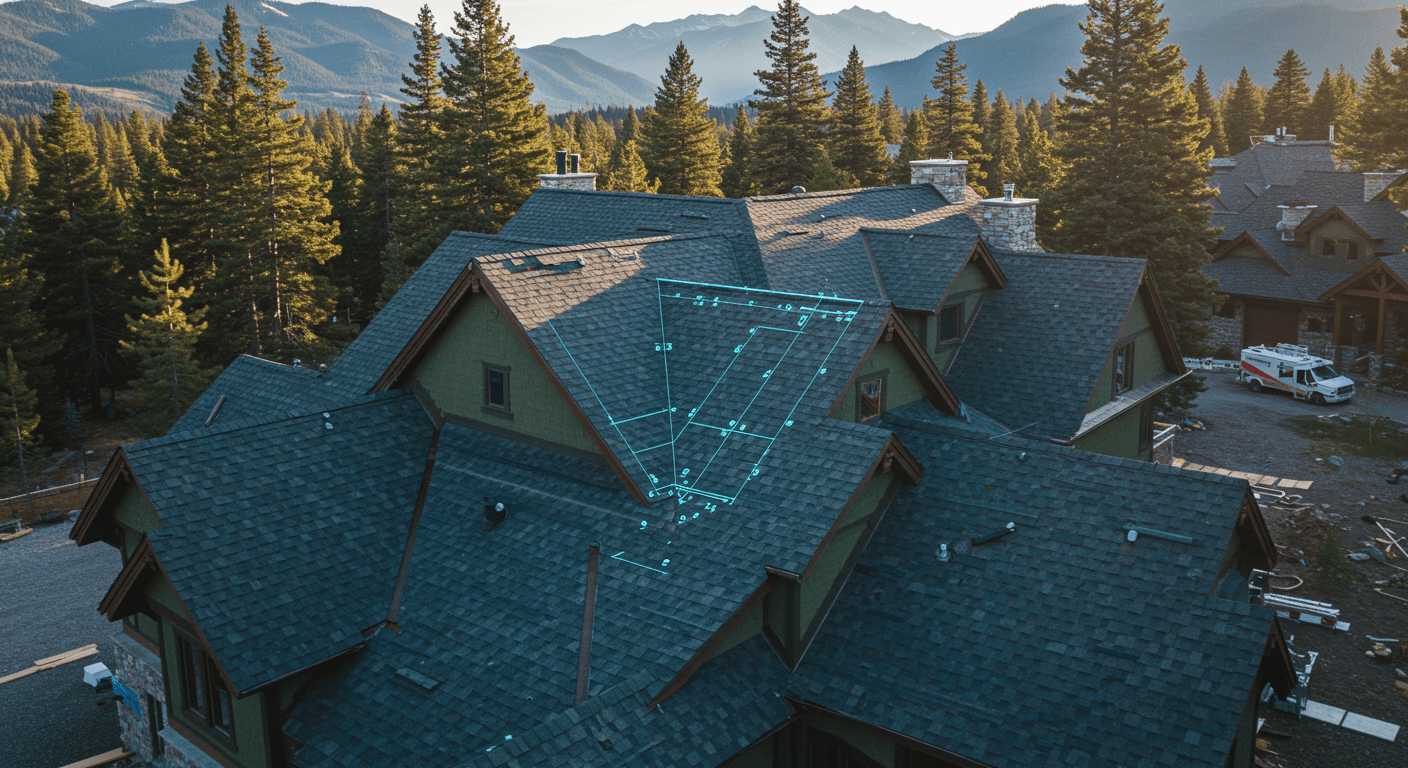
Across specialized Montana roofing crews, roughly 11.4% of billable hours still disappear into ladder moves and hand revisions that modern aerial data could retire. Shops earning in Billings and Missoula are reallocating software budgets because the pain is not slower proposals anymore. It is net profit bleeding when a rep burns 90 minutes on a steep-slope job in Great Falls and the waste factor was high by 6.5% from the first pass.
The lie is subtle: treating the measurement packet like a sales shortcut. The lean shops I watch use it as the production firewall. Owners who only order files on monster jobs miss how early spatial data belongs inside material ordering, distributor releases, and crew staging. Nail that handoff and the same tech line item shows up as roughly 12.8% margin breathing room once fire drills slow down.
What changes when production owns the file
Push verified takeoffs into purchasing and staging, because teams that do average near 8.4% less material overrun than guess-and-adjust bidding.
Pair remote measurements with tighter dispatch rules so a 60-mile territory does not automatically double fuel and labor just to "confirm" what the drawing already proved.
Carry one CAD-backed source into insurance closeouts to defend supplements, with strong shops logging about 14.2% more approvals when evidence matches the first story told on site.
The price of the tape-measure ego
Accuracy without throughput is still a payroll problem.
Last fall I spent a week with a Bozeman sales floor. A veteran rep, call him Vance, treated two hours on the roof with pitch gauges and a long tape as proof of craft. His numbers were tight, but he lived at two appointments a day while nearby teams stacked five. Manual work felt safer to him, yet on a sharp 12/12 the error band from hand methods often lands near 7.3% once hips, waste, and accessory counts compound.
Multiply that across forty-five reroofs a year and you lose more than hours. You fund extra material, rushed supplier runs, and crews parked waiting on corrected counts. Guidance from the National Roofing Contractors Association (NRCA) keeps tying durability and fewer callbacks to tight specifications. In Montana, short weather windows mean you cannot absorb a crew standing down because someone shorted a valley by fourteen feet.
The miss usually hides inside a bundle count that looked fine on the ground. Production pays for it before finance sees the trend line.
Production-first measurement habits
Buy the report when the job is real, not when you have a hunch.
Reactive ordering is the default: wait until the deal feels big, then scramble for a drawing. High earners pull a verified file on every qualified appointment because operations, not sales, extracts the value. With a CAD the production lead trusts, staging tracks bundle positions, valley metal, and tear-off logistics without a second guessing session at the yard.
Out of Kalispell, one long distributor run can chew ninety-five minutes. Avoiding a single short order often pays back more than $340 in combined fuel and idle labor. Reframe the thirty-to-fifty dollar report cost as insurance against an unnecessary second visit or an emergency supplier loop. When homeowner intent is already strong, pairing the drawing with verified lead intake lets you lock specs while momentum is hot instead of rediscovering gaps after someone signs.
The fuzzy square-count trap
Eyeballing satellite thumbnails without a verified takeoff tends to underbid complex eaves and rakes by nearly 5.8% once accessories and waste settle in. That gap rarely shows up in the kitchen; it shows up when the crew opens the deck.
Sales-only vs production-first aerial files
| Decision point | Chase speed in the living room | Anchor purchasing and crews |
|---|---|---|
| Trigger to order materials | After verbal yes, during firefighting | While staging begins, before pallets move |
| Who trusts the numbers first | Rep defends sketch while ops double-checks | Production lead signs the count once, early |
| Long-distance bids | Scout drive before numbers feel real | Virtual pass filters long shots before wheels turn |
| Insurance packet strength | Photos without unified linework | CAD mirrors adjuster sketch language |
Trigger to order materials
Who trusts the numbers first
Long-distance bids
Insurance packet strength
Distance is the silent competitor
Virtual scouting beats burning miles on maybes.
Running Helena toward Butte teaches harsh math fast. Measurement packages give you a disciplined preview before the first physical touch. Review the drawing and you surface anchor plans, low branches overhanging deliveries, and flashing nuance that deserves an experienced foreman before you promise a calendar slot.
This is not flexing tech for fun. It is how rural-heavy operators hold cost-per-opportunity flat while stretching radius. When you can bid accurately fifty miles out without a reconnaissance day, the fuel line on the P&L stops swinging with every maybe lead.
The 48-hour supplement push
"Drop the professional CAD into your first insurance packet as Exhibit A. Teams that deliver that linework within about two days of inspection see supplement approvals climb near 19% because the adjuster works from the same geometry the homeowner already saw."
Let data coach the kitchen-table talk
Transparency reads as competence, not laziness.
Reps worry a report makes them look hands-off. The opposite tends to play out. When Vance walked a homeowner through a sharp 3D skin of their own roof with inch-level counts, the conversation tilted from haggling to understanding. Shops that open with that clarity average about 12.4% higher closes in my tracking because price debates shrink once the math is shared on screen.
If your funnel volume looks fine but sign rates stall, the bottleneck may sit between lead quality and field capacity. Use the contact page to line up intake timing with how fast your crews can execute what you promise on the tablet.
Action Plan
Wire the report into the job before shingles move
Use this sequence when you want the same drawing to steer sales, purchasing, and field leads instead of living in three different PDFs.
Qualify the lead, then order the aerial package while scheduling still has flexibility.
Coach the rep to present the 3D model as the shared map for waste, accessory counts, and upgrade options.
Have production translate the takeoff list into distributor releases tied to delivery dates and laydown zones.
Hand the crew lead the diagram for anchors, ladder points, and staging before wheels leave the yard.
Where measurement software heads next
Machine learning plus imagery tightens pre-qualification.
Editorials in Roofing Contractor keep pointing toward AI overlays that flag bruising and mechanical damage straight from drone or satellite feeds. For Montana owners the payoff is operational: pre-qualify storm replacements before you commit travel time. Picture 88% confidence that a Belgrade roof is a carrier-grade replacement before you stage ladders against the eaves.
That shift does not replace field verification. It gives your dispatch desk a smarter filter so scarce labor chases jobs that match how you like to build.