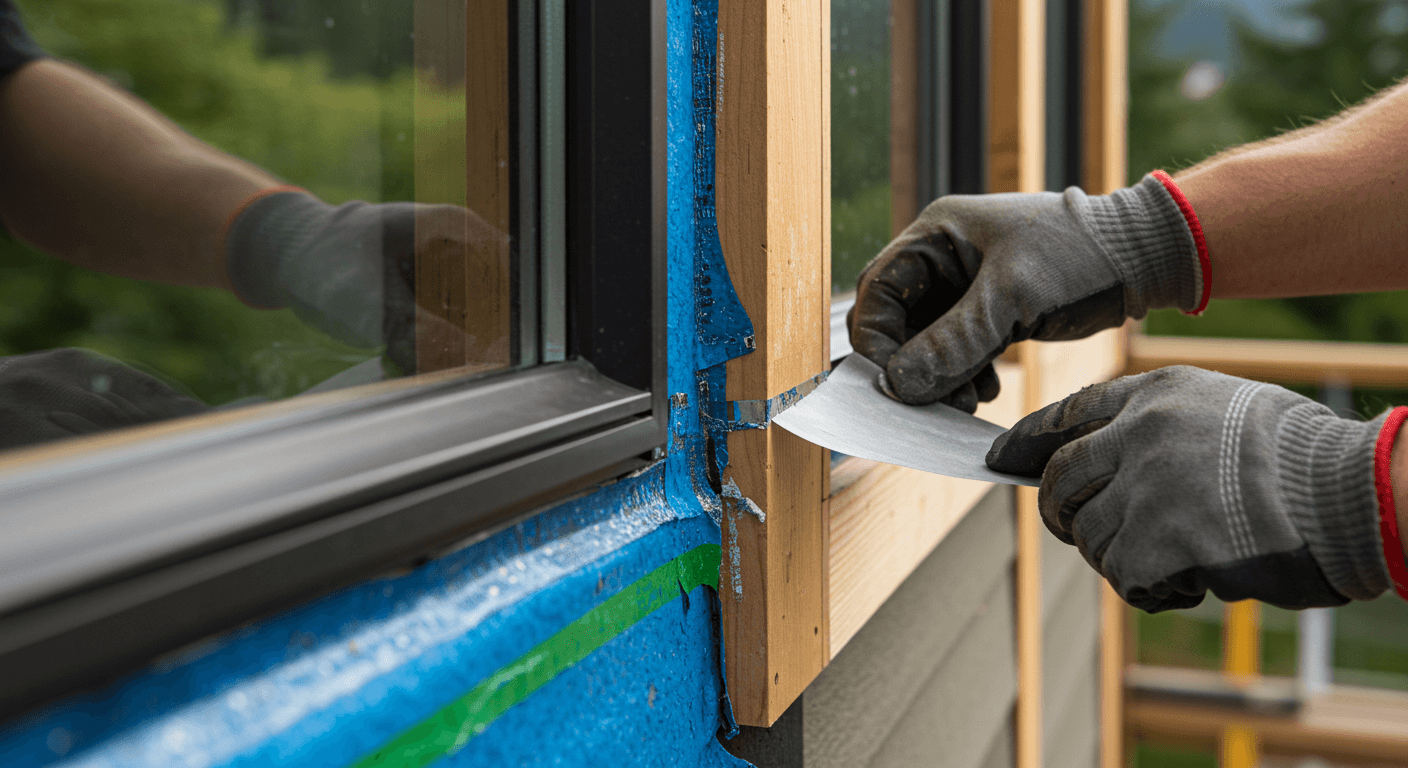
Window and siding markets up and down the West Coast are changing what counts as social proof. From salt air in Oregon to inland heat in California, a polished after photo alone rarely answers what buyers actually ask about: envelope integrity, drainage, and long-term performance. In places where Title 24 and moisture management are part of everyday conversation, a pretty elevation can read like empty marketing.
Across recent West Coast cohorts we track, shops that paired process photos with finish shots saw roughly 76.2% stronger conversion from qualified estimate to signed contract, while average customer acquisition cost improved about 19.3% once ads and sales decks used the same evidence. The pattern is consistent: teach with pictures, then close on scope.
What homeowners infer from your photo set
| Signal | Finish-only gallery | Process + finish proof |
|---|---|---|
| Shows WRB and flashing sequence | Rarely visible | Documented before cover |
| Explains why your price is higher | Looks interchangeable | Ties labor to spec |
| Filters curiosity clicks | Attracts price shoppers | Pulls owners with real failures |
| Supports Title 24 and performance talk | Mostly cosmetic | Links to measurable ratings |
Shows WRB and flashing sequence
Explains why your price is higher
Filters curiosity clicks
Supports Title 24 and performance talk
Use the same frames in ads, GBP, and the kitchen table iPad so the story stays consistent.
Why a finish-only gallery leaks revenue
Many owners still assume great photography means hiring someone for wide hero shots of a completed install. After 6.5 years comparing lead-to-close data for exterior contractors, that assumption costs money. Beauty shots alone do not filter for buyers who care about technical performance, so you pay to educate people who were never going to buy your spec.
A Willamette Valley siding company I will call Zane had a sharp site full of stunning homes, yet $18,400 bids stalled and closes sat near 14.8%. Finished photos made him look like any low bidder who might skip the weather-resistive barrier. Once we documented the rainscreen and tape details, closes climbed to 21.4% with no price cut because prospects could finally see what they were funding.
Presentations that open with failure, layering, and detail before the glamour shot reduce rework on scope and shorten trust building.
Align visuals with performance language
If you want to escape pure price fights, your capture plan should reflect how regulators and manufacturers already talk about windows and walls. Start from the DOE resource hub on windows, doors, and skylights so your field shots match the performance story you tell indoors. For windows, that means flashing corners, sill panning, and foam that backs up your air-sealing claim, not just a crisp frame profile.
When you show a rough opening next to a properly sealed assembly, you can point to DOE energy performance ratings such as U-factor and SHGC without sounding like a brochure. The conversation shifts from sticker shock to operating cost during the next heat wave, which is where you want it for coastal and inland California buyers especially.
Stock creative erodes local trust
Manufacturer library shots and generic Midwestern elevations fail fast in West Coast feeds. Homeowners recognize rooflines, stucco, and plant palettes, and mismatched imagery reads like outsourced marketing, not a crew that knows their neighborhood.
Map captures to the buyer journey
Treat every job as a four-part story you can reuse in ads, follow-ups, and sales calls. Consistency matters more than perfection. Shops that standardize this sequence spend less time re-explaining scope on the phone because the visuals did the teaching first.
Action Plan
Four-stage field capture
Repeat this on every window or siding project so marketing, estimators, and production pull from one evidence library.
Vulnerability: tight shots of rot, failed sealant, fogged glass, or soft sheathing so the problem feels real.
Hidden quality: house wrap, fluid flashing, tape seams, and drainage gaps before siding or trim covers them.
Precision: miters, j-channel cuts, integration with decks or stucco stops, anything that proves fit and finish.
Contextual finish: wide frames that include street cues, hills, or coastal vegetation so the work is obviously local.
Want to skip the manual work and get exclusive, verified leads instead?
Get $150 in Free CreditsWhen that library is tight, you can route higher-intent leads through scoring and alerts without your reps burning cycles on people who only wanted a ballpark. The images set expectation before a truck rolls.
Cheap infrared, real contrast
"A basic IR camera that shows thermal bridging or leaks pairs well with the repaired opening in the same carousel. You are not chasing art direction, you are showing measurable change."
ROI math on disciplined photography
Spending roughly $450 per project for a capture lead or PM add-on is noise when the ticket is $15,800 and the assets sell the next ten jobs. The payoff shows up in CAC, not in the photo line item.
In a Seattle window test, creatives that paired thermal failure with the technical fix beat standard new-glass ads handily. CPL moved from $84.50 to $52.10 when the ad told the same story the estimator later showed on an iPad.
Same audience and spend; the only change was showing failure, detail, and repair in one storyline.
Let the environment justify the margin
Salt in Malibu, steady drizzle around Portland, and Santa Ana dryness all punish the wrong fastener or the wrong detail. When you photograph stainless hardware on a coastal job or extra kickout flashing where decks meet siding, label the frame. You are giving the homeowner a reason your price includes survivability, not just labor hours.
That mindset pairs with marketplaces that reward clarity over volume. If you are tired of opaque bundles, read how LeadZik approaches building a lead marketplace around verified demand so your pipeline matches the same transparency you show in photos.
Carry into your next sales cycle
Finish-only galleries invite apples-to-apples price wars; layered process shots explain premium scope.
Field captures should mirror DOE performance language so U-factor and SHGC conversations feel grounded.
Four repeatable stages (failure, hidden layers, detail, local context) keep ads, GBP, and table decks aligned.
Measured lifts show up in CPL and close rate when creatives match the technical story estimators tell.
Thirty-day implementation
Name a capture lead on each crew, even if it adds ten minutes a day. Their checklist is simple: WRB and flashing photographed before siding or cladding covers it, detail shots at transitions, and a labeled finish frame. Feed those assets to sales nightly so nobody walks into a kitchen table meeting without fresh proof.
On the West Coast, visual proof of competence is often the only buffer between your margin and a race to the bottom. Show the process, keep the language technical but plain, and let the pictures carry the value story.