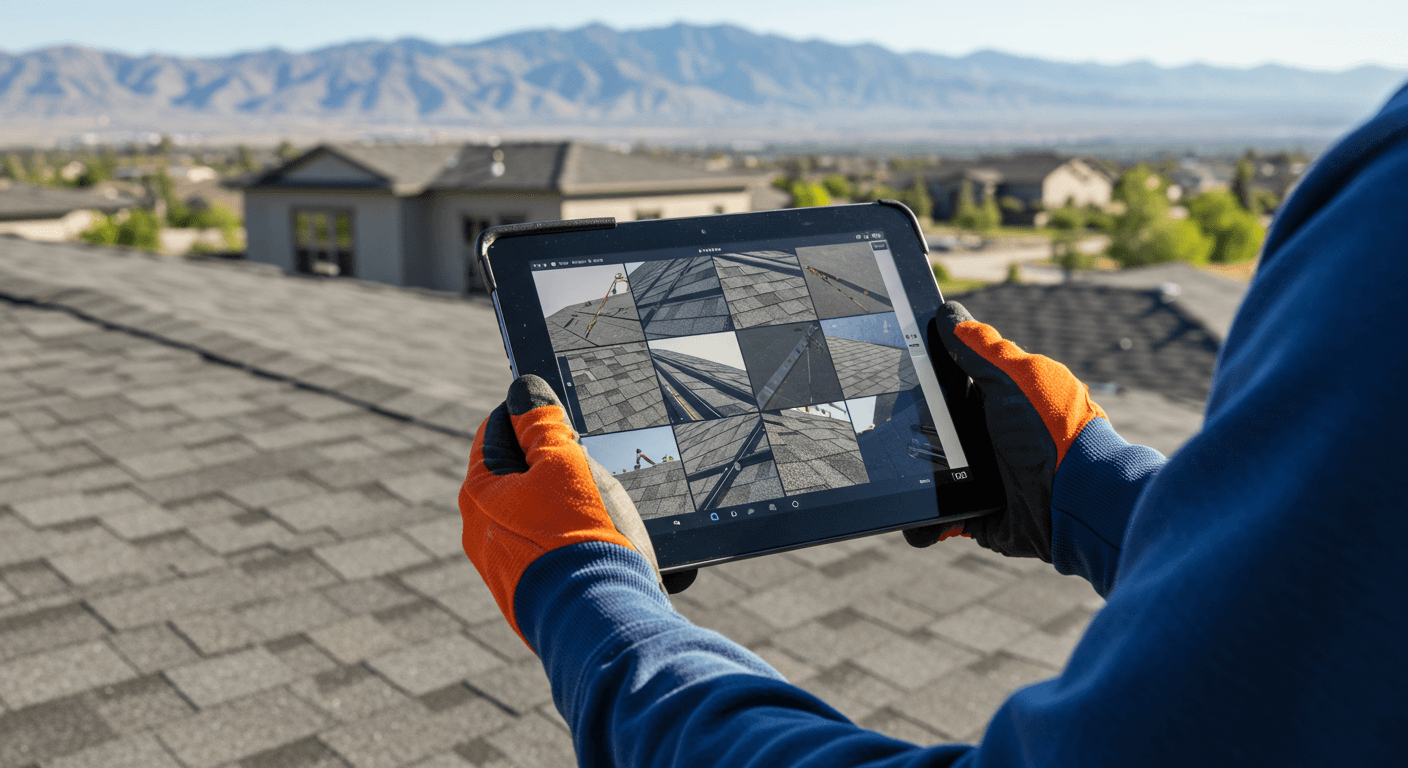
Running a West Valley City roofing shop on instinct, and hoping the lead caught every detail, lands on a different balance sheet than running one on a tight, forty-one point inspection protocol. One path bleeds net margin through warranty callbacks and paid return visits to chase flashing leaks toward Kearns. The other holds a healthier bottom line because valleys and penetrations are photographed before shingles hide the story. The Salt Lake County crews that scale are not magical. They built a system that makes sloppy work expensive and rare.
Most owners I talk to in the 84119 and 84120 ZIP codes say they have a quality problem. Usually it is a data problem. When I reviewed 2023 production notes for a twelve crew operation near the Oquirrh Mountains, the line item called "minor touch-ups" was burning about $9,432 a month. Add the installs that slipped because a crew was back on a drip edge repair in Magna, and the real monthly drag was closer to $27,000.
Table of Contents
Unstandardized crews still finish roofs. They just finance comebacks with labor you cannot bill twice.
Growth past the owner's shadow means moving from "I hope the foreman saw it" to "the protocol made it visible." In West Valley City, gusts off the lake can touch sixty-five miles per hour and ice damming is part of the calendar. Your inspection standard is the buffer between a tight winter and a reputation hit that shows up in online reviews.
The math behind a "small" callback
One unpaid return visit can erase more profit than most owners admit on the whiteboard.
I recently reviewed campaigns where customer acquisition landed near $482 per signed contract. On paper, profit looked fine. Internal files told a different story: twenty-two percent of jobs needed at least one return visit inside fourteen months.
If your average ticket is $14,650 and net margin is ten percent, you are carrying about $1,465 in profit per job. A single paid return visit (fuel, two installers for three hours, small material pulls) in the West Valley City metro often lands near $615. One chimney flashing correction can erase roughly forty-two percent of the profit you thought you banked.
Official outlook data still shows tight supply for skilled roofers, which means every hour your best team spends on rework is an hour not on forward revenue. Read the pressure in the BLS occupational outlook for roofers. Pulling an A-crew off a sold install does not just cost the mobilization ticket. It quietly steals the $4,000 or more in daily production that crew would have captured on a new deck.
When experience becomes a bottleneck
Leaning on one sharp foreman feels efficient until that person is sick, slammed, or pulled into sales. The jobs that slip through are rarely dramatic. They are small misses that show up after the first freeze-thaw cycle.
System A versus System B: audits or the veteran eye
Both can produce a tight roof. Only one keeps quality steady when you add crews.
Legacy Utah contractors often run the veteran eye model. That is the foreman who has been on roofs since 2007 and can feel when a valley is lazy. The skill is real. The weakness is scale. Quality becomes a mood ring tied to one person's calendar, health, and attention span.
Standardized audits trade mystique for repeatability. A junior inspector can follow a checklist with predictable accuracy. I have watched Hunter-area shops flip to a photo-first culture: twenty-five images minimum covering underlayment laps, ice and water at the eaves, valley linings, and high-wind fastening patterns. The photos do not replace judgment. They make judgment portable.
How inspection design changes outcomes
| Factor | Veteran eye oversight | Standardized digital protocol |
|---|---|---|
| Scalability | Capped by one foreman's calendar | Repeatable by any trained tech |
| Typical callback band | 7% to 12% | 1.5% to 3% |
| Documentation | Verbal handoffs and memory | Objective photo evidence |
| Ramp time | Years of field repetition | Weeks on protocol drills |
Scalability
Typical callback band
Documentation
Ramp time
Bands are directional, not guarantees. The point is repeatability beats heroics when you are hiring faster than you can clone your best foreman.
West Valley City climate: wind, ice, and honest details
A mild-climate install checklist will miss the failure modes that show up on the Wasatch Front.
- Six nails where four pass on paper. Manufacturers may allow four nails, but high-wind zones near the West Mountain range respond when you mandate six with disciplined placement through the common bond. Shops that enforced it saw blow-off warranty traffic drop nearly a fifth in the data set I trust most.
- Ice dam defense that reaches past the warm wall. Verify ice and water shield runs at least twenty-four inches inside the warm wall line. Older West Valley attics with thin insulation will punish shortcuts with interior ceiling damage that reads like a five thousand dollar headache.
- Ventilation math, not vibes. Roughly fifteen percent of Utah "roof leaks" I review trace to attic condensation disguised as shingle failure. If your audit skips a measured intake versus exhaust check, you are auditing paint, not performance.
Safety belongs in the same conversation as quality. Crews that follow tie-off discipline are crews that do not rush flashing at dusk. OSHA's Stop Falls campaign is a blunt reminder, but the jobsite truth is simple: predictable harness habits correlate with cleaner nail lines and fewer skipped penetrations.
What actually moves field ROI
Photo documentation at critical transitions catches flashing mistakes while the roof is still open, which is when fixes are cheap.
A mid-project audit plus a final sign-off protects the twelve to fifteen percent net band strong Utah operators target.
Wind and ice specifics belong in the checklist, not in a foreman's head, if you want consistent outcomes from Kearns to Magna.
Lower callbacks keep skilled installers longer because steady sites beat chaotic rework weeks.
Building a zero-callback culture without blaming the crew
Conflicting expectations between foremen read as laziness. Usually it is unclear standards.
I worked with an owner, Jaxon, who was stuck near a nine percent callback rate and assumed his installers were cutting corners. When we mapped work through a digital production board, the crews were following different verbal rules from different leads. Nobody was trying to fail. They were trying to guess which version of "good enough" applied that week.
We rolled out a stop-and-snap rule: before shingles touched the deck, the lead uploaded three photos of starter course and drip edge. Eave-related callbacks fell eighty-seven percent the next quarter. That is not magic. It is alignment.
Alignment starts before metal leaves the yard. If dispatch keeps finding wrong flashing colors or short ridge vent counts, upstream clarity matters as much as field discipline. I send owners who want cleaner packets to LeadZik because the intake shows roof-facing details early, which cuts surprises that waste a morning on a tight Salt Lake County route.
Fifteen minute trailer gate check
"Before a crew loads for a West Valley City install, confirm wind rating, shingle class, and accessory colors against the job packet. Killing a wrong-material start protects the first production block more than any speech in the Monday meeting."
Tech that enforces the standard, not replaces it
Paper clipboards do not survive two million in revenue. Mobile uploads do.
At five or ten million in Salt Lake County competition, you need a mobile-first inspection loop. A tech on the ridge can push images straight into a central portal while the owner audits ten jobs in the time it used to take to drive one site in West Jordan. Remote oversight is how you scale without cloning yourself.
The loop only works if sales intake and production read the same fields. When foremen keep LeadZik on mobile, the audit at week's end matches what the homeowner heard at the kitchen table. That continuity is how you stop arguing about who promised which penetration detail.
Action Plan
Stand up a digital audit lane in one week
You are not rebuilding the company. You are giving every crew the same finish line so variance shows up as data instead of drama.
Pick the three callbacks that hurt margin most last winter and map them to mandatory photo angles.
Assign one production manager as the release gate. No invoice without a complete set.
Run a fifteen minute huddle with foremen using real photos from last week, good and bad, with zero shaming.
Add a mid-roof audit trigger at dry-in so corrections happen before shingles hide the work.
Review one random job file every Friday and score completeness, not speed.
Common Questions
Closing the loop from lead to ridge cap
Systems beat heroics. Then you feed those systems with work that fits how you build.
The shift from working roofer to roofing business owner happens when shingles stop being the obsession and systems become the obsession. West Valley City is too competitive and labor is too expensive to fund free rework.
Compare what you run today with a standardized audit path. If you are not capturing images at each stage, you are betting the company story on memory. Start small: pick your three repeat failure modes and make them photo gates on every file. When production steadies, align sales with jobs that match the standard you finally enforced. That is how Utah winters become proof of your process instead of a tax on it.