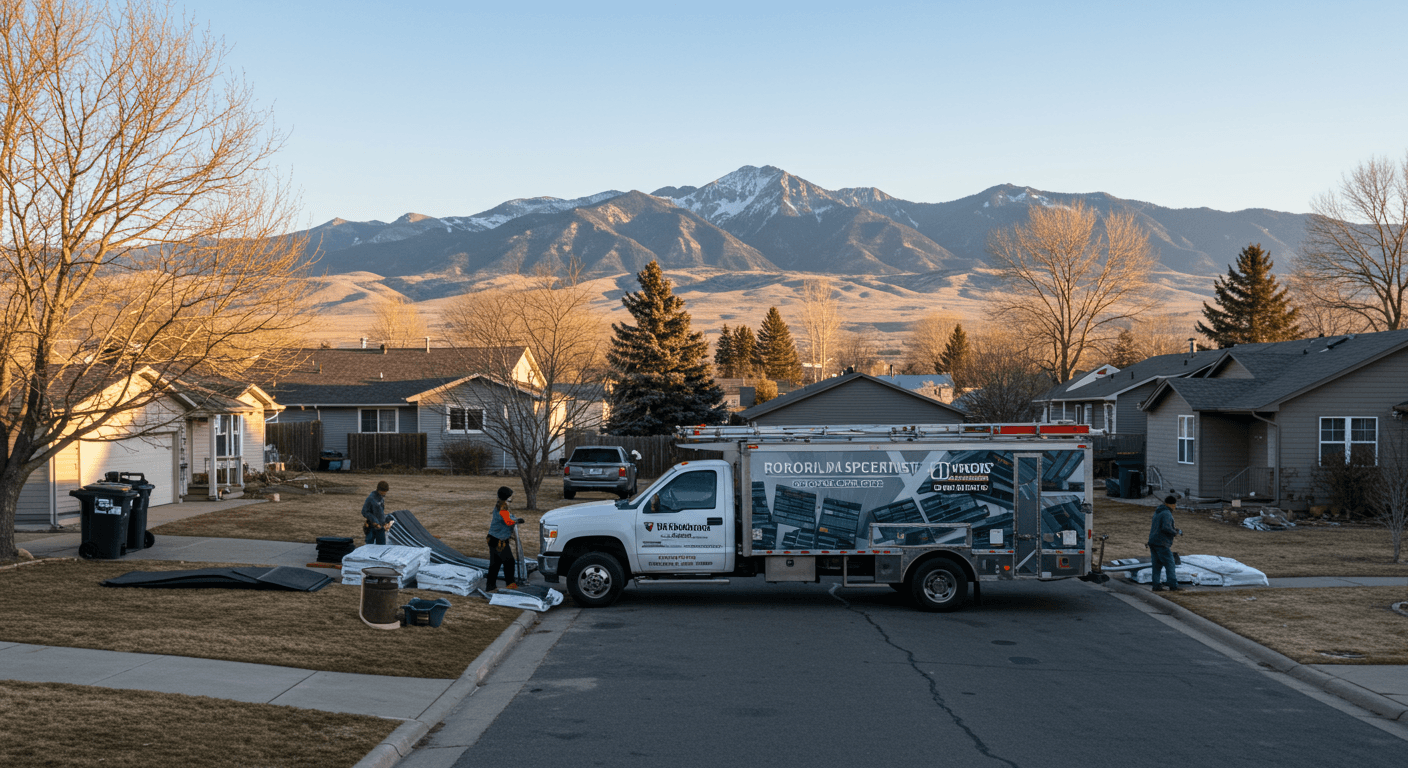
Two separate estimates landed on a kitchen table in the Billings West End last Tuesday, and the gap between them tells the whole story of the Montana roofing market right now. The first contractor, a guy I will call Gavin, bid the job at $13,450 for a standard architectural shingle replacement. He was professional, but his pitch was identical to every other "established" roofer in Yellowstone County. The second contractor bid the exact same roof at $15,825. He walked away with a signed contract and a 15% deposit before he even left the driveway. Gavin lost the job because he was selling a commodity, while the second guy was selling a specific solution for the high-wind conditions we get coming off the Rimrocks.
This contrast is not just about salesmanship; it is about the cold, hard math of Customer Acquisition Cost (CAC). When you look at the latest roofing industry report from IBISWorld, it is clear that market saturation is driving up the cost of generic leads. In a town like Billings, where everyone knows someone with a truck and a ladder, being "reliable and honest" is the baseline, not a brand. If your brand does not scream a specific value proposition, you are forced to pay a "commodity tax" in the form of higher marketing spend and lower closing rates.
I sat down with a shop owner in Lockwood recently who was frustrated that his close rate had dipped to 17.4% over the last six months. We realized his team was spending $485 in marketing and labor hours just to get a single "no" from homeowners who were only looking for the lowest number. By shifting his brand to focus exclusively on hail-resistant Class 4 systems for the local climate, we watched his close rate climb to 26.2% in ninety days. The leads were the same, but the brand authority changed the ROI of every single interaction.
At a Glance
Differentiated brands in Billings see a 31% reduction in CAC by attracting pre-qualified, value-seeking customers.
Specializing in regional-specific solutions, like high-wind or hail-resistant systems, allows for a 8.5% to 12% price premium.
Moving from a generalist to a specialist model increases the efficiency of sales reps, leading to a higher volume of closed deals per lead.
Investing in brand authority acts as a long-term hedge against rising lead prices in the Montana market.
The ROI of the "Specialist Premium"
Most owners I coach in Montana are terrified of narrowing their focus. They think that if they do not market to everyone from Laurel to Shepherd, they are leaving money on the table. The opposite is true. When you are a generalist, your marketing has to be louder and more expensive to cut through the noise. According to Construction Dive, specialized contractors often see significantly higher profit margins because they are not viewed as interchangeable with their competitors.
Let us look at the numbers from a training session I ran with a three-crew operation last year. They were averaging a $12,100 ticket with a 29% gross margin. After we repositioned them as the "Metal Roofing Experts for the Yellowstone Valley," their average ticket jumped to $18,450 with a 36% margin.
The math works out like this:
- Generalist Model: 100 leads @ $125 each = $12,500 spend. 20% close rate = 20 jobs. $242,000 revenue. $70,180 gross profit.
- Specialist Model: 100 leads @ $125 each = $12,500 spend. 25% close rate = 25 jobs. $461,250 revenue. $166,050 gross profit.
By focusing on a niche, this owner did not just make more money; he made his marketing spend more efficient. His CAC dropped because his message resonated deeper with a smaller, more profitable segment of the Billings market. If you are struggling to see these kinds of numbers, it might be time to look at how you are qualifying your pipeline. We offer a 7-point lead verification process that helps ensure you are talking to homeowners who actually value the work, not just the lowest bid.
Commodity vs. Differentiated: The Numbers Don't Lie
| Metric | Commodity Roofer (Generalist) | Differentiated Roofer (Specialist) |
|---|---|---|
| Average Close Rate | 16% - 19% | 24% - 31% |
| Customer Acquisition Cost | $650 - $900 | $400 - $550 |
| Profit Margin per Job | 25% - 28% | 34% - 39% |
| Referral Rate | Low (Price driven) | High (Expertise driven) |
| Sales Cycle Length | 14 - 21 days | 5 - 10 days |
Average Close Rate
Customer Acquisition Cost
Profit Margin per Job
Referral Rate
Sales Cycle Length
Building the "Rimrock Proof" Narrative
In Billings, the weather is your best marketing tool if you know how to use it. Brand differentiation is not about a fancy logo; it is about owning a specific problem in the homeowner's mind. When I am coaching sales reps, I give them a specific talk track for when a customer mentions a cheaper competitor.
"Gavin's quote is definitely lower, and for a standard roof, he does good work," the rep might say. "But we noticed your home sits right on the edge of the Heights where those north-south wind tunnels hit 70 miles per hour every spring. A standard shingle is rated for that, but it is at its absolute limit. We only install a reinforced starter strip and a specific nailing pattern designed for this exact neighborhood. It costs an extra $1,640, but it is the difference between keeping your roof and filing an insurance claim in three years."
This is consultative selling. You are no longer arguing about the price of a bundle of shingles. You are selling "Rimrock Proof" peace of mind. This level of differentiation requires you to have a pipeline of leads that are ready for a professional conversation. If you are tired of chasing dead-ends, you can see how our system filters for these opportunities in our FAQ section.
The 'Hyper-Local' Authority Hack
"Don't just say you're a Billings roofer. Mention specific neighborhoods in your case studies. A project gallery labeled "New Roof in Ironwood" or "Hail Repair in Copper Ridge" carries 10x the weight of a generic "Recent Work" page. Homeowners want to know you've solved problems for their neighbors, not just someone in the same zip code."
The Hidden Cost of Sales Fatigue
One thing owners often overlook is the psychological toll that "price fighting" takes on their sales team. When a rep like Gavin goes out and loses four jobs in a row to a guy who is $500 cheaper, his morale craters. He starts asking for "flexibility" on pricing, which is just a polite way of saying he wants to give away your margin to make his job easier.
When you differentiate your brand, you empower your sales team. They walk into a home in the West End or Lockwood knowing they offer something unique. This confidence is worth at least 3% to 5% in close rate improvements alone. I recently worked with a rep who was about to quit because he was tired of the "I'll think about it" responses. We switched his focus to a "storm-ready" branding package, and his confidence surged. He stopped apologizing for his price and started explaining his value.
If your team is struggling with this transition, it might be because they are fighting the wrong battles with the wrong leads. Sometimes the best way to fix a sales problem is to fix the input. If you need to discuss how to better align your lead flow with a premium brand strategy, feel free to reach out to our support team.
When reps believe in their unique value proposition, they stop competing on price and start winning on expertise.
Payback Period on Branding Investments
Moving from a commodity model to a differentiated brand does have an upfront cost. You might spend $4,500 on new vehicle wraps, $2,800 on a specialized website landing page, and another $3,200 on targeted local SEO. That is a $10,500 investment.
However, if that investment raises your average net profit per job by just $875 (a very conservative estimate for a differentiated Billings roofer), your payback period is only 12 jobs. For most shops in Yellowstone County, that is less than two months of work during the peak season. Every job after that is pure additional margin that stays in your pocket instead of being wasted on inefficient marketing.
The contractors who are winning in Montana right now are the ones who realize that the "Big Sky" is big enough for everyone, but the "Cheap Roofer" niche is crowded and dying. By specializing, you stop being a line item on a spreadsheet and start being the only logical choice for a concerned homeowner.