At a Glance
Standardized documentation can increase average claim supplements by $1,842 per job.
Proper safety protocol integration reduces liability and keeps crews active during peak storm seasons.
Transitioning from "free inspections" to "verified assessments" improves lead-to-contract conversion by 18.7%.
Localized Worcester knowledge, like identifying specific slate-to-asphalt transitions, prevents mid-job margin erosion.
Standing on a steep pitch near Indian Lake, Wesley realized his lead inspector had spent 43 minutes looking at a chimney flash while missing the granule loss on the north-facing shingles entirely. It was a classic Worcester mid-summer afternoon, humid and heavy, and we were looking at a triple-decker that had supposedly been "vetted" for a full replacement. The problem wasn't a lack of effort. Wesley is one of the hardest-working owners I have met in Central Massachusetts, but his "protocol" was essentially a mental checklist that changed depending on how much coffee his crew had drank that morning. This lack of standardization was costing him approximately $1,140 in missed line items per insurance claim.
When we sat down in his office off Shrewsbury Street to look at the numbers, the leak in his bucket became obvious. His team was running 14 inspections a week but only converting 3.2 of them into signed contracts. In a market like Worcester, where the competition is fierce and the housing stock is aging and complex, you cannot afford a 23% closing rate on storm leads. We spent the next 4.5 months rebuilding his assessment protocol from the ground up, focusing on the ROI of every minute spent on a roof.
The High Cost of the "Eyeball" Method
Most contractors in the 508 area code treat storm damage assessments as a necessary evil, a hurdle to jump before getting to the actual work. I see it differently. I see it as the most critical data-collection phase of your entire business cycle. When Wesley's team went out without a rigid protocol, they were essentially guessing. They would spot the obvious wind-creased shingles but miss the subtle soft-metal hits on the vents or the peripheral damage to the gutters and downspouts.
According to my analysis of three similar-sized shops in the region, the "eyeball" method results in a 31% discrepancy between the initial estimate and the final insurance payout. That is money left on the table. In a city with as many historic homes as Worcester, from the Victorians near Elm Park to the dense rentals in Main South, missing a specific architectural detail during assessment means your crew shows up with the wrong materials or, worse, you eat the cost of a change order that the adjuster refuses to cover later.
Due to insufficient photo documentation
Efficiency isn't just about how fast you can nail a shingle. It is about how much revenue you capture per hour of labor. If your inspector spends two hours on a roof and misses $900 worth of legitimate damage, your effective hourly rate for that employee just plummeted. We calculated that by tightening the assessment window to 28 minutes but increasing the data points collected, Wesley could actually run 19 inspections a week with the same headcount, all while increasing the accuracy of each report.
The ROI of Documented Precision
Let's talk about the actual return on investment for implementing a rigorous protocol. A high-quality assessment requires better tools, perhaps a drone for those treacherous triple-decker pitches, and definitely better software. Wesley invested roughly $6,840 in new tablets and a specialized reporting app. At first, he balked at the cost. But let's look at the math we did three months later.
Previously, his average contract value for a storm-damaged roof was $13,420. After implementing a 45-point inspection checklist that included mandatory photos of "collateral damage" (creased siding, dented AC fins, even mailbox damage), his average contract value jumped to $15,263. That is a $1,843 increase per job. Over the course of 47 jobs, that totaled $86,621 in additional revenue. His $6,840 investment paid for itself in less than four weeks.
This level of detail also changes your relationship with adjusters. When you present a 12-page PDF with timestamped, high-resolution photos and GPS-verified locations, the adjuster's job becomes easier. They are less likely to fight you on "gray area" damage because you have provided the black-and-white proof. I have seen this shift happen dozens of times. You move from being a "pushy contractor" to a "professional consultant."
The Collateral Strategy
"Never start your assessment on the roof. Begin at the mailbox and move to the downspouts. If you can prove hail hits on soft metals at ground level, you've already won 65% of the argument before you even pull out your ladder."
Integrating Safety into the Workflow
In Worcester, we deal with some of the most challenging roof geometries in New England. You cannot expect a crew to perform a detailed 45-point assessment if they feel unsafe. This is where operations and safety intersect. I have watched inspectors skip the backside of a house because the terrain was too uneven for a stable ladder set, or the pitch was too aggressive for their footwear.
Integrating OSHA roofing safety standards into your assessment protocol is a profit-protection strategy. A single fall doesn't just hurt an employee, it can bankrupt a mid-sized shop through increased premiums and stopped-work orders. We implemented a "Safety-First Assessment" rule: if the pitch is over a 10/12, the drone goes up first. This allows the inspector to identify the high-probability damage areas from the ground, minimizing the time spent in high-risk zones.
Training your team on the OSHA fall prevention framework ensures that when they do need to be on the shingles for tactile testing, they are doing so with the right equipment and mindset. I've found that crews who feel the company prioritizes their safety are 14% more productive because they aren't constantly fighting the "fear factor" of a poorly secured site.
Scaling the System: From One Truck to Five
The real beauty of a systematic protocol is that it makes your business scalable. Wesley was the bottleneck in his company because he was the only one who "knew" how to spot damage. By codifying his 17 years of experience into a repeatable process, he was able to hire Devin, a former construction lead with zero roofing-specific experience, and have him producing high-quality assessments within 12 days.
This is how you grow a roofing empire in Central Massachusetts. You stop relying on "tribal knowledge" and start relying on systems. When you have a reliable flow of verified roofing leads, you need to know that whoever you send to that property will represent your brand with the same level of technical precision you would provide yourself.
Action Plan
Implementing a 4-Phase Storm Assessment Protocol
A systematic approach to storm damage assessment that maximizes revenue capture while ensuring safety and scalability.
The Perimeter Sweep: Document all soft metals, fencing, and siding. This establishes the "storm footprint" before touching the roof.
The Systematic Grid: Divide the roof into slopes (North, South, East, West). Use a 10x10 square on each slope for detailed hail/wind counts.
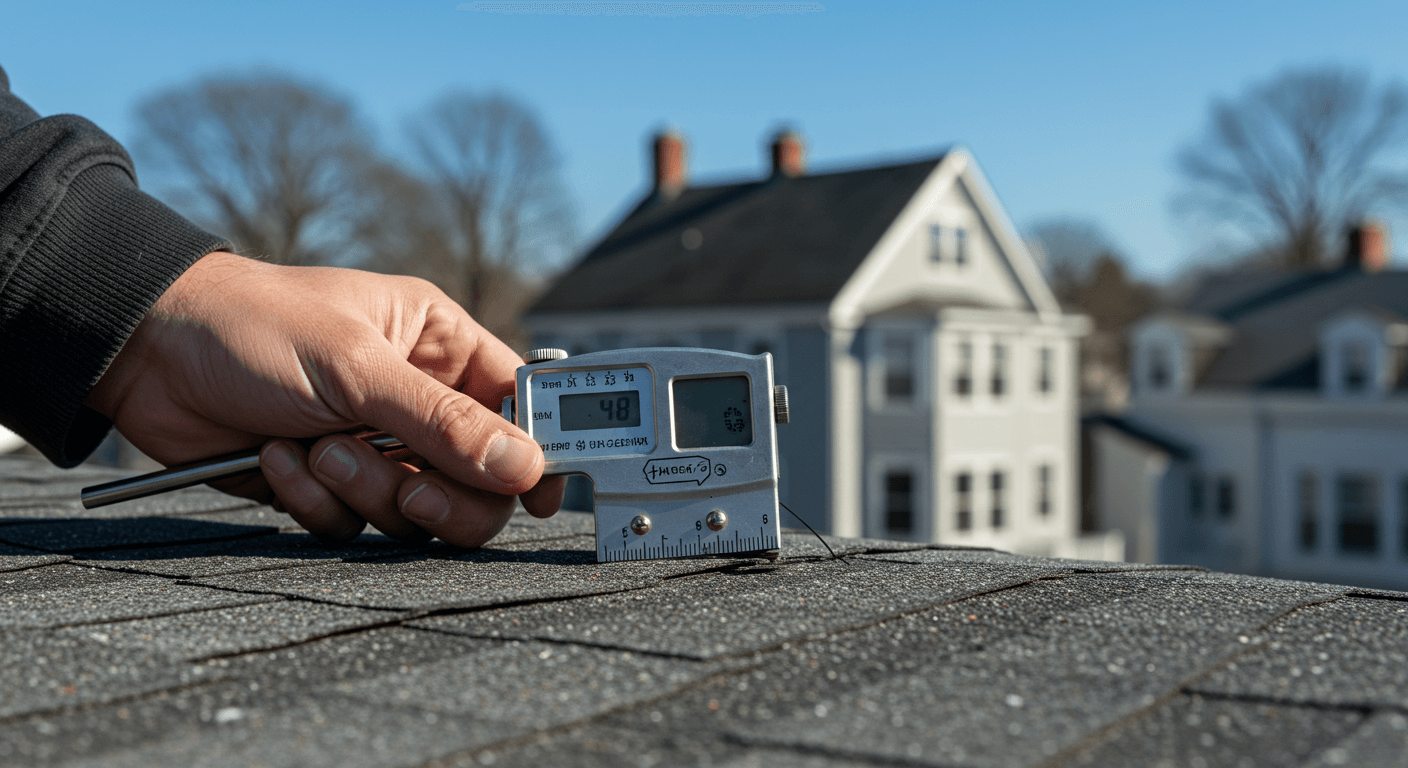
The Photo Standard: Every slope requires 5 specific shots: a wide context shot, two medium-range damage shots, and two macro (close-up) shots with a gauge.
The Instant Review: The inspector must sync the report before leaving the driveway. This allows the office to spot-check for missing data while the tech is still on-site.
Want to skip the manual work and get exclusive, verified leads instead?
Get $150 in Free CreditsWe also looked at the "cost of a callback." In Worcester's erratic weather, a missed leak point during an assessment can lead to a disastrous interior damage claim during the next Nor'easter. We found that Wesley was spending an average of $612 per year, per crew, on "nuisance callbacks" for items that should have been caught during the initial assessment. By adding an "Attic Void Inspection" to the protocol (checking for daylight or water stains from the inside), he reduced those callbacks by 74%.
Navigating the Worcester Market Dynamics
Worcester isn't Boston, and it isn't the Berkshires. We have a specific mix of triple-deckers, ranch-style homes in the West Side, and massive industrial buildings. A "one-size-fits-all" assessment protocol usually fails here. You need to account for the local building codes and the reality of ice damming, which is a significant factor in our region.
When assessing storm damage, you must also look for secondary issues. A hail storm might be the catalyst for the insurance claim, but the ice dam damage from three winters ago might be what actually compromised the decking. If you don't document that accurately, you'll end up in a dispute with the homeowner when you have to charge them for 12 sheets of unexpected OSB.
I've always believed that transparency is the best sales tool. When you show a homeowner in Grafton or Millbury a detailed report that highlights both the storm damage and the general wear-and-tear, you build a level of trust that the "storm chasers" simply can't match. This is the ethos we built LeadZik on—the idea that quality and verification should be the foundation of every roofing transaction.
The Long-Term ROI: Asset Value
Finally, consider the value of your business itself. If you ever want to sell your roofing company, a buyer isn't going to pay for your "gut feeling" about storm damage. They are going to pay for your systems. A company with a documented, high-ROI assessment protocol is worth significantly more on the open market than a "man and a van" operation.
We saw this play out with another client who was able to exit his business for a 4.6x multiple specifically because he could prove his lead-to-contract conversion was standardized across 8 different sales reps. He didn't just sell a roofing company; he sold a revenue machine.
Common Questions
If you're looking for more ways to optimize your back-office operations or want to see how other contractors are handling the current market shifts, I highly recommend checking out our other deep dives on the LeadZik blog.
The shift from being a reactive contractor to a proactive operations strategist doesn't happen overnight. It starts with one clipboard, one checklist, and the realization that every square inch of a roof represents a data point in your profit margins. Wesley doesn't just "look" at roofs anymore. He assesses them. And his bank account reflects that difference.