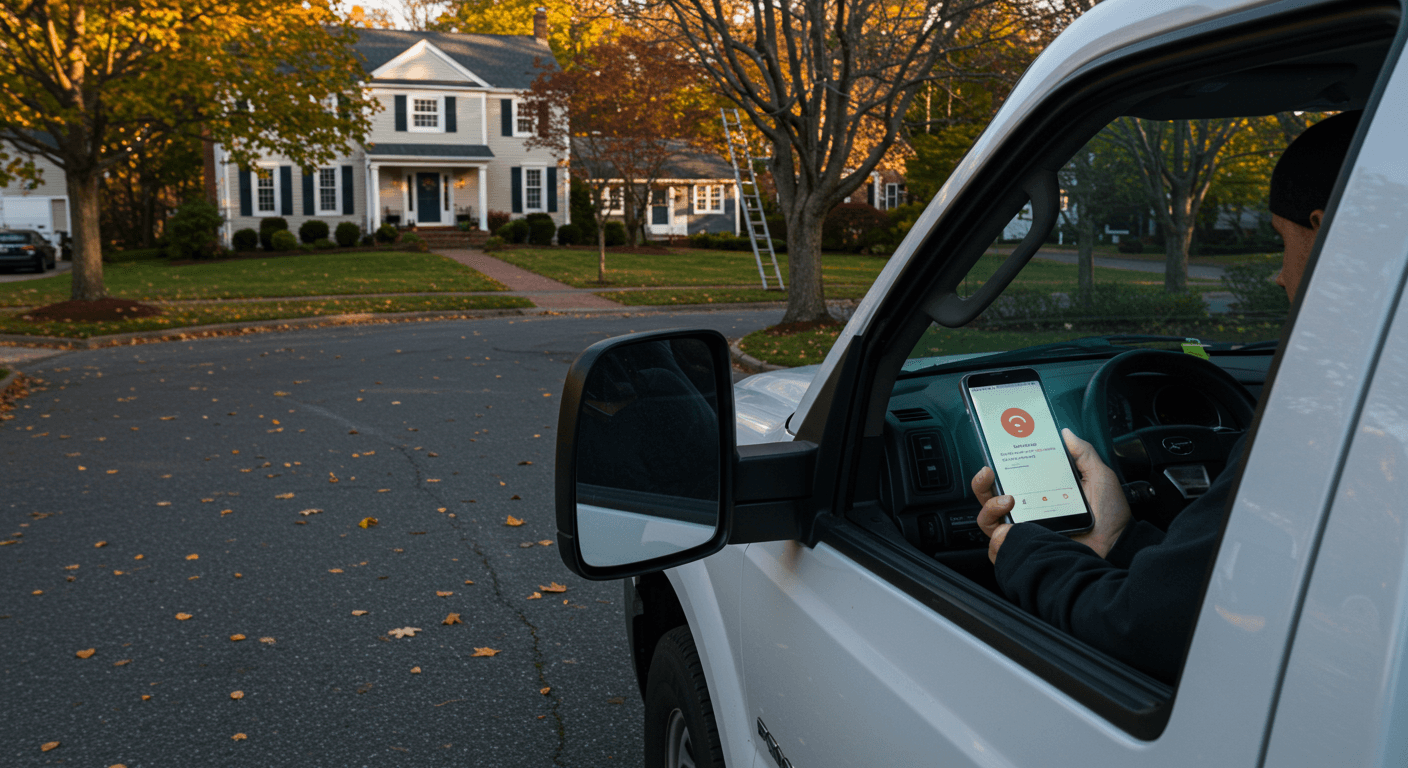
In Connecticut, a homeowner's patience often ends the moment they tap the next search result. In dense markets—Fairfield County historic homes, shoreline storm damage, or urgent leaks in Bridgeport—speed is not a vanity metric. It is the lever that decides who gets the signed contract. I recently reviewed three days of intake logs for a mid-sized shop run by a contractor I will call Preston. He blamed his lead vendors for a fourteen-month slide in "quality." When we lined up CRM timestamps, his average time to first touch on a new inquiry was seventy-four minutes. In that window, most homeowners had already talked to two other roofers and often booked the estimator who answered first.
Running a roofing company here means competing where Home Improvement Contractor registration is mandatory and the I-95 corridor packs in rivals. When someone in Stamford or Greenwich searches for a replacement, they are not looking for a pen pal—they are trying to solve an eighteen- to twenty-six-thousand-dollar problem. If you are not the first voice that confirms you understand that problem, you fade from the short list fast.
What This Means for Your Shop
Roughly four in five roofing contracts go to the first responsive company, even when they are not the cheapest bid.
With thousands of registered HICs statewide, digital leads decay faster here than in many less crowded regions.
Contact within roughly five minutes dramatically improves qualification odds compared with callbacks even twenty minutes later.
Cutting median response time from an hour to a few minutes often lifts revenue without spending another dollar on ads—because you convert what you already paid for.
The Mathematics of Lead Decay in the CT Market
Demand is up, but so is contractor density—treat digital inquiries like perishable inventory.
Aging stock in New Haven and Waterbury plus volatile coastal weather keeps residential demand elevated. The mistake is treating web forms like old-school referrals. Referrals tolerate a relaxed callback because trust is baked in. A paid digital lead is a commodity: its value collapses as minutes pass.
In Preston's Bridgeport data, every minute past the five-minute mark looked like about a hundred dollars in lost gross profit on the jobs he could have won. After an hour, the lead was noise. The homeowner had already moved on—often to a competitor who used LeadZik's mobile workflow to claim the job and dial the moment it landed.
Across Connecticut roofing contractors we benchmark, more than a third of annual revenue potential evaporates when verified leads are not contacted inside the first ten minutes.
Why Connecticut Expects a Faster Response
Regulation raises the bar—your intake has to match the professionalism homeowners already assume.
The Department of Consumer Protection sets a serious tone. That is good for the trade, but it also trains homeowners to expect white-glove service. When exclusive roofing opportunities arrive pre-vetted, the buyer assumes your team will behave like a real business—not like a crew that checks email when the ladder comes down.
You can be deep in OSHA roofing safety expectations on a steep West Hartford slope while your phone signals the next twenty-thousand-dollar opportunity. Without a dedicated speed-to-lead system, you are funding competitors: you buy the lead, lose the race, and they collect the signed contract.
Reactive intake vs. a Connecticut speed-to-lead system
| Factor | Reactive shop | Systemized response |
|---|---|---|
| First human touch | Whenever the owner checks email | Under five minutes, owner or Lead Captain |
| Routing | Shared office inbox | Direct alert to whoever closes |
| Follow-up if no answer | Single voicemail | SMS plus second call sequence |
| Visibility | Gut feel | Weekly CRM audit of time-to-first-touch |
First human touch
Routing
Follow-up if no answer
Visibility
The goal is not heroics—it is removing friction between signal and conversation.
From Reactive Callbacks to Proactive Intake
Preston did not need magic leads—he needed a predictable first touch.
We scrapped the mindset of "I will call when I get off the roof." Instead we prioritized verified job opportunities and assigned a Lead Captain whose only job in the first two minutes was a proof-of-life call: confirm you saw the request, sound professional, and book the inspection window. No deep qualification yet—just proof that your company is awake and competent. That psychological win often stops the homeowner from dialing the next five names.
The double-dial pattern
"If nobody answers your first attempt, wait sixty seconds and call again. In a noisy state, unknown numbers get ignored once; a second ring reads as urgency, not spam. Teams I coach have seen contact rates lift by high teens after adding this habit."
Action Plan
Design a speed-to-lead workflow that survives I-95 traffic
Four moves that shrink the gap between alert and conversation for Hartford-area teams who cannot afford to waste windshield time.
Pipe every lead source into mobile push alerts—email alone will hide under supplier invoices and crew chatter.
Train a thirty-second script: acknowledge the issue, confirm the town and street, and lock an onsite time before the call ends.
If the phone does not connect, fire a personalized SMS within thirty seconds—many Connecticut homeowners will answer a text before they listen to voicemail.
Every Friday, inspect average time-to-first-touch; if it creeps past eight minutes, reassign coverage or add an on-call responder.
Want to skip the manual work and get exclusive, verified leads instead?
Get $150 in Free CreditsKeep Production Discipline While Sales Accelerates
Fast intake should feed a controlled job site—not chaos.
When shops in New Britain chase revenue without guardrails, safety slips and fines follow. Speed-to-lead fills the calendar months ahead so crews run on a plan, not panic. Ground that plan in fall-prevention training through the OSHA Stop Falls campaign so your faster sales engine does not translate into rushed, dangerous installs.
One Norwalk company trimmed median response from nineteen minutes to four; customer acquisition cost fell sharply because they closed more of the leads they already bought—not because ad spend changed.
The office-manager bottleneck
When every form lands in a single shared inbox, the fastest rep in the world still waits on someone else's sorting ritual. By the time a Milford office manager finishes morning triage, the homeowner is three conversations deep with competitors. Route alerts straight to closers and use LeadZik to preview context before you commit spend.
Platforms that let reps review job details before purchasing the lead help you prioritize the highest-value calls the moment the alert fires—instead of after a round of internal forwarding.
Seasonal Spikes in the Northeast
Spring thaw and pre-winter rushes break shops that lack surge capacity.
Volume can triple overnight. That is when slow shops lose twice: they miss revenue in the moment and burn reputation when neighbors compare notes about who ghosted them. An on-call estimator rotation during peak weeks keeps every inquiry inside the five-minute window even when your primary team is buried.
Final Operational Insight
Treat inbound leads like triage, not a to-do list.
Preston eventually drove average response to about six minutes. Close rates on verified leads climbed from 14.2% to 22.8% in one quarter—proof that the constraint was process, not lead quality. In a state where every roof is a billboard, being known as the crew that actually answers is compounding marketing you cannot buy.