Before Wyatt rebuilt his Des Moines siding shop, his marketing line sat near $4,821 a month and still felt like guessing. After he leaned into a community-anchored plan, the same budget supported a 23.4% higher lead-to-close rate because his name showed up at booster meetings and small retail counters, not only inside a generic ad slot. One path leaned on broad auctions. The other stacked small, visible commitments that neighbors could repeat back on a phone call.
The difference was not magic. It was density of proof in a handful of zip codes where his crews already worked clean jobs. When locals can point to your sign two doors down, the first appointment stops being a cold audition.
The Midwest "invisible contractor" trap
Siding crews can finish beautiful work and still disappear the moment the trailer leaves. If every job starts as a price fight, acquisition math gets brutal fast.
For years Wyatt ran a familiar playbook: purchased lists, always-on social boosts, and a hope that the phone would cooperate. Crew quality was strong, but once a job wrapped in West Des Moines, the brand memory thinned out. Each new inquiry meant another five-bid scrap where the lowest number often won the first meeting.
Digital channels can work, yet they rarely create neighborhood thickness on their own. When you cluster several projects on one block, travel and staging time fall and gross margin breathes. Ad platforms cannot manufacture that clustering. Local presence, repeat sightings, and referrals do.
Trade groups such as NARI keep stressing continuing education and peer networks for remodelers because those channels reinforce professionalism where homeowners already shop for names they trust. Wyatt was paying roughly $215 for a single online inquiry while competitors picked up steady calls from a hardware counter and a school fundraiser line. He needed a repeatable way to feel local, not sporadic.
Measured across fourteen months once neighborhood touchpoints replaced pure auction spend while keeping the same basic service mix.
Auction-first spend vs neighborhood-first presence
| Decision factor | Wide digital bids | Tight local presence |
|---|---|---|
| How homeowners first hear you | One-off impressions in a crowded feed | Booster announcements, library flyers, neighbor referrals |
| Depth of trust on day one | Low, you still explain who you are | Higher, they have seen your crews or donations already |
| Sensitivity to seasonal dips | Costs stay flat when demand softens | Local calendar events keep the brand warm between peaks |
| Average time to confident scope | Longer discovery calls | Roughly two weeks faster once recognition replaced cold intros |
How homeowners first hear you
Depth of trust on day one
Sensitivity to seasonal dips
Average time to confident scope
Wyatt still buys some digital, but the mix shifted so paid traffic was no longer carrying the full trust load.
What the Midwest numbers showed
Referral-heavy neighborhoods pulled blended CAC down more than twenty-five points once three zip codes hit repeat visibility.
Sales cycles shortened by about fourteen days when homeowners arrived already associating Wyatt's shop with visible community work.
Average contract value rose roughly $2,800 as fiber cement and upgraded window packages won on confidence instead of coupon chasing.
Seasonal softness hurt less because school and library calendars gave fixed dates to stay in front of the same households.
Quantifying the shift
We started with his books. Marketing sat near $14,320 a month while acquisition cost hovered around $1,400 per sold job. That can work on an $18,000 margin ticket, but it leaves little room for error.
The goal was practical: move acquisition under $1,000 within eighteen months by earning density instead of renting scattershot reach. Vague brand awareness campaigns were off the table. We mapped where Wyatt's ideal homeowner actually spent Saturday mornings, then built touchpoints in those corridors.
The radius rule
"Stop trying to blanket a whole metro. Pick three zip codes where your ticket size and warranty history are strongest, then commit signage, micro-events, and follow-up there for two quarters before expanding again."
Athletics money that actually talks
Passive fence banners rarely move the needle. Active, spoken recognition tied to something useful for students did.
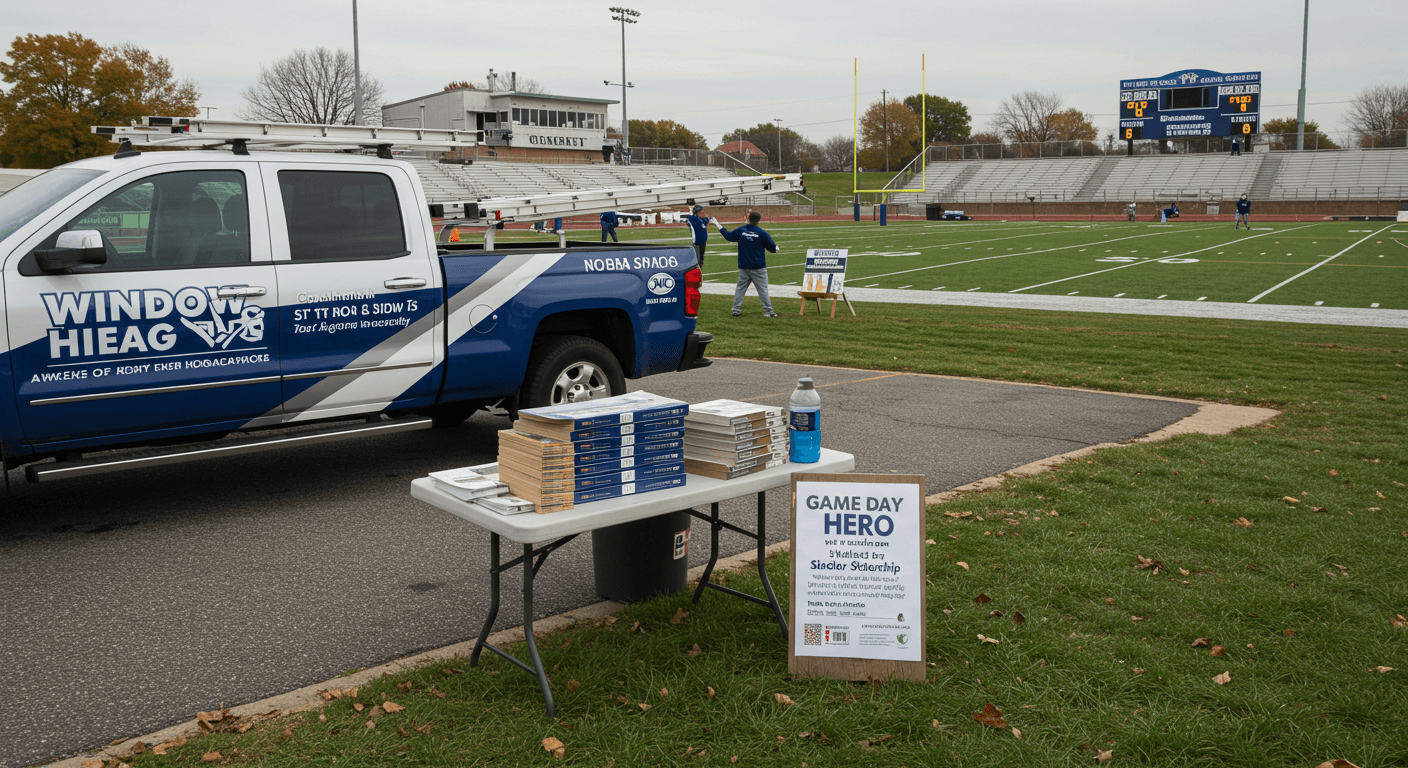
Wyatt once bought a standard stadium banner and saw almost no lift. We replaced that posture with a simple game-day pledge: each score triggered a modest donation to the school's vocational arts fund. His company name landed in the PA rotation, not only on plywood behind the end zone.
Within about six and a half months, calls sounded different. People mentioned seeing his crew at night games or seeing the donation totals on social posts. First meetings felt less like interrogations and more like continuing a conversation that already started in public.
Avoid "logo only" community buys
If your sponsorship cannot tie to a story locals retell, treat it as a donation, not marketing. Budget it separately so you do not confuse charity with pipeline.
Teaching moisture before pitching color
Midwest siding fails quietly until it does not. Humidity, freeze-thaw, and bad flashing punish lazy details. Wyatt used education as his authority wedge.
He hosted short home health workshops at libraries and township rooms. Instead of a sales deck, he walked through photos of failed window seals, wrinkled house wrap, and what good head flashing looks like on a real elevation. Technical references from Journal of Light Construction's windows and doors library gave the sessions backbone so homeowners saw him as a practitioner, not a pitchman chasing a color sample.
When someone is staring at a $45,000 exterior decision, they gravitate toward the person who already taught them how to protect the sheathing. That shift alone trimmed a lot of redundant explanation on estimates.
Action Plan
Wyatt's neighborhood density loop
These were field-led habits, not a second marketing department. The point was to make every finished job seed the next three conversations on the same street.
Five-five-ten door coverage: after a wrap, leave five hangers on each side of the home and ten across the street with a simple QR that lands on a local project gallery.
Biweekly local leader spot: record a short interview with another business owner in the same zip, cross-tag online, and let goodwill compound without paid boosts.
One-hour open progress visit: invite neighbors during a controlled tear-off so they see dust control, protection, and sequencing instead of imagining chaos.
Micro sponsorships with shelf life: fund shirts, benches, or dugout signage that stays in the neighborhood for years rather than a single weekend flyer.
Eighteen months later
Spend fell while output rose, which is the rare combination that tells you positioning changed, not just budget.
Monthly marketing settled near $9,840, lead volume rose 19.2%, and closing rate moved from 22% to 34.6%. Average project size climbed about $2,841 as homeowners picked better materials once they trusted the technical advice. Sales visits focused on scope and sequencing instead of re-proving identity.
Organic neighborhood work is a slow compounding asset, so Wyatt still used exclusive Midwest previews when he needed predictable fills during weather swings or when testing a new service area. The community engine carried margin; the paid layer guarded utilization.
Field reps also leaned on the LeadZik mobile app to claim and answer inquiries while they were already near the job, which kept median first response under four minutes on measured weeks.
System without a new desk job
Owners fear community plans because time is scarce. Wyatt pushed ownership to the lead installer with a clear incentive, not a vague culture ask.
Delaney, his lead installer, owned three photos per jobsite, posting into a hyper-local group with a consistent hashtag. She handled the five-five-ten drops and earned a small spiff on any signed job traced to that block. Wyatt kept Saturdays for family while the crew face stayed visible.