Miami roofing has turned into a sprint where a single $2,415 change order for hidden deck rot can unwind a signed job before the permit packet clears. Shops in Doral and Pinecrest are not winning because they guess faster. They win because someone spends the twenty-ish minutes before tear-off treating the visit like a diagnostic, not a photo op for a pitch deck. Insurers are asking for clearer documentation, the Florida Building Code keeps tightening substrate expectations, and the old curb-and-binoculars habit is starting to look like a margin leak you cannot model away.
When you move moisture, nail corrosion, and drainage path into the estimate instead of into day two of production, you protect the crew calendar and the lumber stack. Structured inspections do not only catch bad plywood. They signal that your numbers are built on evidence, which is how you hold price in a crowded market without sounding defensive.
Pulled from production logs at a Kendall and Palmetto Bay heavy shop where rot and drainage issues were visible if you went inside and probed.
Paying for guesses you could have seen
Speed without attic time is expensive humidity math
I recently reviewed numbers for a mid-sized crew working mostly in Kendall and Palmetto Bay. Line items filed as "unforeseen site conditions" were eating about 11.4% of margin. None of it was truly unforeseen. It was unobserved. Tear-off in July heat, then thirty-eight sheets of delaminated plywood that never made the takeoff, is where trust frays and supers start quietly blaming sales.
The owner, Vance, saw the pattern: estimators were optimizing for same-day proposals. Bids looked sharp on the front end and ugly in job costing. If he wanted scale without chaos, he had to replace the quick quote with a repeatable diagnostic. That lines up with how the SBA guide on growing a service business talks about growth: durable shops build systems people can repeat, not heroics that collapse when volume doubles.
Two inspection cultures on humid coastal roofs
| Factor | Visual walk-around | Diagnostic audit |
|---|---|---|
| Typical time on site | About twelve minutes at grade | Thirty-five to forty-five minutes with attic and edges |
| Decking exposure before production | Misses most soft plywood hidden under old mastic | Attic light, stains, and probe hits land in the bid |
| Change-order pressure | High, crews absorb friction to keep the job moving | Lower, scope matches what the truck unloads |
| Sales cycle feel | Fast to paper, slow to profit | Two extra days of estimating, cleaner closeouts |
Typical time on site
Decking exposure before production
Change-order pressure
Sales cycle feel
Humidity does not negotiate. If you only look down from the ridge, you are underwriting someone else's rot.
What changes when inspections turn diagnostic
Pricing rot and partial deck replacement in the proposal keeps homeowners out of mid-job sticker shock and preserves field momentum.
Measured drip edge, valley metal, and vent boots stop the Hialeah supply run that burns a half crew for the afternoon.
Photo sets that show drainage path and substrate satisfy carrier questions before an adjuster invents a new narrative.
Fewer rescue repairs keep the Tuesday schedule honest so the next roof starts when you promised it would.
Flashlight before ladder
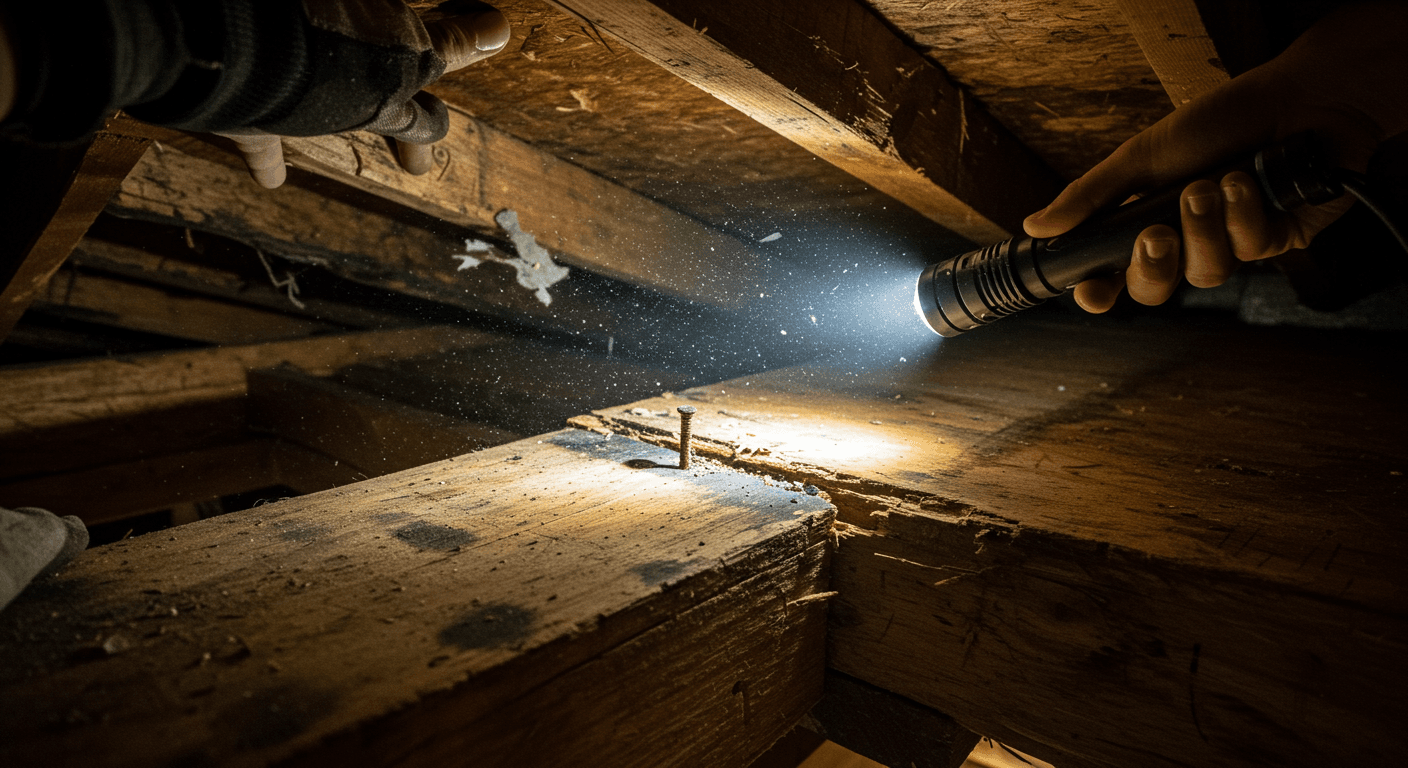
"Do not sign a Miami roof without attic time. Rusted nails and dark halos on rafters tell the truth when the field looks passable. Catch it in estimating and you charge remediation once, not as a fire drill after shingles are open."
Three places that quietly eat margin
Decking, drainage, and the accessory count
1. Substrate integrity
Miami-Dade HVHZ rules do not forgive soft deck. Vance's estimators started running a weighted probe along eaves and valleys on every job. Roughly nineteen percent of projects showed localized decay you simply do not see from a ridge photo. That is plywood you order on purpose instead of plywood your crew cuts twice while the homeowner watches.
2. Drainage dynamics
Flat and low-slope transitions in Wynwood or Brickell love to pond. Your routine needs a clear path for water during a three-inch-per-hour burst. Scupper sizing, cricket flow, and membrane tie-ins belong in the estimate, not in a panicked text after the first tropical wave. Fix drainage before you lay cap sheet, or you are polishing a structural problem.
3. Accessory inventory
Flashing and drip edge get rounded to nice numbers until the Coral Gables chimney needs another fifteen feet of custom copper. A systematic count uses a rolling measure on every linear foot of metal, boot, and transition so the job box leaves the yard complete. That is where Vance eventually saw sheet goods waste fall: fewer emergency cuts, fewer partials left to weather in the rack.
Flat roof assumption
Drains on a plan do not prove slope in the field. Dark organic circles usually mean water is sitting long enough to stain membrane. If you ignore that pattern, fresh cap sheet will not fix deflection that is already moving structure.
Install the routine like any other production standard
Zones, probes, counts, and photos
Better inspections are not about working harder on the roof. They are about a sequence everyone follows. Harvard Business Review's coverage of small business management and strategy keeps returning to the same idea: value stacks when processes stay consistent. Roofing is no exception.
Action Plan
Four-zone diagnostic pass
Run these in order so interior clues inform what you probe outside, and so photos match the scope production signs.
Zone 1, interior and attic: map moisture staining, deck sag, and nail pops before you commit ladder placement.
Zone 2, perimeter probe: test fascia and eaves where wind-driven rain saturates end grain; most hidden rot starts here.
Zone 3, component count: tally every vent, boot, cricket, and flashing transition. Banish standard kit averages.
Zone 4, photo documentation: capture gutters, landscaping, and wall lines as they existed pre-work to shut down pre-existing damage debates.
What showed up in Vance's numbers
Callbacks, crew mood, and plywood scrap
Six months after the four-zone pass became non-optional, warranty callbacks slid from 7.4% to about 2.1%. Crew leads stopped muttering about fixing sales misses every Tuesday. Net profit per job lifted roughly $1,842 because Vance quit comping "small" repairs to protect relationships he had already weakened with surprise scope. Sheet goods waste from bad counts and emergency re-cuts dropped near twenty-three percent, which is the headline his yard manager cared about as much as the close rate.
Measured after six months; combines fewer free fixes and tighter material planning.
If your pipeline only rewards same-day quotes, deep inspections feel like a luxury. When intake is noisy, estimators skip attic time because they are chasing volume, not because the attic stopped mattering. It helps to step back and audit where leads enter your shop. Cleaner, verified demand gives estimators room to document decking and drainage without apologizing for doing the job correctly.
Common Questions
Florida growth needs more than billboards. It needs an operational spine that refuses mystery scope. Tighten the inspection, and every signed job is one your crew can actually execute. For how LeadZik handles refunds, exclusivity, and lead quality when you are bidding high-trust work, read the FAQ on credits and guarantees.