Payments do not hibernate
Illinois roofers finance a lot of iron that only earns its keep during a narrow weather window. When the note is due every month while production thins out, the fleet stops looking like growth capital and starts looking like a fixed leak.
$9,437 is the average monthly overhead drain I see in Illinois roofing shops carrying too much pride-of-ownership debt on specialized steep-slope gear that sits idle for about 164 days a year. A lot of owners still read fleet size as the main proof they are scaling. What actually breaks shops is capital velocity. When you lever into heavy iron before lead flow can support something like 87% utilization on that asset, a strong storm season can flip into a winter where payroll and notes fight each other.
From Naperville-style density out to Rockford-scale commercial work, the shops I like on paper treat trucks and lifts as depreciating tools, not trophies. They run a hard ROI test before they sign. When the Illinois market cools between storm cycles, survival usually tracks liquidity and debt service more than who had the shiniest boom on the lot.
The Illinois slowdown and idle iron
Mandatory downtime changes the math on anything with a monthly payment.
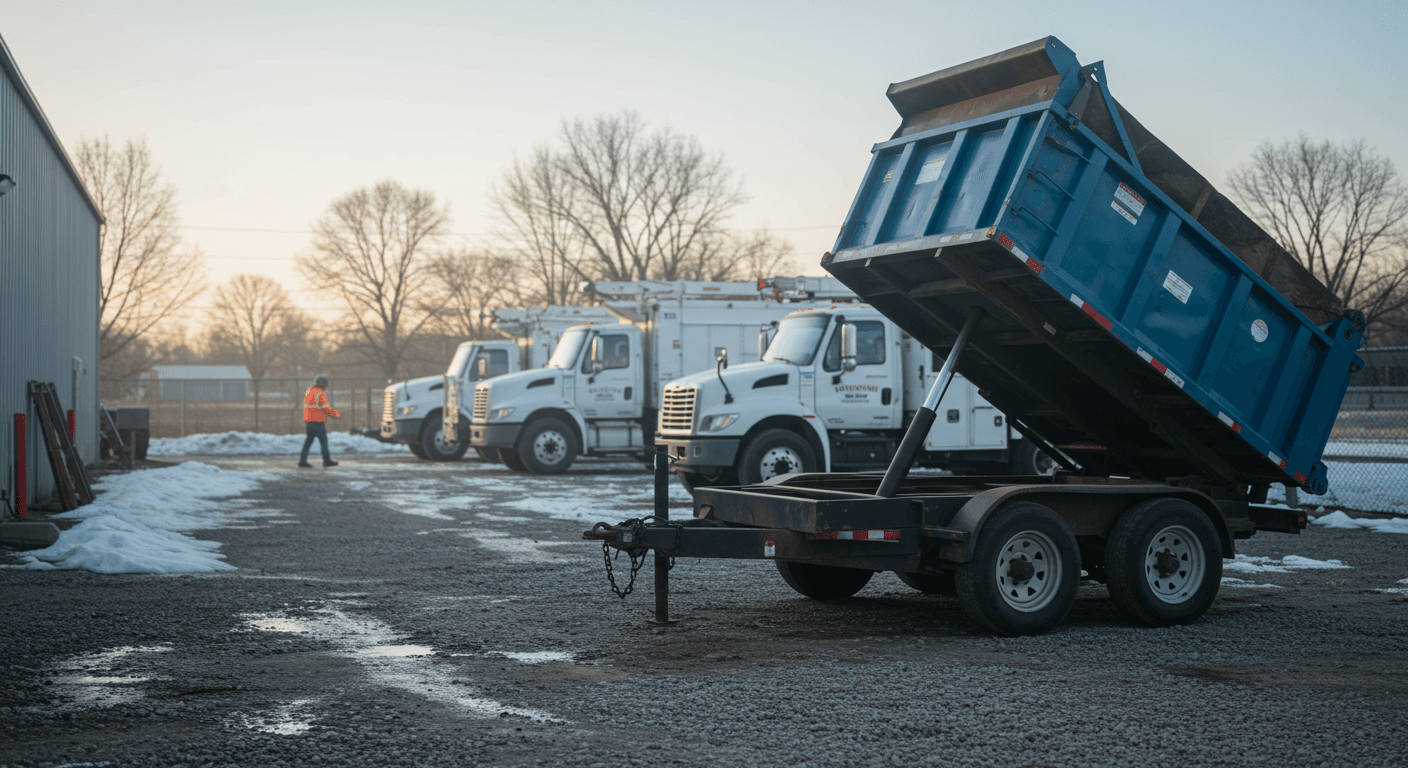
Equipment financing here has to respect the quiet months. Roughly December through March, a lot of Chicagoland crews and teams farther south near Springfield simply lose production hours. If you are financing a $78,400 specialized dump body over sixty months at 9.2%, that unit can land near $1,634 a month whether it is hauling tear-off or sitting under snow.
Last year I reviewed a Joliet shop where the owner, Devin, was excited about three new crews. Net margin still slid 6.4% after the fleet upgrade. Debt service jumped to $12,840 a month while job count only rose 14.7%. He bought peak capacity for a few summer weeks, then paid for it all year.
The fix starts with billable hours, not brochures. If a lift or trailer does not remove labor hours or unlock higher-margin work you already know you can sell, the financing is probably slowing you down. Federal SBA guidance on growing a business keeps saying the quiet part out loud: scaling means pairing debt with enough liquidity to survive normal seasonality, not only the busy months on Instagram.
How two shops treat the same monthly payment
| Decision lens | Trophy mindset | ROI mindset |
|---|---|---|
| Why buy now | Image, ego, fear of looking small next to a competitor | Measured labor savings or margin you can actually capture |
| Utilization plan | Hope the phone rings once hail hits | Trailing job data by crew with a stated utilization target |
| Winter plan | Assume you can muscle through slow cash | Debt service fits the slowest quarter, not the best week |
Why buy now
Utilization plan
Winter plan
Action Plan
Illinois equipment purchase screen
Use this four-step framework before you add another payment in a state where weather already controls your calendar.
Calculate the labor offset. Example math: a self-propelled debris system saves 3.2 hours on a 25-square job at a $28 burdened rate. Multiply that by the jobs you truly run in a month, not the jobs you wish you ran.
Apply an Illinois seasonal multiplier. Most residential shops see about eight active months where that savings is real. Treat the other four like a discount on any rosy forecast.
Stack the full annual cost of ownership: principal and interest, insurance, maintenance, licensing, and storage if it applies.
Use a 2.5x rule. If annual labor savings do not clear 2.5 times the annual carrying cost, call the purchase what it is: a vanity bet, not a growth plan.
Section 179 is not a growth plan by itself
A tax deduction is not the same thing as a return on capital.
Late-year equipment buys show up a lot when owners are staring at a tax bill. A $62,000 crane truck can wipe liability in April and still leave you with fifty-eight payments that do not care what the market does next quarter. Spending a dollar to save thirty cents in tax is arithmetic, not strategy.
I have watched Peoria-area contractors get pinned by commercial-grade payments right when residential demand spikes. Cash that could have funded sales hires was locked in a chassis that was wrong for driveways. Resilient operators keep flexibility on purpose. Harvard Business Review's small business coverage keeps circling the same theme: the best plans leave room to move when facts change. For roofers, that room might be the cash to fund marketing the week a hail cell parks over the 618, not a maxed line on iron you cannot redeploy.
Illinois roofing companies that push debt-to-equity past about 2.8x in one calendar year without at least a 22% lift in lead conversion often show this kind of margin giveback on year-end statements.
When financing steep gear actually pays
Insurance, licensing, and margin you were giving to subs can change the ROI story.
There is still a clean case for debt: gear that pulls insurance down, improves safety outcomes, or moves your Illinois licensing story from limited steep work to something you can price and schedule yourself. If you are subbing steep-slope because you lack lifts and harness programs, you might be handing 18.5% to 24% of potential margin to another roofer. That is margin capture, not vanity.
One Aurora firm was spending $4,200 a month on high-reach rentals. Owning a financed lift at $2,140 cut the monthly line item almost in half and removed a three-day rental wait. Jobs closed 4.8 days faster on average, which tightened cash-to-cash in a measurable way.
Rental-to-purchase threshold
"Do not finance a dedicated asset until trailing-twelve-month rental receipts for that same class of equipment clear 140% of the projected monthly loan payment. That keeps you honest about demand instead of chasing one big insurance winter."
Match production units to pipeline reality
A financed crew stack is a fixed cost. Your leads are not.
Financing a new crew setup can land near $4,500 a month in fixed overhead before labor even hits the job. That number only works if the sales side can keep the calendar full. If marketing only supports two crews, a third rig is not a flex, it is a hole in the checking account.
When you know cost per lead and your reps hold something like a 28.4% close rate, you can date the purchase to the pipeline instead of to pride. If you want a clearer picture of how verification, previews, and purchase timing fit together, read how LeadZik routes demand from first touch to delivery. If you are stress-testing whether a new zip can feed another crew, you can also start on LeadZik with $150 in starter credits and put real previews against your capacity plan before you add another note.
Fleet notes worth pinning in the office
Treat monthly payments as a year-round obligation, not a storm-season souvenir.
Run equipment math on burdened labor, Illinois active months, and full carrying costs before you sign.
Use debt for gear that captures margin or reduces real risk, not for a short-term tax mood.
Size trucks and lifts to verified pipeline, not to how loud the dealership floor feels in November.
Common Questions
Keep the iron honest
Scaling here is mostly timing and margin discipline. Every piece of financed iron should compound the work you already sell, not drag you through the slow months. Hold the 2.5x ROI screen, keep production capacity behind verified demand, and you end up with a business that looks strong in the field and still breathes on the statement.
The next time a dealer line looks tempting, pull job costing first. If the file does not show a realistic path to at least a 14.3% efficiency lift, keep the older rigs working and steer that capital toward the sales pipeline instead of another note.