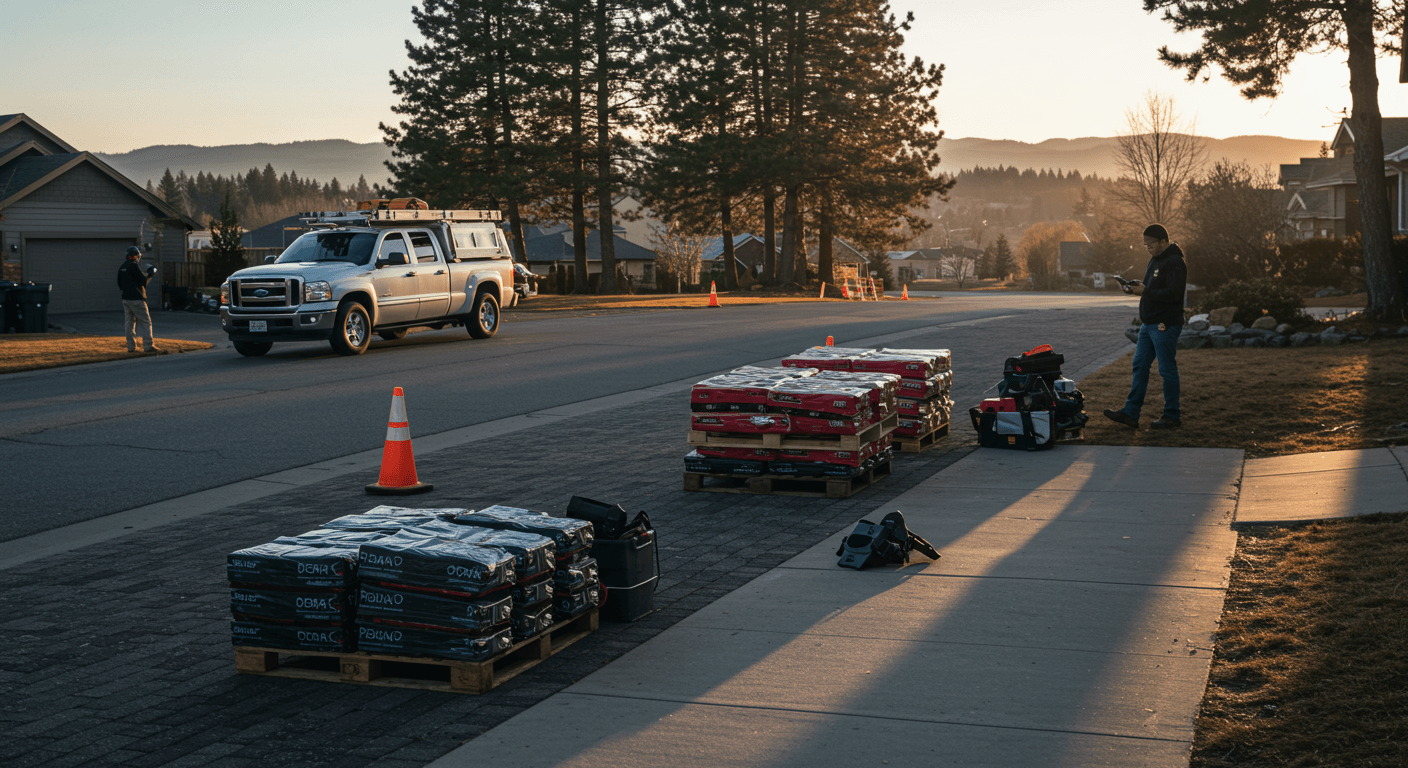
Adrian stood by the fleet yard on East Sprague Avenue, watching four crews load bundles while three separate insurance adjusters buzzed his cell phone simultaneously. It was 6:14 AM on a Tuesday in late September, the exact window when Spokane roofing shops either print money or set their culture on fire. The prevailing myth in our industry is that "hustle" is the only viable bridge between a major Inland Northwest wind event and a profitable Q4. We are told that if a Production Manager (PM) isn't grinding through 74-hour weeks when the South Hill gets hit with hail, they simply aren't "bought in."
That is a dangerous lie. It is a lie that costs local owners an average of $19,430 in turnover costs every time a seasoned PM walks out the door. When I first audited this specific Spokane operation, their lead PM was drowning in 68-hour weeks, material order errors were hovering at 13.8%, and the "peak season" was quickly becoming a "quitting season." We didn't need more hustle. We needed a production architecture that didn't rely on one human being acting as a manual switchboard for every crew, supplier, and homeowner in the Valley.
Operational Wins from the Spokane Case Study
Weekly PM hours dropped from 68 to 44.5 without losing project velocity.
Material ordering errors fell by 76% through decoupled administrative workflows.
Gross margins on storm jobs increased by 8.4% due to reduced emergency hot-shot deliveries.
Zero PM turnover during the highest volume wind-storm season in the company's 14-year history.
The High Cost of "Reactionary" Production
In Spokane, the window for high-volume roofing is tight. Between the spring rains and the first real freeze in late November, the pressure to produce is immense. Most owners respond to this by putting the entire weight of the company on the PM's shoulders. They expect the PM to be a safety officer, a material runner, a supplement negotiator, and a crew therapist.
When volume spikes, the PM stops managing production and starts managing fires. I've seen this play out at dozens of shops: the PM spends four hours a day in their truck just running hot shots (missing flashing, forgotten ridge vent) to job sites in Liberty Lake or Mead. That isn't production management; it's an expensive delivery service. According to the Western States Roofing Contractors Association, technical and operational efficiency is the primary differentiator between shops that scale during storms and those that merely survive them.
Reactionary vs. Decoupled Production Management
| Workflow | Reactionary Model | Decoupled Model |
|---|---|---|
| Supplement handling | PM negotiates Xactimate lines on-site | Dedicated office coordinator owns adjuster comms |
| Material staging | PM runs hot shots mid-job | 48-hour photo-verified supplier drops |
| Sales handoff | PM scouts jobs after dispatch | Locked site preview before calendar entry |
| Peak-season hours | 68+ hour weeks, high turnover risk | 44.5 hour average with stable throughput |
Supplement handling
Material staging
Sales handoff
Peak-season hours
Step 1: Decoupling the "Supplement" Trap
The first change we implemented for Adrian was removing the "Insurance Adjuster" hat from his head. In the middle of a storm run, your PM cannot spend three hours a day arguing about Xactimate line items with an adjuster while a crew is waiting for a crane in Shadle Park.
We moved all supplementing and adjuster communication to a dedicated office-based coordinator. This person doesn't need to be a roofing expert; they need to be a documentation expert. By shifting this load, we reclaimed 14.5 hours of Adrian's week immediately. This allowed him to focus on what actually drives revenue: job site readiness and crew cycle times.
The 15-Minute 'Job Ready' Audit
"Before any crew leaves the yard, the PM should verify the Big Three: correct shingle color and brand, specialized flashing requirements, and site access hurdles (like overhead lines in older Spokane neighborhoods). Catching one color error in the yard saves $1,140 in wasted labor and crane fees."
Step 2: Eliminating the "Field Surprise"
Burnout often stems from the unknown. When a PM pulls up to a job site only to realize the sales rep missed a second layer of tear-off or a rotted chimney cricket, their stress levels spike. This is why intake quality is the foundation of production stability.
We integrated a system where every job had a locked preview of the actual site conditions before it ever hit the production calendar. When the sales team uses tools that provide verified, exclusive job data from the start, the PM doesn't waste 3.5 hours a day scouting jobs that weren't ready for production. This level of visibility ensures that when a crew is dispatched to a steep-slope project in Manito, they have the right safety gear and pitch-specific equipment on the truck the first time.
Field teams also need a clean handoff when volume spikes. The LeadZik mobile app gives sales and production a shared view of high-intent jobs without the back and forth that usually burns an hour before lunch.
Action Plan
How to Reclaim 15+ PM Hours per Week
These four shifts separate production management from firefighting. Each one removes a recurring drain on PM bandwidth without slowing storm-season throughput.
The Administrative Handoff: Move all permit applications and neighborhood association (HOA) approvals to an office admin.
The Staging Protocol: Require suppliers to deliver materials 48 hours in advance with a photo-verified drop tag sent to the PM's phone.
The Mobile-First Update: Claim and track high-intent jobs from the field so sales and production stay aligned on the same job record.
The Daily 4 PM Pivot: PM spends 20 minutes at the end of the day only looking at the next day's logistics, rather than solving today's leftover problems.
Step 3: Safety as a Systematic Time-Saver
In the rush of storm season, safety is often the first thing to be compromised. However, a single safety incident doesn't just hurt a worker; it shuts down production for days and leads to massive PM burnout through litigation and reporting.
We implemented a "No-Drone, No-Start" policy for site inspections and strictly followed OSHA Roofing Safety guidelines for fall protection. By standardizing the safety setup, ensuring anchors are set and ropes are staged before the main crew arrives, we reduced the PM's site hovering time by 19.4%. When the system handles the safety enforcement, the PM can focus on the technical execution of the flashing and ventilation.
The 'Hero Culture' Trap
Beware of rewarding the PM who saves the day with a midnight material run. You aren't rewarding hard work; you are subsidizing a broken process. If your PM has to be a hero every Tuesday, your staging system is failing.
Results: The Spokane Transformation
After 90 days of running these systems, the results at this Spokane shop were undeniable. Adrian's 68-hour weeks were a memory. He was leaving the office by 4:30 PM, even during a three-week backlog.
More importantly, the financial metrics followed the cultural ones. Because Adrian had the mental bandwidth to actually inspect roofs rather than just putting out fires, the callback rate dropped from 7.2% to 1.9%. In a market like Spokane, where word-of-mouth in neighborhoods like North Indian Trail can make or break your reputation, that quality shift is worth more than any marketing budget.
Measured as productive PM hours redirected from clerical firefighting to site readiness and crew cycle management.
The Long-Term Play
Production manager burnout isn't an inevitable part of the roofing industry. It is a symptom of a shop that hasn't separated doing the work from managing the work. By isolating the administrative burdens, tightening the handoff from sales, and leveraging field-ready technology, you aren't just saving your PM. You're protecting your net margin.
In a city like Spokane, where the weather can turn on a dime, your production system needs to be the most stable part of your business. When the next windstorm rolls through the Palouse, make sure your team is ready to catch the volume without falling apart.