Four digital lines on Jaxon's dashboard glowed green at exactly 6:58 AM, signaling that his dispatch team was live and ready for the morning rush. In years past, this moment involved a frantic dash to unlock a physical office, brewing a pot of stale coffee, and hoping the local highway traffic didn't delay his lead CSR by twenty minutes. Now, Jaxon watched the queue from a tablet while walking through his warehouse to check inventory. His team, spread across three different time zones, didn't just show up on time. They were already triaging two emergency "no-cool" calls before the first technician had even turned an ignition key.
The shift Jaxon made wasn't about following a trend. It was a cold, calculated move to reclaim net margin that commercial rent and a high local turnover rate were eating alive. He was stuck in a cycle many HVAC owners recognize, where the cost of maintaining a central hub was outpacing the value that hub provided. By moving administrative, dispatch, and sales coordination roles remote, he didn't only save on the light bill. He unlocked a tier of talent that simply wasn't available inside a thirty-mile zip radius.
Is your physical office actually an anchor?
Sentiment says heartbeat. The P&L often says deadweight. Here is how we proved which story was true for Jaxon.
Most HVAC owners treat the office as the center of gravity. Strip the sentiment and it often behaves more like a heavy anchor. When I reviewed Jaxon's profit and loss statement sixteen months ago, the office and administrative line item was sitting near 14.3 percent of total revenue. On a shop doing about $3.2 million, that is a serious slice. We started asking what that money was actually buying.
The space was running about $3,450 in rent, another $620 in utilities, and roughly $210 in small recurring perks like coffee and cleaning supplies. Beyond the hard costs, proximity created friction. If two dispatchers were having a rough day, the whole room felt it. If a technician walked in hot after a difficult install, he'd vent at the CSRs and phone performance dipped for the next hour. The synergy owners like to talk about was often shared distraction wearing a teamwork costume.
We estimated each in-house seat was costing roughly $4,820 per year before wages. When Jaxon asked whether he could keep quality without seeing faces daily, we leaned on ACCA Quality Assured contractor standards. Those guidelines stress documented outcomes, verification, and process discipline. None of that requires a dispatcher ten feet from a manager. Quality lives in the system, not the zip code.
Remote operations ROI highlights
Fixed facility load often drops $2,800 to $4,500 per month for mid-sized shops when admin and dispatch go remote.
Remote office staff in Jaxon's model showed 23.4 percent higher retention, which matters when each CSR churn event costs about $4,680 to replace.
National hiring pools help you cover seasonal spikes without leaning on expensive local overtime patterns.
Dispatchers on integrated mobile workflows averaged 6.2 percent faster response times on high-intent emergency leads once the noise of the physical bullpen dropped away.
The biggest ROI lever in the remote model is not the lease line. It is turnover. In Jaxon's market, reliable office staff get poached by insurance shops and medical billing desks that pay a few dollars more or offer a shorter commute. Every dispatcher exit cost him about $4,682 in lost productivity, recruiting fees, and training drag.
Opening the search nationwide landed Quinn, a dispatcher with ten years on the same CRM Jaxon ran and enough grounding in ASHRAE Handbook fundamentals to pre-qualify equipment issues over the phone. Jaxon paid a nationally competitive wage that felt like a local premium where Quinn lived. Loyalty followed because the role finally matched her skill instead of her commute.
Action Plan
Four moves to take your HVAC office remote
This is the same sequence we used with Jaxon before peak cooling season. The goal is fewer hallway assumptions and more measurable outputs.
Inventory the tech stack: move landlines to VOIP and keep the CRM cloud-native with granular permissions so remote seats cannot wander into data they should not touch.
Define output-based metrics: stop rewarding hours at a desk and start tracking calls handled, booking rate, and time to dispatch.
Implement synchronous communication: give techs a dedicated channel for quick pings so nobody has to shout down a hall to get an answer.
Run a phased rollout: start with one remote CSR in the shoulder season, fix the handoffs, then scale before the summer rush.
Hybrid versus fully remote
A split model can feel safer. Just watch what happens to cost per occupied square foot when the lease stays.
Not every shop is ready to go fully virtual, and that is a fair concern. I have watched hybrid setups work when a local office manager handles physical paperwork and parts returns while phone-heavy roles stay remote. The hybrid path can act like a safety net.
How the two models behave on the books
| Decision factor | Hybrid (lease stays) | Fully remote admin |
|---|---|---|
| Monthly rent obligation | Full payment even when desks sit empty | Facility cost tied to warehouse or yard needs only |
| Seasonal phone capacity | Add bodies into fixed square footage or stay understaffed | Burst remote coverage when heat-driven volume spikes |
| Labor pool | Still partially tied to local CSR competition | National hiring for specialized dispatch and coordination |
| Management focus | Split attention between physical space and remote workflows | One operating system built around documented outputs |
Monthly rent obligation
Seasonal phone capacity
Labor pool
Management focus
If the office is twenty percent occupied most weeks, your cost per occupied square foot balloons. Remote teams let you scale heads without scaling drywall.
The empty-desk tax
Keeping a $3,000 monthly lease for nostalgia while only part of the team shows up is not conservative. It is a quiet margin leak that shows up the same every month whether you are busy or slow.
For Jaxon, the decision sharpened when we mapped seasonal scaling. July needed six people on the phones. Mild October needed two. A brick office forces you to choose between empty desks half the year or cramming bodies during peak. Remote staffing let him add burst contractors who only log in when weather-driven lead volume crosses a threshold he and Quinn agreed on upfront.
Jaxon's team stayed longer once the office drama and drive-time stress dropped out of the equation, saving about $14,046 in annual hiring and retraining costs.
Efficiency in the field: connect remote office to trucks
Technicians need proof the office sees the job. Give them a live window, not a voice on a speakerphone.
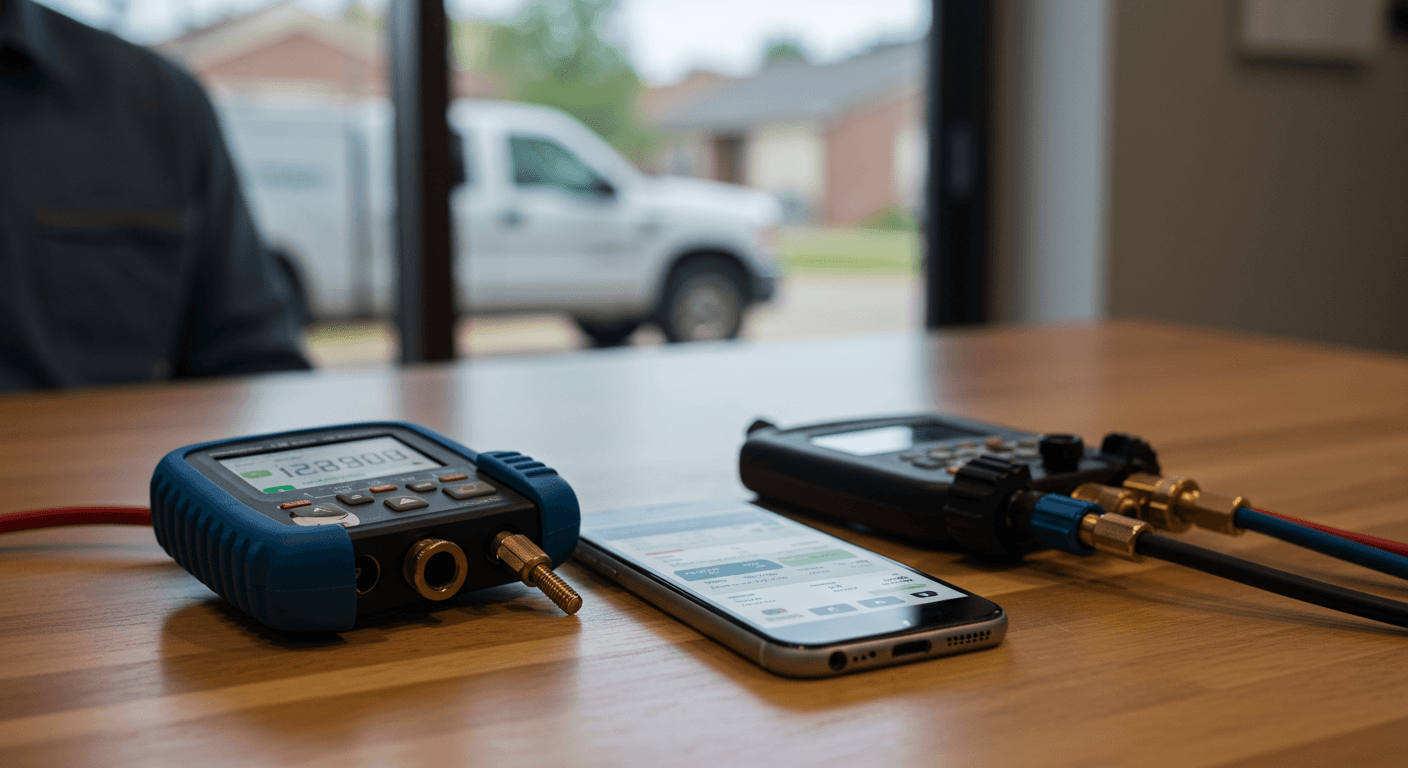
The common fear is disconnect. Techs assume the office does not understand the real world of the job site. We closed that gap by giving remote staff the same visual context the field had. Jaxon put a mobile tool in trucks so crews could sync photos and diagnostics straight to dispatch. When a furnace repair got weird, the coordinator saw what the tech saw without hovering in the shop.
Input quality matters as much as hire quality. Remote efficiency collapses if CSRs spend forty percent of the week chasing price shoppers or junk leads. Shops that tighten what hits the phone queue keep remote teams on high-value dispatch work instead of administrative triage. Verified, high-intent calls are the fuel. Everything else is noise that eats the savings you fought for.
When the math says flip the switch
These are the patterns I have seen across Jaxon's shop and four other HVAC operators this year.
The break-even point usually appears once office staff crosses about three full-time equivalents. At that scale, desks, machines, square footage, and insurance start to outweigh whatever you gain from everyone breathing the same air. Consider the pivot seriously if:
- Local CSR churn runs higher than twenty-five percent annually and you are tired of retraining the phone tree every quarter.
- Rent plus utilities drift past five percent of gross revenue while the office is not producing billable work.
- Booking rate on inbound calls falls more than ten percent during seasonal surges because you cannot seat seasonal hires without a construction project.
The quiet-room requirement
"When hiring remote HVAC staff, stipulate a hard-wired internet connection and a noise-canceling headset in the contract. Clean audio is part of your brand when a homeowner is already stressed about a dead AC."
Final ROI: the real numbers
Year-over-year, Jaxon's outcome beat his own expectations because retention and booking rate moved, not just rent.
When we closed the year-over-year comparison, the savings were blunt. Happier remote staff sounded different on the phone because they were not grinding through traffic before the first ring. That showed up as a measurable booking lift, not just a lower utility bill.
Jaxon's annual savings breakdown
- Eliminated commercial lease: $41,400
- Reduced utility and insurance overhead: $9,340
- Lowered turnover and training costs: $18,720
- Increased booking rate (4.2% lift): $23,022
- Total annual ROI: $92,482
None of this was magic. It was what happens when you stop paying for square footage you don't need, then reinvest part of the savings into stronger national hires and sharper digital tooling. Jaxon runs leaner now, and the business bends with a heat wave or a soft month without a long commercial lease locked around his ankles.