I was staring at a stack of fuel receipts from a 12 truck fleet operating out of a shop near Haywood Mall. The owner, a guy named Elias, was complaining about his estimators being "too busy" to handle the new spring lead volume. When we actually pulled the GPS logs for his top sales rep, Sloan, the problem hit me like a falling shingle. Sloan had spent 14.3 hours that week sitting in traffic on I-85 and Woodruff Road just to deliver "no" or "let me think about it" to homeowners.
The math was brutal. Between fuel, vehicle wear, and Sloan's base salary, every single in-person estimate was costing Elias roughly $167.40 before a single nail was bought. That is when it clicked. We were treating every lead like a high-stakes luxury consultation when 63% of them just wanted a price and a timeline.
At a Glance
Eliminate the $150+ 'hidden cost' of every physical site visit for unqualified leads.
Increase estimator capacity by 3.5x by removing travel time from the sales cycle.
Use speed as a weapon to beat competitors who are still stuck in Greenville traffic.
Reinvest saved fuel and labor costs into higher quality lead acquisition.
The High Cost of the "Windshield Time" Trap
In the Upstate, we are seeing a massive surge in residential growth toward Greer and Easley. While that is great for business, it is a nightmare for operational efficiency. If your estimator leaves a job site in Taylors to head to a lead in Powdersville at 4:30 PM, you have effectively lost that employee for the rest of the day.
According to research from the National Roofing Contractors Association (NRCA), operational inefficiencies like poor scheduling and excessive travel can drain up to 18% of a contractor's annual gross profit. In Greenville, where traffic congestion has increased by nearly 12.4% over the last three years, that drain is even more pronounced.
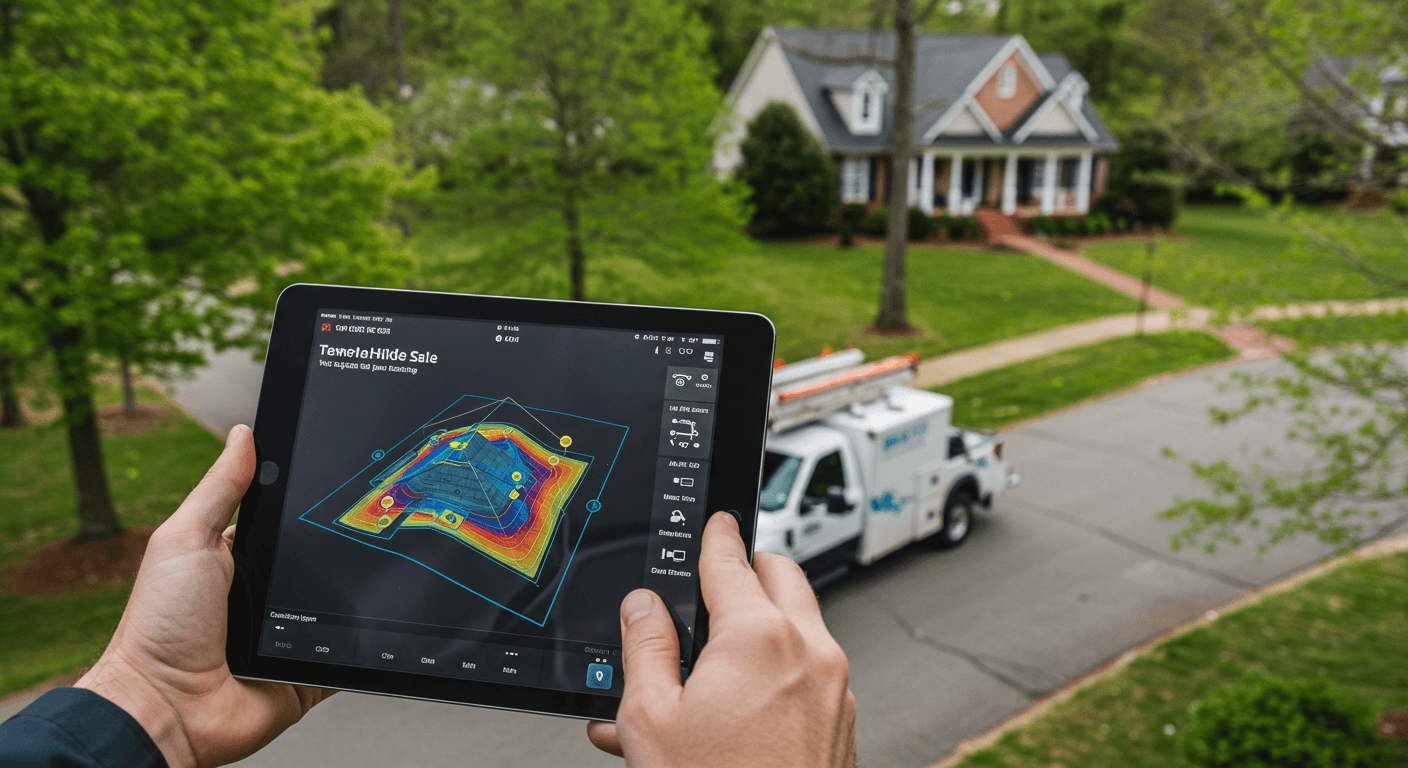
When you force an estimator to be physically present for every measurement, you are capping your revenue at how many miles they can drive. Virtual sales presentations break that cap. By using aerial measurement tools and video conferencing, Sloan was able to pivot from four estimates a day to eleven.
Breaking Down the Virtual ROI
Let's look at the actual numbers. A traditional on-site visit in the Greenville metro area takes about 2.5 hours when you factor in the drive, the "small talk," the measurement, and the drive back.
With a virtual model, that same process takes 38 minutes.
On-Site vs Virtual Sales Model
| Factor | On-Site Sales Model | Virtual Sales Model |
|---|---|---|
| Travel Cost | $24.50 (Fuel/Wear) | $0.00 |
| Labor Cost (Sales) | $85.00 | $21.50 |
| Lead Capacity (Daily) | 3-4 | 10-12 |
| Close Speed | 3-5 Days | 24 Hours |
Travel Cost
Labor Cost (Sales)
Lead Capacity (Daily)
Close Speed
The ROI is not just in the saved gas. It is in the closing rate. Homeowners in 2024 are used to the "Amazon effect." They want information immediately. If you can provide a verified, accurate quote via a virtual presentation while your competitor is still trying to find a parking spot in their driveway, you win on speed alone.
I've seen shops that implement this see a 19.6% jump in their close rate simply because they were the first professional quote the homeowner received. If you are worried about lead quality for these virtual calls, using a platform that provides locked previews of verified leads ensures your team only spends time on homeowners who are actually ready to buy. According to Roofing Contractor Magazine, contractors who leverage virtual sales tools report significant improvements in both efficiency and customer satisfaction.
Implementation: The Greenville Tactical Playbook
You don't need to overcomplicate the tech stack. Most of the successful operations I've consulted with use a three-step process:
- The Digital Intake: Use high-resolution aerial imagery to get the measurements. Industry research emphasizes the importance of accuracy in digital estimating to maintain margins, noting that even a two-square error can wipe out the profit on a standard residential job.
- The Video Walkthrough: Use a simple Zoom or FaceTime call. Have the homeowner walk the perimeter of the house while you're on the line. It builds rapport without you needing to use a drop of gas.
- The Screen-Share Presentation: Show them the satellite imagery, explain the drip edge and flashing details, and drop the contract via DocuSign before the call ends.
The Local Pivot
"If a lead is in a high-value neighborhood like North Main or Augusta Road, consider a hybrid approach. Do the virtual tech work first, and only send a 'quality inspector' out to finalize the colors once a deposit is hovering in the air."
Overcoming the "Face-to-Face" Myth
I hear it all the time from old-school guys in South Carolina: "People buy from people they shake hands with." That was true ten years ago. Today, people buy from people who respect their time.
When Elias transitioned Sloan to a virtual-first model, he didn't lose the personal touch. He actually improved it. Sloan was less stressed, he wasn't screaming at traffic on I-85, and he was more focused during his calls. The company's Google reviews actually went up because the "professionalism and speed" of the digital presentation stood out in a market where other roofers were showing up two hours late because of a wreck near Pelham Road. This approach aligns with modern sales strategies that prioritize customer convenience and streamlined processes over traditional face-to-face meetings.
Action Plan
4-Step Virtual Transition
A tactical framework for transitioning from in-person estimates to virtual sales presentations, maximizing efficiency and closing rates.
Audit your travel logs: Track exactly how many hours your team spends driving vs. selling for one week.
Select your tech: Choose a reliable aerial measurement provider and a screen-sharing tool.
Script the transition: Train your office staff to sell the 'Virtual Consultation' as a premium, time-saving benefit for the homeowner.
Equip the field: Ensure your team has mobile access to lead data so they can pivot to virtual calls even if they are out in the field.
Want to skip the manual work and get exclusive, verified leads instead?
Optimize Your Sales FlowFAQ: Navigating the Virtual Shift
If your current operations feel sluggish, the problem might not be your crew or your materials. It might be the $9,400 a month you are "donating" to the local gas stations and the hours your best closers are losing to the Greenville commute.