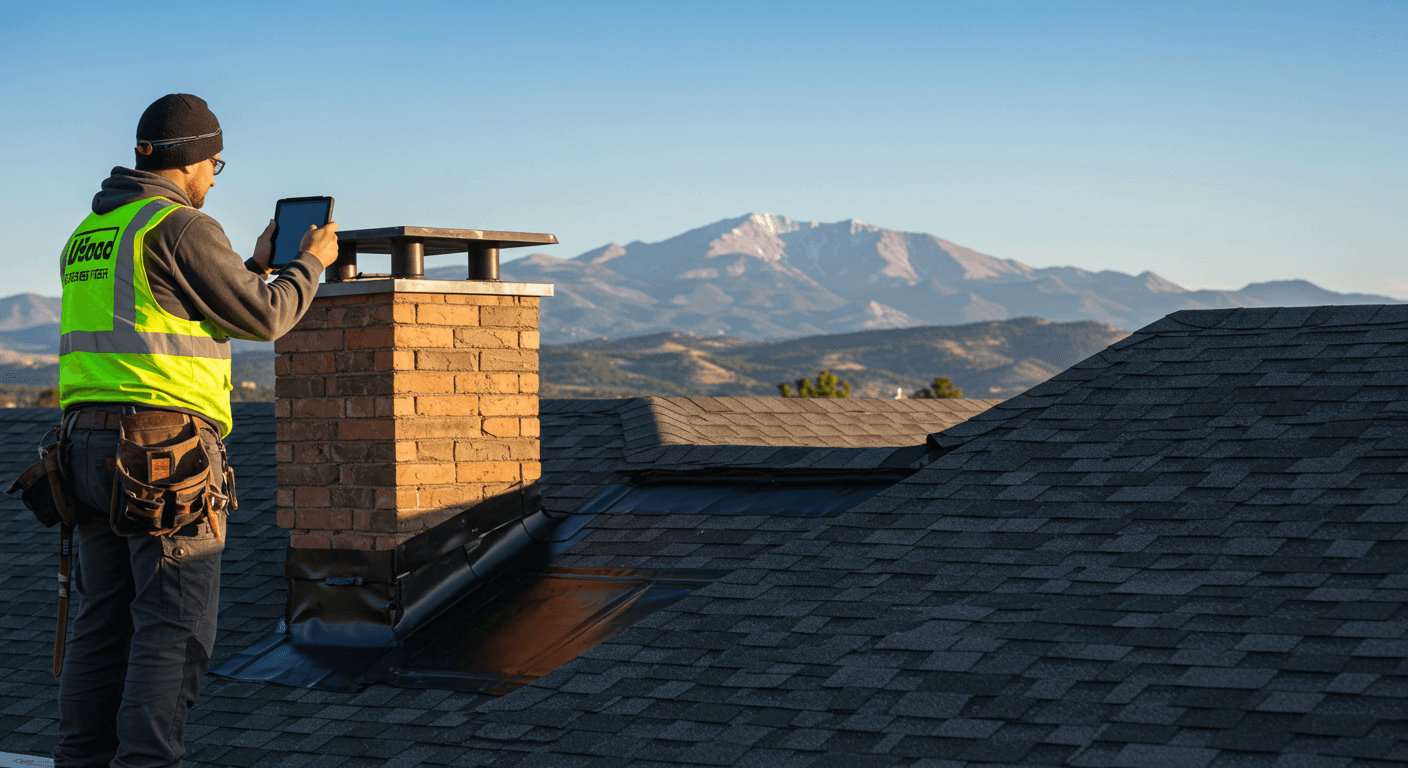
Traditional roofing wisdom in the Front Range suggests that if you are hitting about $4.2M in annual revenue, a handful of leaks or loose ridge caps are just the tax you pay for speed. I was on a driveway in the Broadmoor neighborhood last month with a shop owner named Wyatt, watching his best lead technician climb into a truck for the third time that week to go fix a small flashing issue in Falcon. Wyatt shrugged and said that in a high-wind market like Colorado Springs, callbacks are a cost of doing business.
The shop math said otherwise once we stopped rounding trips down to anecdotal busywork.
When we sat down and pulled the P&L for that fix, the numbers were hard to ignore. Between fuel, the technician's $38-per-hour rate, the opportunity cost of a missed new estimate, and the drag on his Google Business Profile, that one callback cost about $487.62. Across thirty-four callbacks last year, Wyatt was losing more than $16,500 in net profit. That is not a line item you grow out of with more leads if the work keeps failing the homeowner on the first pass.
One "small" fix carries labor, fuel, lost sales time, and reputation risk that spreadsheets rarely capture in one row.
The "cost of doing business" trap
If you normalize callbacks, crews will too. Treat repeat trips like rework in manufacturing: measurable, preventable, and owned by a standard.
The hidden ROI of "first-time right" operations
Margins in El Paso County get decided on the deck, not in the ad account.
Most owners stare at the top line, but durable wealth in roofing shows up in gross margin and schedule integrity. In a county where 85-mph gusts and rapid freeze-thaw cycles are normal, standard work on paper is not always standard on the roof. If your crew treats a Briargate install like a calm valley job, you invite warranty churn and margin fade. Rigid inspection standards are not just fuel savings. They protect reputation in a market where neighbors talk.
When you require photo proof of ice and water shield at every valley and penetration, you are building an asset: a defensible file if a homeowner questions workmanship or if weather tests the system next spring. The Western States Roofing Contractors Association emphasizes that technical discipline and regional standards are core drivers of long-term profitability for western contractors.
Think about the compounding effect. If you move callback rate from 6.3% to 1.8%, you are not only cutting direct labor on returns. You are freeing senior techs for billable production instead of unpaid repairs. For a mid-sized shop, that kind of capacity shift can land near six figures without adding headcount.
Rounded for planning; your exact figure lives in job costing, but the direction should alarm you if callbacks are "normal."
The 15-minute "last look" protocol
"After trucks are loaded, have the foreman take a solo walk-through and sign a five-point high-risk checklist: chimney flashing, valley debris, gutter clearance, nail pops, and magnetic sweep. In most shops I work with, about seven in ten non-leak callbacks trace to simple misses this pass catches."
Wind-zone discipline vs. generic production
| Decision point | Speed-first mindset | Compliance-first mindset |
|---|---|---|
| Nailing pattern | Four nails when "it looks fine" | Six nails per shingle where uplift risk is real |
| Documentation | Handshake and verbal close | Photo set that matches your written scope |
| Callbacks | Blamed on weather or picky homeowners | Tracked, owned, and reduced with standards |
Nailing pattern
Documentation
Callbacks
Climate-specific standards for the Front Range
Colorado Springs punishes assumptions. Inspect like the next storm is already scheduled.
Steep-slope work near Woodmen Road often needs fastening discipline that survives downslope wind. I coach teams to move from asking if it is done to asking if it is compliant with the exposure and uplift risk on that specific roof.
Non-negotiables on high-wind installs
Fastener frequency: verify six nails per shingle in designated high-wind zones, not four by habit.
Drip edge overlap: hold at least a 2.4-inch overlap so spring snowmelt cannot wick behind metal.
Ventilation clearance: confirm intake paths are not buried in insulation, a common driver of premature shingle failure and ice issues in Black Forest-style assemblies.
Safety belongs in the same conversation. A final walk should catch debris, damaged landscaping cues, and exposure risks left behind. Following OSHA roofing safety guidance during close-out reduces the odds of a different kind of callback: regulatory or legal attention after someone gets hurt or property is damaged.
Action Plan
Three-phase inspection spine
A simple rhythm that catches errors while the crew is still on site, before the homeowner discovers them in the first storm.
Mid-day deck check: before shingles land, confirm deck integrity and underlayment placement. Fixing a bad board now is a three-figure decision; fixing it after tear-off is often a four-figure surprise.
Flashing audit: most leaks start at transitions. Inspect every penetration, wall-to-roof joint, and chimney counter-flashing before you set the final cap course.
Digital evidence close-out: the foreman uploads twelve defined photos to your CRM. That packet is your roof birth certificate for the homeowner and for future warranty conversations.
Turning quality into a sales tool
Differentiation is documented, not declared.
In coaching, we talk about the value gap between what a homeowner fears and what you actually deliver. Almost every contractor says quality work. Fewer can slide a 22-point inspection report across the table that matches what the foreman did that morning. That moves you from commodity bidding to consultative selling.
I have watched shops justify a 10% to 15% premium over chuck-in-a-truck pricing when the file includes dated photos, checklist sign-offs, and a scope that reads like an engineer wrote it, not a flyer. Buyers in Old Colorado City or Rockrimmon will pay for certainty when the proof is in the folder.
The same discipline applies on the revenue side. When your sales team can show a homeowner a clean inspection file, photo close-out, and a documented scope, the job feels worth more before price even comes up. If you need a simple way to keep sales and operations aligned, the how it works overview spells out verification, preview, purchase, and delivery in one place so the handoff stays consistent.
If your inbound flow is full of low-fit estimates, tighter inspections still help, but the bigger win is matching disciplined crews with jobs that fit how you sell. That is where stronger qualification, better intake, and cleaner scope visibility start to compound.
Modeled on mid-sized shops that cut callback rate sharply; plug your labor rates and trip data to localize it.
What to do this week
Define a callback so your KPI reflects workmanship, not every warranty phone call.
Add a foreman-only final pass with five high-risk checks and require sign-off before keys turn.
Build a photo close-out tied to CRM fields so sales can show proof, not promises.
Align Front Range fastening, metal, and ventilation rules to actual wind and freeze-thaw exposure.