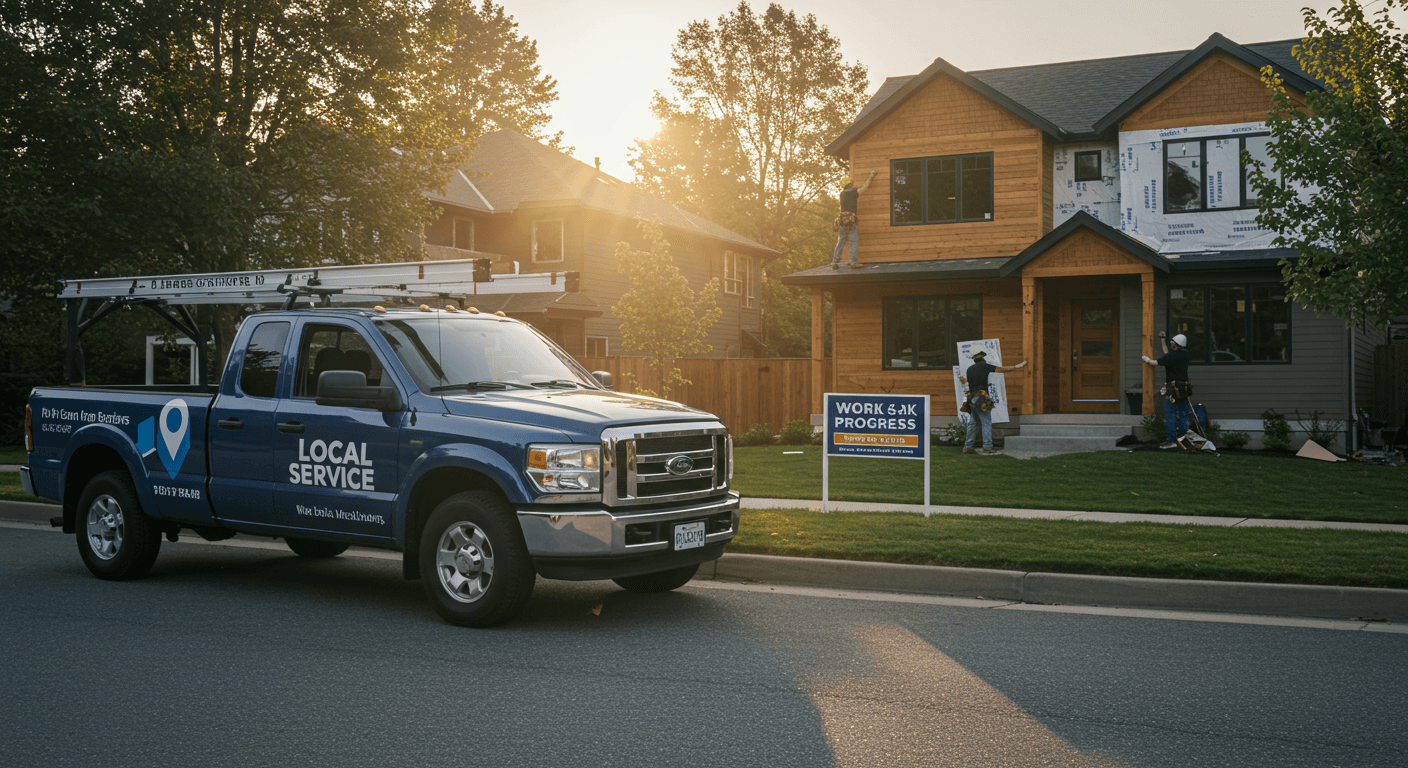
Last summer I watched a window and siding shop burn through about $5,842 a month on search ads for siding replacement in a crowded suburban corridor. Click-through looked fine, but only 2.1% of those visits turned into real conversations. Three miles out, a smaller competitor spent under $1,900 on localized pages and owned the map pack in the zips that actually drive full tear-offs and full-frame window packages. Same market, totally different economics. One team rented attention by the click. The other stacked organic visibility that kept working when the ad account paused.
That split is easy to miss when you are running crews and juggling warranty calls. Local SEO is not a vanity trophy for "being online." It is showing up the moment someone searches for ice dams at the eave, bubbling lap siding, or drafty rooms after a polar week. Miss that beat and you quietly fund the shop that did show up.
What local SEO actually buys you
Leaner acquisition: shops that pair GBP depth with neighborhood pages routinely hold a lower cost to acquire than teams that only scale paid bids.
Intent-heavy calls: map results lean on proximity and fresh proof, which lifts trust before your sales manager says a word.
Compounding assets: pages, photos, and citations keep pulling after the invoice is paid, unlike spend that dies when the budget slider hits zero.
Consultant positioning: ranking for envelope terms and performance metrics signals you are not selling on price alone.
The hard math on window and siding leads
When clicks are expensive, small conversion changes swing whether the month is worth running.
Exterior remodel tickets are large, so platforms charge accordingly. In one recent audit, branded "window replacement" clicks landed near $43.60. At a 10% form or call rate, that is roughly $436 before anyone sold the job. Close one in four and you are near $1,744 in acquisition before trim coil or demo labor hits the job cost. Local SEO sidesteps that toll when the map card earns the tap instead of an ad.
A Midwest siding operator let me compare sources after a slow spring. Organic map and site leads cleared the lower 20s on cost-to-close versus paid, mostly because homeowners arrived already anchored to a mapped address and recent reviews instead of a cold keyword. Trust shaved friction; average cycle time dropped by almost half a week on the organic side of the sample.
Lift we tracked after crews rebuilt GBP service detail, photo cadence, and neighborhood proof for specific towns instead of one generic city page.
Buyers on $20k to $60k envelopes want to know you will still be around if color fades or flashing leaks. A truck parked nearby helps, but a live listing tied to their town plus recent five-star context is the modern reference call. Meet that expectation and you spend less time overcoming doubt on the first visit.
Paid search versus local SEO for exterior shops
| Factor | Paid search | Local SEO |
|---|---|---|
| Lead flow | Fast when budget is on | Steady once assets mature |
| Typical cost per booked estimate | $150 to $450 in many metros | Often $35 to $95 blended organic |
| When spend pauses | Calls fall off quickly | Demand continues from rankings |
| Operational load | Daily bid and creative tuning | Content, photos, reviews, citations |
Lead flow
Typical cost per booked estimate
When spend pauses
Operational load
Figures shift by market, but the pattern holds: rented traffic spikes fast, owned visibility amortizes.
Technical authority, not just city plus service
Teach the problem in your climate and you attract buyers who care about performance.
A Colorado owner, call him Jaxon, kept drawing tire-kickers on broad "replacement window" queries. We aimed content at how DOE energy performance ratings show up on labels homeowners see in the showroom. Short lessons on U-factor, solar heat gain, and air leakage for their altitude and sun exposure started pulling readers who wanted efficiency, not just the cheapest quote. When education happens on your site, your first live conversation starts at consultant level instead of dueling line items.
Problem-style searches carry the same advantage. Someone might not type "siding contractor" today, but they will ask why lap is wavy or which assemblies handle wind-driven rain in your county. The Department of Energy keeps a practical hub on windows, doors, and skylights you can cite while explaining how envelope upgrades pay back. Link your workmanship to those facts and Google has more reason to match you with serious exterior buyers.
Neighborhood pages beat a single city blurb
"Build separate service area pages for the suburbs you actually want, not a bullet list on the footer. Mention local architecture, common water intrusion, and the inspections you see on those streets. That specificity feeds relevance without stuffing zip codes."
Google Business Profile for high-ticket exterior work
Treat the listing like a live showroom, not a yellow-page shadow.
Most of the action on phones starts in the map. Refresh the services menu with the real SKUs homeowners search: fiber-cement installs, triple-pane retrofits, storm-grade packages. Thin labels like "Windows" miss the homeowner typing low-E installers nearby. Google maps detailed services to intent; give it nouns it can match.
Chat and message speed matter in that same bubble. Wait three hours on a Saturday and the next listing wins. This is where a mobile lead workflow pays off. When estimators can claim or reply between ladder moves, you stop losing map inquiries to shops that simply answered first.
Action Plan
Map pack discipline in four moves
Stack small weekly wins so the listing compounds instead of stalling after one audit.
Expand GBP services with plain-language names and short descriptions per line item so Google can map fiber cement, full-frame replacement, and cap metal to real queries.
Upload five to ten sharp job photos weekly with location enabled so metadata reinforces where the work happened.
Maintain review velocity with a simple ask after spotless closes; a steady trickle beats a single huge push.
Earn local links through sponsorships or associations; a trusted .org signal still nudges relevance in competitive counties.
Filter the noise on purpose
If everything is welcome, you attract small tickets you never wanted.
Organic feels noisy when the site speaks to everyone at once. Talk instead about drainage planes, WRB details, manufacturer-certified installs, and how you handle punch lists. That voice scares off DIY dabblers and handyman hunts while signaling you handle full envelope replacements with adult paperwork.
When the pipeline still has thin months while SEO matures, pair the portfolio with exclusive window and siding demand on LeadZik so you can fill holes without inflating ad spend. Long authority work plus selective paid demand keeps sales busy without burning the estimating team on mismatched asks.
The fake address trap
Do not use mailbox shops or virtual suites to fake a pin in a town where you do not work real jobs. Google suspends those listings aggressively. Use a service-area business profile, honest mileage, and proof on the ground you can defend.
Measure what pays crews, not vanity ranks
Rankings are inputs. Cashflow per neighborhood is the scoreboard.
Track three views monthly:
- Conversion by zip. Which polygons actually produce calls and booked inspections?
- Average sale by source. In the shops I benchmark, organic-heavy leads often carry a high-teens percent ticket lift over generic social ones when the content targets envelope upgrades instead of patch jobs.
- Review language. Mentions of insulated siding or triple-pane lines become long-tail seeds for new copy.
One window team I know ranked first for "cheap windows" and hated every appointment. We pivoted copy toward energy payback and comfort. Six months later, average contract moved from about $8,400 to $12,900. Same trucks, different words in market.
Common Questions
Window and siding is won block by block. Treat local SEO like capital that lowers acquisition cost and raises trust, not a line item you toggle when things feel slow. Own the queries that pair distress and budget in your towns, and you become the name people call when the house feels wrong.