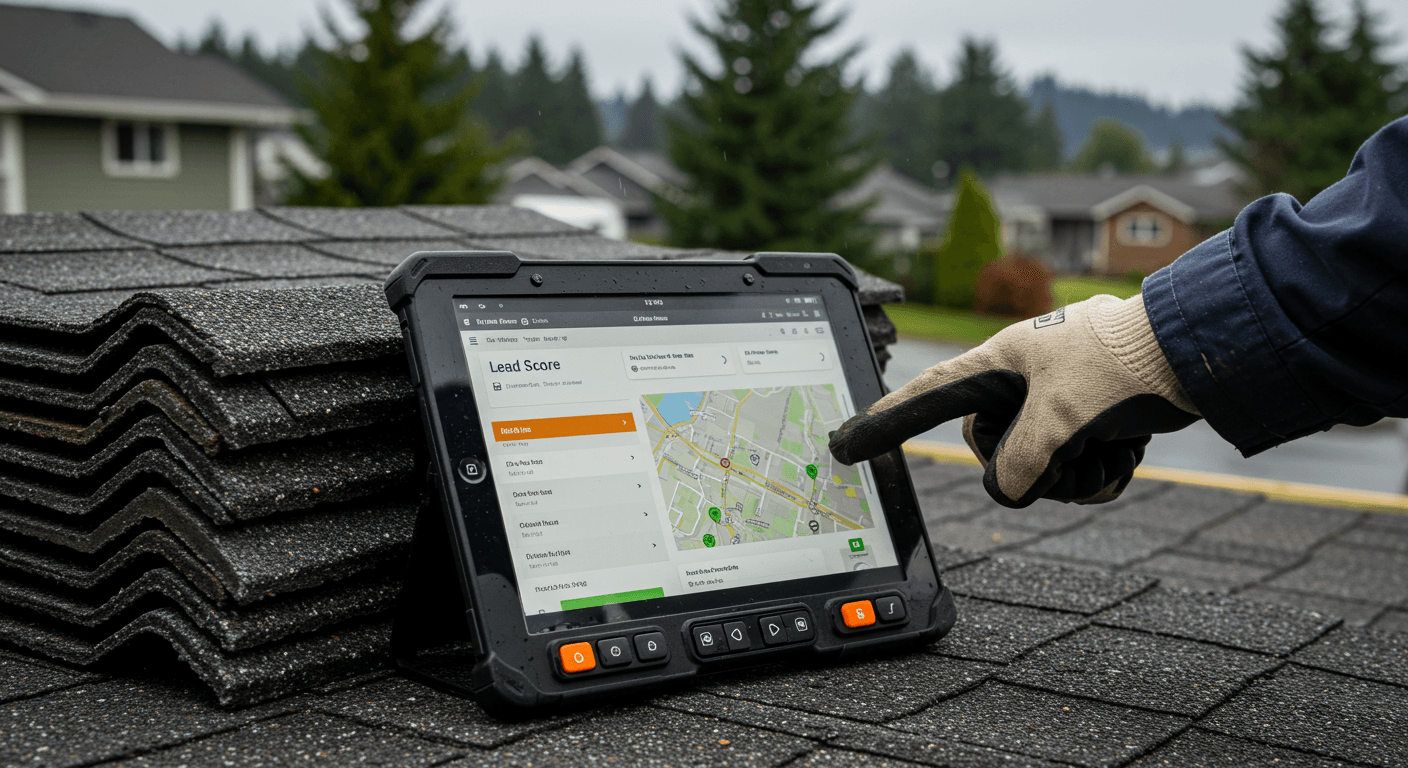
Before the first cup of coffee hits the desk in Medford, Xavier is already staring at a backlog of 21 "urgent" quote requests from a Facebook ad run over the weekend. A shop in Bend saw 38 inquiries in the same window, yet the office manager only needed 14 minutes to review them because an AI-driven triage stack had already cut the tire-kickers and "just curious" renters. The Medford crew is about to burn roughly $742 in labor this week just manually filtering noise, while Bend is already lining up four pre-qualified roof replacements with signed site-access paperwork. That 19.4% gap in operational efficiency is not about who fields a sharper crew—it is about who stopped using salaried admins as a human spam filter.
What This Means for Your Shop
Automate the first three minutes of lead screening so front-office payroll stops subsidizing low-conversion funnels.
Layer sentiment and urgency signals so true active leaks reach estimators before price-shoppers flood the schedule.
Pipe qualified records straight into the CRM and hold median first-response times near 4.8 minutes.
Stop chasing ghosts outside verified territory to plug roughly $14,200 in yearly leakage from out-of-area fantasies.
The invisible margin killer
Pacific Northwest roofing already fights labor scarcity and rising insurance. Ignoring office drag is optional—until it quietly erases gross profit.
Owners I work with in Eugene or Salem love talking material swings and crew velocity, but they rarely clock how much admin time drains into digital junk. Paying someone $24 to $28 an hour to phone every form fill is a tacit vote for volume over sanity. About 63% of those pings are ghosts: non-owners, renters fishing for a free inspection note, or households two counties past your routed trucks. Fifteen minutes per ghost across 40 weekly leads is 10 hours erased every week—north of 500 hours annually that could feed reviews, warranty checks, or collections instead.
Contemporary lead generation strategies keep repeating the same lesson: volume is vanity if conversion stays brittle. Portland shops that "scale" by buying more unfiltered demand usually torch morale because sales reps inherit a thicker pile of trash. An always-on qualification layer shifts the math—it asks roof age, ownership, and leak language before anyone schedules a lift.
Weekend surge, two Oregon shops
| Operating signal | Manual Medford triage | Bend-style AI pre-filter |
|---|---|---|
| Time spent reviewing 21–38 leads | Full morning on callbacks and spreadsheets | Single short block with scored queue |
| Labor dollars lost to filtering (example week) | ~$742 reactive admin cost | Labor redirected to booked work |
| Likelihood serious replacements reach production | Crews oscillate between hope and no-shows | Pre-qualified jobs with access approvals |
| Strategic takeaway | Efficiency limited by human sorting speed | Efficiency tied to rules + models, not stamina |
Time spent reviewing 21–38 leads
Labor dollars lost to filtering (example week)
Likelihood serious replacements reach production
Strategic takeaway
Illustrative week pulled from the Medford vs. Bend contrast described above.
Building a tactical AI triage system
You are wiring a qualification engine, not earning another degree.
Swap the generic "Contact Us" wall for conversational flows or logic-heavy builders such as Typeform or Jotform. When a Hillsboro homeowner types "moss growth" and "granule loss," route those phrases through a scoring rubric—High Intent Repair versus Replacement Candidate—before your customer experience team ever sees a name.
A Gresham contractor recently piped every submission through a large language model using Zapier. The model hunted for property ownership, damage phrases like "missing shingles" or "skylight leak," and GPS relevance to primary routes. Clean hits landed in the CRM as Hot; everything else received a polite auto-email demanding specifics before a human dialed. Net result: 11.5 phone hours saved in the first month. That mirrors what advanced markets learned when they moved toward insight-driven selling instead of blitzing every raw request.
Action Plan
Oregon AI qualification sprint
Four moves to replace manual chaos with scored, CRM-ready roofing leads.
Step 1 — Audit lead flow for 14 days. Tag job-ready homeowners versus out-of-area, wrong-trade, or renter noise.
Step 2 — Deploy an AI gatekeeper (Intercom, custom OpenAI, etc.) asking three to five non-negotiables, including a verifiable street address.
Step 3 — Score intent from 1–100: catastrophes and filed claims float up; curiosity and vague sprawl sink into nurture.
Step 4 — Automate CRM pushes into JobNimbus, AccuLynx, or your stack so reps open laptops to five-figure opportunities—not inbox roulette.
Want to skip the manual work and get exclusive, verified leads instead?
Get $150 in Free CreditsDo not weaponize speed against compliance
Chasing every hail keyword without verifying geography or ownership will still waste CCB-sensitive crews and annoy legit prospects. Let automation filter, but keep humans accountable for contract law, permits, and documented scope.
CCB context, weather truth, and proactive canvassing
Use public data to prioritize storms instead of guessing.
Oregon's Construction Contractors Board expectations shift between Multnomah commercial work and a residential patch in Clackamas. Train agents—or brittle scripts—to reference jurisdiction, then cross-check addresses against zoning and historical weather when someone claims hail. If Medford reports hail damage, confirm whether NOAA logged an event for that zip in the last 14 months before you fuel a truck.
A Beaverton storm team blended public weather feeds with their CRM and spotted 22 high-probability homes that had not yet requested inspections. Dispatch became intentional, and average contract value climbed 28.7% for the quarter—proof that qualification can start before the form submit if data is honest.
Sales labor stays glued to dead leads while urgent homeowners sign the competitor who responded with context, not a script.
Sentiment analysis finds the hidden emergencies
Same form fields, totally different urgency.
"I think I might have a leak" is philosophically distant from "Water is hitting our dining table tonight." Models that read distress language let you hijack the queue exactly when speed still wins the bid. Pair that with scoring, alerts, and routing you can configure once and the right notification hits your lead tech before the homeowner finishes dialing the second company on Google.
During Oregon's atmospheric river stretches, volume spikes strain every shop. Winners separate active disasters from stains that sat unnoticed since 2019, so crews spend nights on real saves—not theater.
Five-minute human rule
"Route any message mentioning an active leak or ceiling damage to a live human within five minutes. Let automation handle hygiene; empathy still closes the $15,800 emergency ticket."
Operational ROI in plain dollars
Reassess payroll allocation before you buy more ads.
Assume an office manager earns $54,000. If a quarter of their week is qualifying junk, $13,500 of that salary props up work software can absorb for roughly $45 a month. Automation is not automatic headcount cuts—it frees ten hours weekly for post-job review calls, lien releases, or financing nudges. One Medford shop lifted review capture 34% once their admin had breathing room after final inspections.
When you map how verification, preview, purchase, and delivery interact, the constraint is rarely raw lead count. It is how fast truthful data reaches the people who can sign a contract.
If reps say the leads suck, inspect the filter first
Noise buries viable rooftops.
Plenty of "bad" leads are actually workable—they are just trapped under spam. Qualification gives your business permission to decline miserable fits while reserving capacity for steep-slope replacements, commercial coatings, or storm repairs you actually want.
When you read why LeadZik exists, the through-line is simple: roofing operators deserve the same rigor financiers demand from deal flow. AI screening is the operational extension of that promise—fewer ghosts, more signed scopes.