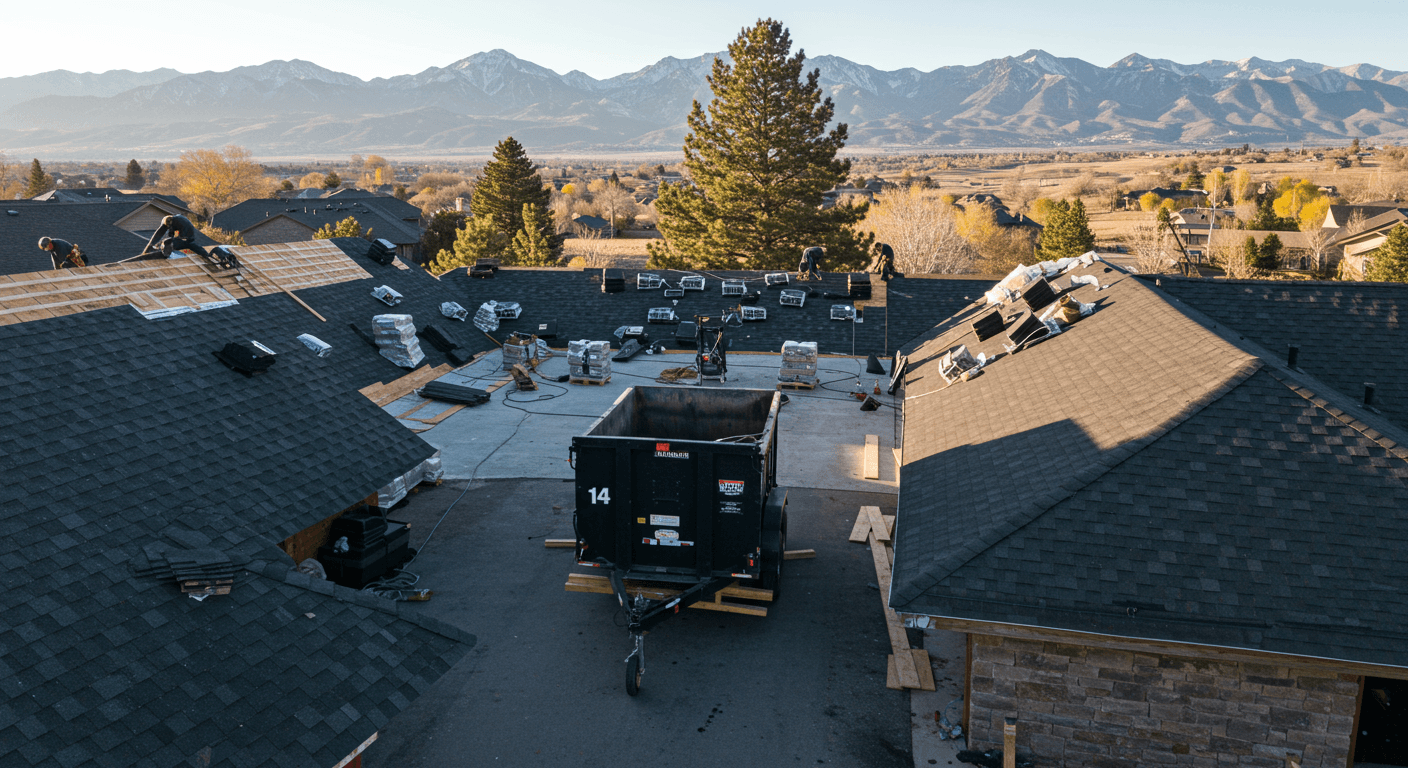
In the Utah Valley, a $1,348 margin gap often separates reactive cleanup from a synchronized debris staging system. One approach leaves an Orem driveway buried under 4.2 tons of jagged asphalt for seven hours, forcing a big end-of-day labor spike that drains 11.6% of the project's net profit. The alternative treats the dump trailer as a moving extension of the roof deck, where shingles travel from the eave to the box without touching turf. That is not just a courtesy move. It is a way to reclaim the 19.4% of crew time that often disappears to double-handling waste. When a team stops fighting the mess, they tend to finish the ridge vent roughly two hours sooner, which matters while labor pressure keeps climbing for the roofing workforce across the mountain west.
The high cost of the "ground drop" in Provo
If the old shingles hit the lawn first, you pay for that decision twice.
Many owners in Utah County treat tear-off like a brute-force phase. If the old roof is stripped by noon, they call the system a win. When you add up moving 8,400 pounds of shingles from the ground into a container, the math turns ugly fast.
I recently picked apart a 32-square job near Brigham Young University that used a standard ground drop. Four laborers spent 2.5 hours at the end of the day policing the grounds. That is 10 man-hours spent moving material they already had in their hands on the roof. At a typical fully burdened rate, that is about a $340 leak on one job.
In Provo's tighter residential pockets, like streets near Northgate or the narrow lots in East Bay, the ground drop is not only labor. It is exposure. Shingles sliding off a steep slope can wreck a $2,400 vinyl fence or crush beds you did not price to replace.
Residential installs that let material hit the ground before the box usually burn extra hours on magnets, tarps, and homeowner walkthroughs.
Optimizing Provo job site logistics
Synchronized staging can cut total project man-hours by trimming double-handling between the roof edge and the waste box.
Dump trailers often win on maneuverability in tight Provo bench neighborhoods compared with full-size roll-off rigs.
Smarter bundle placement on the ridge cuts walking and lines up with how you should keep travel paths clear for fall prevention.
Staged tear-off timing keeps the site passable mid-day and stops the crew from rushing the last magnet pass when they are tired.
Comparing the logistics: dump trailers vs. roll-offs
Waste hardware in the Provo market depends on what your fleet can tow and how hostile the driveway is. The bench lots deliver great views and awful turning geometry for heavy trucks.
A 14-yard dump trailer is often the better fit there. Towed behind a 3/4-ton or 1-ton truck, it can snake places a roll-off truck simply cannot. You can often back the tongue closer to the eave on a skinny drive without chewing up the whole front yard.
Debris management comparison
| Feature | Third-party roll-off | Owner-operated dump trailer |
|---|---|---|
| Driveway protection | Moderate (planks and truck weight) | High (rubber tires, lighter footprint) |
| Maneuverability | Low (needs wide swing room) | Strong on tight Provo lots |
| Daily cash burn (typical) | $185–$265 (rental plus tonnage) | $42–$58 (fuel, wear, maintenance) |
| Scheduling control | Vendor queue and haul windows | You decide when the box moves |
Driveway protection
Maneuverability
Daily cash burn (typical)
Scheduling control
Numbers shift with dump fees and diesel, but the pattern holds: roll-offs trade convenience for a higher daily ticket.
The trade is the dump run. If you own the trailer, someone has to haul it to the North County transfer station. A 90-minute round trip still stacks up favorably when you pocket roughly $215 in rental savings. Shops running three or more roofs a week in Provo often see trailer ownership cross breakeven in a little over eight months if they stay disciplined on maintenance.
Material staging: the quiet lever on install speed
If the trailer is your exit plan, staging is your entry plan. I have watched Provo crews burn 45 minutes each morning because shingle delivery landed dead center in the drive, blocking the trailer path you need all day.
Roof-loaded bundles are ideal. On a 12/12 in the foothills where a boom cannot reach, you still need a ground-to-roof plan that does not bottleneck on a single ladder hoist.
Finn, a field supervisor I worked with last season, used a ridge-split rule. Instead of one monster stack, delivery split across the main ridge and the garage gable. That cut average walking distance per bundle by about 16 feet. Across 40 squares on a steep deck, that is close to two miles of unnecessary slope walking gone.
Safety and speed overlap here. Following OSHA fall prevention guidance and keeping walk paths clear of staged bundles does more than check a box. It lets installers move with confidence instead of sidestepping piles all day.
The "reverse-L" placement
"Park the dump trailer in a reverse-L relative to the main tear-off slope so two tossers can work without crossing paths. Fewer near misses, fewer dropped loads."
Synchronizing tear-off timing
The classic failure mode is all-at-once tear-off. The back slope is bare, the lawn looks like a war zone, and the crew waits on cleanup before anyone feels good about dry-in. Staged tear-off breaks that cycle.
- Phase 1: Clear the primary eave and park the trailer in the strike zone.
- Phase 2: Strip the first 10 squares and get gutters clean before debris piles spread.
- Phase 3: Dry-in the cleared section while the next strip starts, so the workflow stays circular instead of stop-start.
That rhythm keeps the site sane enough for a homeowner to walk the dog at 2:00 PM without finding nails in the grass. It also avoids cleanup fatigue at 5:30 PM when tired crews start skipping the final magnet pass.
Before you lock a trailer into a tight street, it helps when detailed project previews already answered driveway length, overhead branches, and gate width so your PM is not guessing while the crew waits.
Action Plan
Clean-site implementation plan
Four moves that reduce friction between tear-off, dry-in, and the haul-out.
Zone mapping: mark the drop zone and staging zone on the digital job file before the crew rolls.
Lead-in verification: confirm driveway length, slope, and overhead clearance for the trailer combo you plan to run.
The 15-minute sweep: a mandated mid-day pass around 12:30 PM so debris never snowballs into a night job.
Direct-to-hitch: have the runner on site 30 minutes before the trailer is full so you can swap boxes without pausing tear-off.
The Provo "power line" trap
Older homes near downtown Provo often carry low service drops. Check overhead lines before you tilt a dump bed. A loaded 12-yard trailer at full dump angle can reach near 14 feet and snag wire that was harmless when the bed was flat.
Scaling the system
If logistics eat your week, step back and look at what you are feeding the schedule. Chasing thin-margin work leaves little cash for trailers, runners, and spare tires.
Shops that stabilize intake around verified project opportunities can plan staging days with real scope and pitch in hand. When you know the roof before you bid, quoting a honest logistics surcharge on tight Provo canyon jobs stops being a guess.