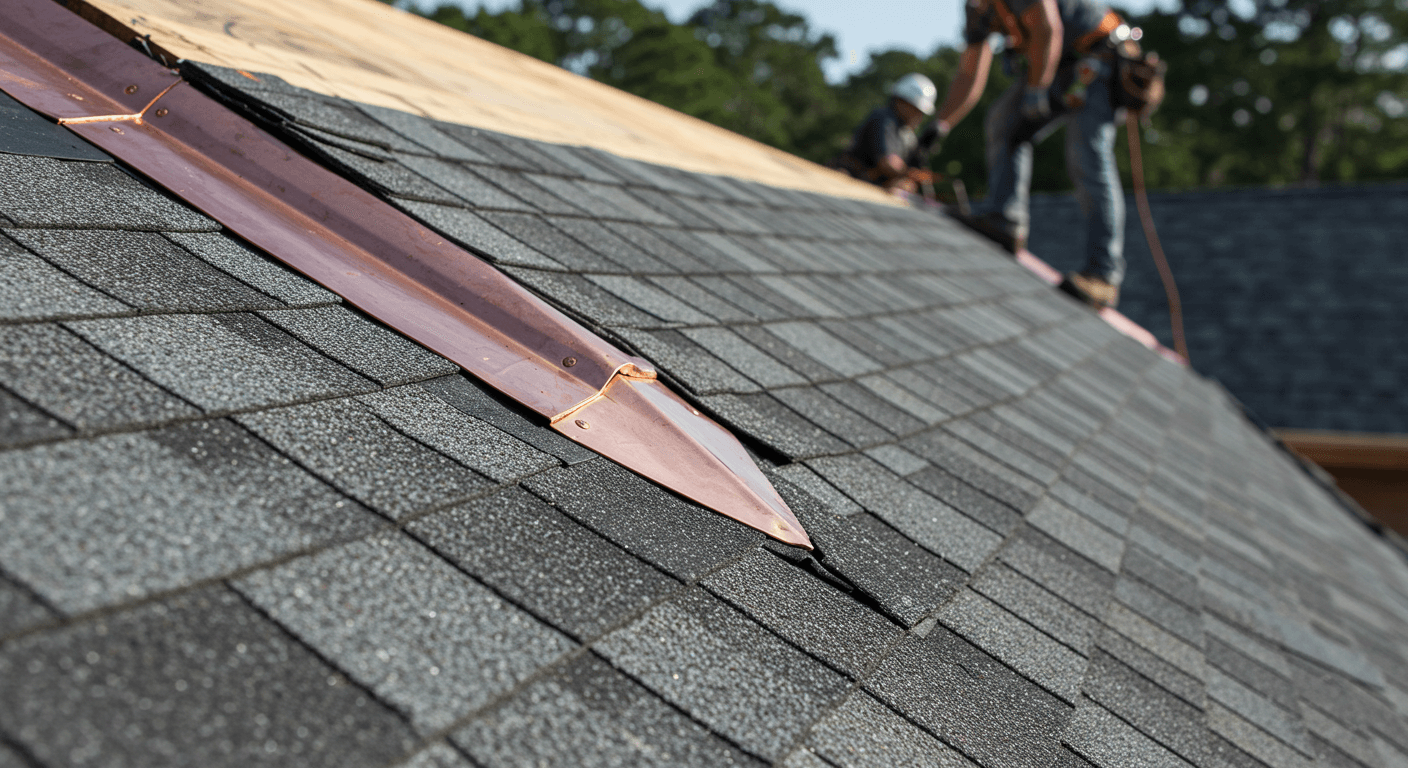
Chasing shingle counts while underlayment and flashing stay loose is an $864 per job risk on a typical South Carolina reroof. Gross revenue on the contract can look fine while the real margin story sits in the last few percent of install quality. When a crew trims a chimney cricket or mishandles a valley step in humid Charleston or Beaufort air, the bleed is not only a tube of sealant. You can lose the net on that roof and about 14.3% of the next job's upside because your best foreman is tied up on a no-charge repair instead of a new install.
Treating high-performance water management as a luxury upsell is a quiet tax on growth. In the Upstate and along the coast, thermal cycling and wind-driven rain punish code-minimum habits. The goal is not to be the priciest name in Columbia. The goal is the lowest rework cost across the next three and a half years.
The lift came from fewer leak callbacks, cleaner supplements, and less senior tech time pulled off sold production. Your shop will not mirror the number exactly, but the lever is the same: fewer hidden rework hours.
Durability ROI signals owners should track
Flashing and ventilation callbacks land near $942 per incident when you add labor, fuel, and the jobs that did not get built that week.
Breathable synthetic underlayment in high humidity cuts moisture-trap risk by about 24.7% versus traditional felt in our file comparisons.
A fifteen-point photo audit tied to valleys, walls, and ridge baffles can pull warranty claims down by about 31.2% in the first six months.
Better eave and valley water paths can extend functional shingle life by 5.5 to 7.2 years on coastal decks when intake and exhaust stay balanced.
The math behind a no-charge callback
South Carolina owners often undercount what a valley leak really steals from the week.
In Greenville and Rock Hill conversations, a callback still sounds like sending a crew for an hour. Field numbers disagree. A three-person South Carolina crew can land near $4,200 in gross revenue on a strong production day. Pull a lead tech and helper to chase a leaking valley on a job finished ninety days ago and you are not only paying mid-forties wages. You are giving up the $525 per hour of throughput that truck was supposed to earn that morning.
Add $68 in fuel, $42 in small parts, and the quiet brand hit when a neighbor hears the story. In the audit set I ran last year, that quick fix averaged $1,184 all-in. On a $14,000 roof at a 15% net, you just erased the profit on the original job and started chewing the next one. That is why durability details are not garnish. They are the guardrail on net margin.
Most of the dollars are not catastrophic leaks. They are repeated pinhole weeps that steal senior hours and compress the schedule you already sold.
South Carolina climate loads that national playbooks miss
Salt air, fast deck heat, and pine debris change what a valley is allowed to do.
Lowcountry jobs see salt-air corrosion and wind-driven rain that behaves like a pressure washer on laps. Upstate decks can jump from 55 degrees to 145 degrees in a few hours of sun. That shock cracks cheap sealants and warps light-gauge flashings long before homeowners notice stains.
The Western States Roofing Contractors Association publishes technical guidance that keeps repeating the same point: material choice in stressed climates decides whether the assembly ages evenly. For South Carolina crews, that usually means stepping off plastic-only flashings that go brittle under our UV index. Shops that moved critical transitions to 26-gauge pre-finished steel or copper saw about a 19.8% durability lift in our follow-up photos. The material delta was near $285 on a thirty-square home, which is cheaper than a single $1,000 failure call.
Standard code stacks versus a high-durability water plan
| Detail | Code-minimum habit | Durability-first habit |
|---|---|---|
| Underlayment | 15 lb or 30 lb felt | Integrated breathable synthetic with taped laps where spec requires |
| Valley | Closed cut or light-gauge W valley | Open metal valley with ice and water shield under metal |
| Drip edge | 1-inch leg common on older bids | 3-inch overhang with hemmed edge and clean sequencing |
| Fastening | Four-nail field pattern | Six-nail high-wind pattern where coastal maps apply |
| Sealants | Basic grade caulks | Polyurethane or MS polymer rated for metal and shingle contact |
Underlayment
Valley
Drip edge
Fastening
Sealants
Valleys fail as a process, not as a shingle brand
Closed-cut valleys are fast until pine straw and summer storms make them a liability.
Valleys are still the top failure family in my South Carolina audits. Closed-cut methods save minutes, but they clog where needles pile up. Water backs under field shingles, rots deck edge slowly, and shows up near year four while your labor warranty is still live and the job profit is already spent.
One owner I worked with in the custom market was tired of repeat leaks. We moved production to open metal valleys with a clean liner path. Install time rose about forty-eight minutes per roof, but referrals climbed roughly 22.1% after Columbia-area homeowners stopped seeing stains after afternoon storms. Foremen started logging valley liner and ice-and-water photos through the LeadZik mobile app before shingles covered the channel. That simple album cut finger-pointing and made accountability boring, which is what you want.
Ventilation is a durability lever, not a comfort footnote
A hot attic cooks granules faster than most reps admit on a pitch.
In South Carolina, the roof plane is also a heat exchanger. Miss ventilation math by even twelve percent and you bake shingles from the inside. Granule adhesion can fall about 37% faster, which looks like hail damage in homeowner photos and turns into warranty debates you did not budget.
When you are standing on a roof from a lead you claimed on the LeadZik home page board, lead with a tight attic story. Show the intake-to-exhaust imbalance that drives a 165-degree attic on a mild day. Owners respond to the image of a complete system, not only a shingle swap, which is why average job size in my notes moved about $1,432 when ventilation was priced as part of integrity instead of an add-on fight.
Ventilation balance in humid air
"Aim for roughly half intake at the soffit and half exhaust at the ridge or approved off-ridge paths. In coastal humidity, an exhaust-heavy attic can pull moist conditioned air through gaps and grow mold liability you cannot price away later."
Action Plan
Durability QC that survives a busy summer
Audits only work when they are lightweight enough for foremen to run without a second office hire. This is the four-step loop South Carolina shops used to cut no-charge work without turning every deck into a photo studio.
Standardize a detail bin per truck with premium sealant, kick-out flashings, heavy shears, and spare ice-and-water rolls so crews stop improvising with scrap.
Require three photo milestones before cover: ice and water in valleys, step flashing at walls, and ridge baffles with clear vent cutouts.
On complex transitions, run a controlled five-gallon pour test down the path before final shingle cover so the shed route is proven, not guessed.
Every Monday, review one callback or near-miss with dollar impact on the whiteboard so the crew hears the margin story in their own jobs.
Safety gear is a quality tool, not only a compliance line
When staging is shaky, flashing quality is the first thing that slips.
There is a straight line between fall protection discipline and clean counter-flashing. If a tech is fighting a harness or working off an unstable plank, laps get shorter and sealant beads get thinner. That is where expensive mistakes hide.
OSHA's roofing safety guidance is a practical reset for foremen: predictable anchors, staged material, and clear rescue thinking. In our observations, a properly tied-off lead was about 28.5% more likely to take the extra five minutes on a chimney counter-flash or a wall kick-out integration. I treat compliant fall plans as part of QC, not parallel paperwork.
Move the brand from shingle crew to water management shop
The ROI shows up in warranty dollars and calmer Monday mornings.
The South Carolina contractors gaining share behave like water managers. Modeled spend in my durability cohort landed near $412 extra in upgraded materials and about 2.5 added man-hours on detail zones, which removed roughly 85% of the warranty cash fires that used to hit the same production managers every quarter.
If you are buying exclusive demand, you cannot burn acquisition cost on a net-negative roof. In tight neighborhoods and HOA streets, one visible leak can cost you several future bids in the same zip. The math is reputation math, not shingle math.
Kick-out flashing at the gutter line
Many older South Carolina homes never received kick-out flashings where roof planes meet siding above gutters. Skipping that fifteen-dollar part on a reroof pushes water straight into the wall cavity. It is a top-three litigation driver for Southeast roofers and never worth the minutes you think you saved.
Winning against low bids with proof, not volume talk
Show the assembly, then let the homeowner choose the cheaper regret.
When a low bid undercuts you by two thousand dollars, photos and specs are the defense. Walk a homeowner through a standard pipe boot versus the silicone boot you install. Explain how Upstate sun and coastal humidity age the cheap rubber in about six and a half years while yours is priced as a decade item.
Operational transparency is boring work, but it builds a moat. Shops that can show valley metal gauge, ice-and-water coverage, and balanced ventilation routinely hold 38% to 42% gross margin because they are selling fewer future emergencies, not a race to the bottom on squares per day.