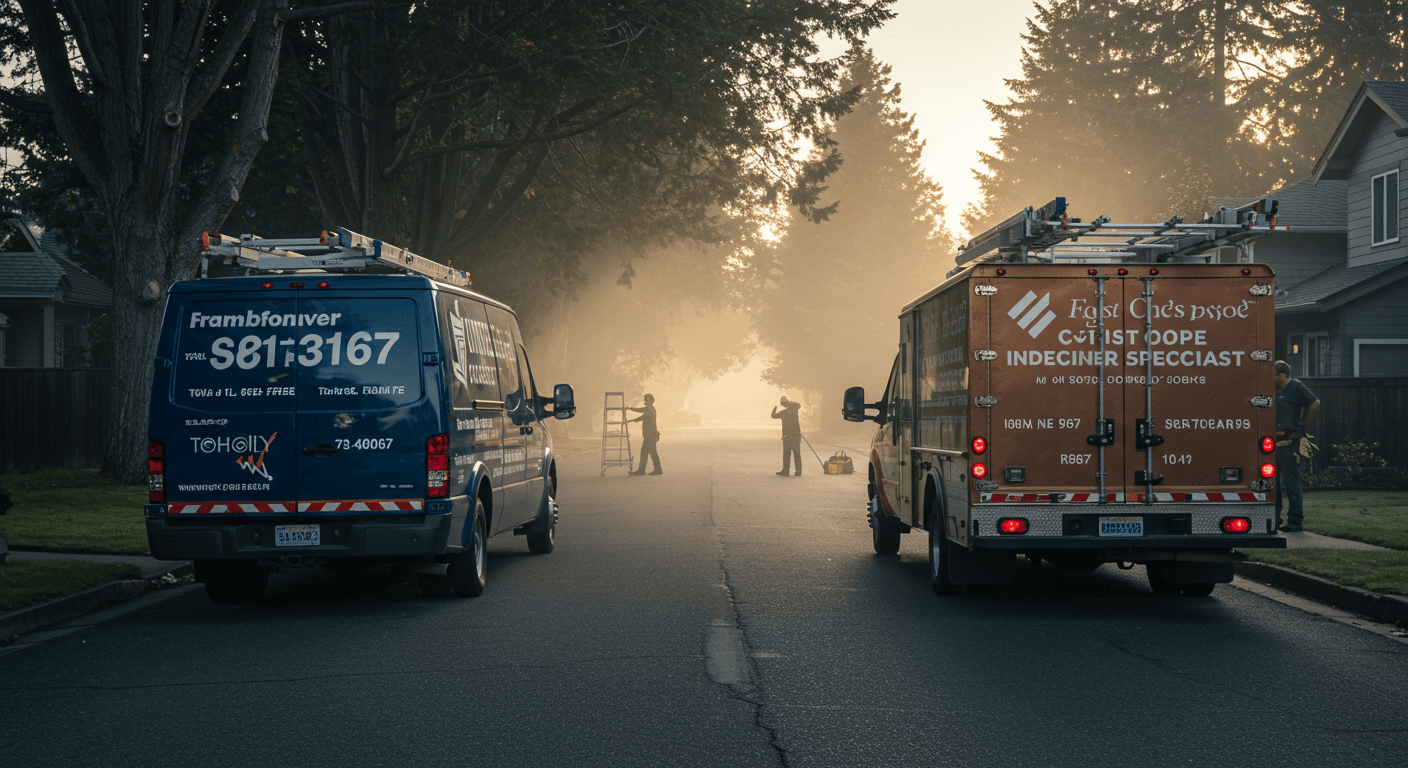
Scaling a solo operation across the Bay Area keeps you in control of every custom miter and downspout bracket, while signing a franchise agreement in Southern California trades some of that freedom for a packaged marketing engine and a standardized ops playbook. At roughly $450,000 in revenue, that trade becomes the real fork: bet on your own brand in a crowded lane like Seattle or Portland, or buy a system that picks your colors, your software, and a steady slice of gross margin.
Neither path wins on vibes alone. The question is which sacrifice gets you to seven figures with a crew you can still stand behind. I have sat with owners who felt boxed in by franchise rules at a $2.4M run rate, and independents in Sacramento who stalled because hiring a strong lead technician without a corporate training spine was harder than hanging steel. You are choosing between artisan control and enterprise management, and the coast makes that math expensive either way.
The high cost of independent trial and error
Systems you build yourself still invoice like a vendor
Independent growth on the West Coast is rarely glamorous. You research how gutter materials behave in real weather so coastal clients get the right aluminum gauge against salt air. You chase coil pricing with suppliers in Tacoma or Fresno. Every playbook is homegrown, which is powerful until the hidden bills show up.
Wesley in San Jose spent eighteen months building a sales curriculum while his crews crushed the technical work. He already understood drainage and runoff control on steep Victorians, yet tickets hovered near $1,840 because estimators could not explain leaf protection or fascia repair with confidence. By the audit, he had burned $14,230 on outside marketing help and $9,600 on shelfware. No royalty line on the P&L, but the learning tax was real, and for stretches it ran hotter than a 6% or 8% franchisor cut. Three years later the shop looked efficient; a franchise might have compressed part of that calendar.
Watch the "silent" software and coaching stack
If you cannot point to a single CRM view your estimators live in, you are probably funding random tools instead of compounding process. That spend is the independent analog to recurring franchise fees, except it rarely shows up as a clean percentage.
The franchise squeeze when corporate math is not coastal math
Franchises sell a business in a box. For strong gutter operators, the box can feel tight fast. Royalties often land between 5.5% and 9.2% of gross, with another two to three points for a brand fund. At $1.5M in Los Angeles, that stack can move six figures a year back to corporate before you buy a pound of hangers.
The value question is whether the spend buys local leverage. West Coast digital auctions are brutal. If the franchisor plans around a $65 CPL and your San Diego reality is closer to $145, headquarters does not always retune fast enough. You still fund brand overhead while you fight for attention block by block.
Tooling fights show up next. Forced CRM choices that refuse to talk to field apps mean crews lose minutes all day. When you cannot check job details from the truck or the ladder staging area, labor bleeds quietly. Franchises trade speed for customization: you can ramp, but you may ramp into a margin band that feels thinner than the brochure implied.
When total recurring fees cluster near the mid sevens, ask what proprietary demand you are buying in your zip codes, not just what the brand sounds like on a slide deck.
The 12.4% rule for independents
"If you stay independent, plan on at least 12.4% of gross going to real system work for the first three years: brand that reads professional, CRM your team actually uses, and SOPs someone can train from. If that number makes you wince, a franchise fee can look like outsourced R&D instead of a penalty."
Two P&L personalities at the same $1.2M revenue
| Factor | Franchise shop | Independent shop |
|---|---|---|
| Net margin band (owner salary normalized) | Low to mid teens after recurring fees | Near high teens when marketing spikes are controlled |
| CAC stability month to month | Often smoother with centralized ad testing | Swings hard when a competitor floods the zone |
| Creative control on brand and upsells | Corporate guardrails limit experimentation | Full control, for better or worse |
| Buyer story at exit | Predictable playbook can attract certain acquirers faster | Premium local brand can win multiples without royalty drag |
Net margin band (owner salary normalized)
CAC stability month to month
Creative control on brand and upsells
Buyer story at exit
Figures mirror 2023 shop sets I reconciled in Oregon and California; your market will move the bands, but the relationship between fee load and net margin usually holds.
The West Coast lead calendar problem
Pacific Northwest seasonality packs revenue into a narrow weather window. Independents need a plan for dry months; franchisees may still pay into national pools that overweight sunbelt demand when Seattle needs the spend. Either way, lead quality beats volume when diesel and labor in San Francisco or Portland are priced like specialty items.
The shops that surprised me paired tight geography with disciplined intake. Instead of blasting broad digital packages, they matched opportunities to crew skill using locked previews before committing route time. One bad-fit visit in those markets can erase a few hundred dollars in loaded cost before you even talk accessories.
Action Plan
Evaluating your growth path
Four checks I run with owners before they sign or double down on independence. They are blunt on purpose.
Infrastructure audit: if every role lacks a written SOP and nobody wants to author it, a franchise manual is a real shortcut.
Brand equity test: search gutters in your city. If the top slots are national brands, count the cash required to win as an unknown.
Royalty math: multiply projected three-year revenue by roughly 0.07. If that sum clears $200k, ask what internal systems you could build for the same capital.
Exit goal: lifestyle income versus sellable machine. Buyers like different proofs, and the franchise wrapper changes the diligence story.
Culture versus manuals on the ladder side
Independents often win hearts. A gutter company is only as steady as the people on the roof. Franchise crews can feel like a corporate roster; independents can build a crew-first shop that keeps lead installers for five or ten years when pay and respect line up.
Yara in Phoenix runs a tight independent operation: lead installers earn roughly twelve percent over market because she is not shipping eight points to Charlotte every month. Turnover is low, and her teams read fascia wear and seasonal overflow the way neighbors read a fence line. Franchises lean on repeatable scripts so anyone can execute, which scales tract installs fast but can increase callbacks on ornate coastal architecture. Match the model to the housing stock you actually touch week to week.
Making the final call
If you wake up thinking about funnel tweaks and crew routing, you will chafe under rigid franchise rules. Stay independent and invest in the systems you actually want to live with.
If you want a financial vehicle more than bespoke craft, a franchise can blunt catastrophic early mistakes that still sink a large share of young service shops. California compliance and Northwest logistics already squeeze margin, so pick the path that funds resilience, not ego.
If intake is thin, the franchise-versus-independent debate is academic. Fix how work enters the business first, then decide who gets a percentage of the top line. LeadZik is one option among many, but when crews finally have predictable work on the calendar, the rest of the strategy conversation gets quieter and easier to hear.
What actually moves the decision
Independence saves recurring franchise fees but invoices learning tax in coaching, software, and brand work that rarely shows as a single line item.
Franchise stability on CAC can be worth the fee when corporate media teams truly understand your metros; otherwise you are funding someone else's playbook error.
West Coast seasonality rewards intake discipline more than another generic ads layer, because route time is too expensive to waste on vague requests.
Exit stories differ: franchises can feel turnkey to certain buyers, while a premium local name without royalty baggage can still command attention if financials are clean.