Saving $318 on a material sub-load for a chimney transition in Worcester's North End feels like a clean win until the warranty call lands during a February nor'easter. Callback math is ugly. You lose the $942 in real labor and material on the repair, then you lose the $3,615 in opportunity cost from the crew that should have been starting a new 42-square tear-off in Auburn. In central Massachusetts, where freeze-thaw cycles stack up all winter, the gap between a 23.4% net margin and a 13.1% grind usually is not hiding in the shingles. It is hiding in the metal.
Across recent P&L reviews with MetroWest shops, metal-related callbacks showed up as one of the few line items that moved net margin without a matching drop in field speed.
Protecting your premium margins
Standardize custom-bent apron flashing so unbillable crew hours do not balloon on punch-list work.
Treat long valley runs like a weather system problem: longer extensions and clean integration with ice and water at the eaves reduce the Worcester ice-dam tax.
On triple-deckers and older brick, copper or lead-coated transitions can add real ticket value when you price them as a system, not a line-item afterthought.
Hold steep-slope installs to the full intent of NRCA technical guidance so liability and carrier questions do not outrun your field photos.
The hidden cost of a "good enough" transition
When I line up profit and loss for roofing shops around MetroWest, one variable keeps flashing red: unbillable hours filed as minor leak adjustments. I recently dug into a shop where the owner, call him Devin, was irritated that crews were finishing jobs 4.5% faster than last year while net profit went nowhere. The logs told the story. 11.2% of total man-hours were tied to punch-list trips six months after the final check cleared.
Most of those trips were not shingle failures. They were flashing failures. Worcester has dense triple-deckers and Victorian-style stock near Elm Park, so the roof is rarely a simple plane. It is a stack of intersections. If the estimator misses a counter-flash reglet cut into 100-year-old brick, the field team often reaches for caulk and keeps moving. That $45 tube buys months, not years. At 14.5 months the bond starts to slip, and a $2,400 profit slice can walk out with the leak call.
The sealant trap
Do not let tri-polymer or high-stick sealants bridge flashing gaps wider than a quarter inch. In Worcester, expansion and contraction will shear those joints within a couple seasons. If metal is not shedding water mechanically, the transition is not done.
The central Mass ice-dam tax
Worcester sits in a pocket that pulls coastal moisture and inland cold. That mix feeds ice damming that can push water uphill under architectural shingles that look fine from the street. Reporting from Roofing Contractor lines up with what I see on insurance and interior damage files: weak eaves-edge integration between flashing and ice and water protection is a repeat driver of winter claims in the Northeast.
Operationally, a warranty run to Grafton is never just a quick fix. At $38 for the lead, $22 for two helpers, a four-hour patch is roughly $328 in wages, about $45 in fuel, and close to $1,850 in revenue you did not book because that truck was not on a new install. Shops that adopt a zero-caulk rule on primary transitions, meaning chimneys, dormers, and wall intersections all get metal bent for the actual pitch, usually add around $415 in material and save multiples of that over the life of the job.
Where margin leaks on Worcester transitions
| Detail | Shortcut habit | System habit |
|---|---|---|
| Water path at masonry | Heavy bead of sealant in an open reglet | Mechanical counter and apron sized to the brick |
| Valley line in ice-prone roofs | Minimum metal extension, hope the IWS catches it | 24-inch extensions with a clean eaves starter |
| Fabrication timing | Portable brake on site, weather dependent | Shop kit from estimator dimensions, dry-fit first |
Water path at masonry
Valley line in ice-prone roofs
Fabrication timing
Scaling quality with prefab flashing kits
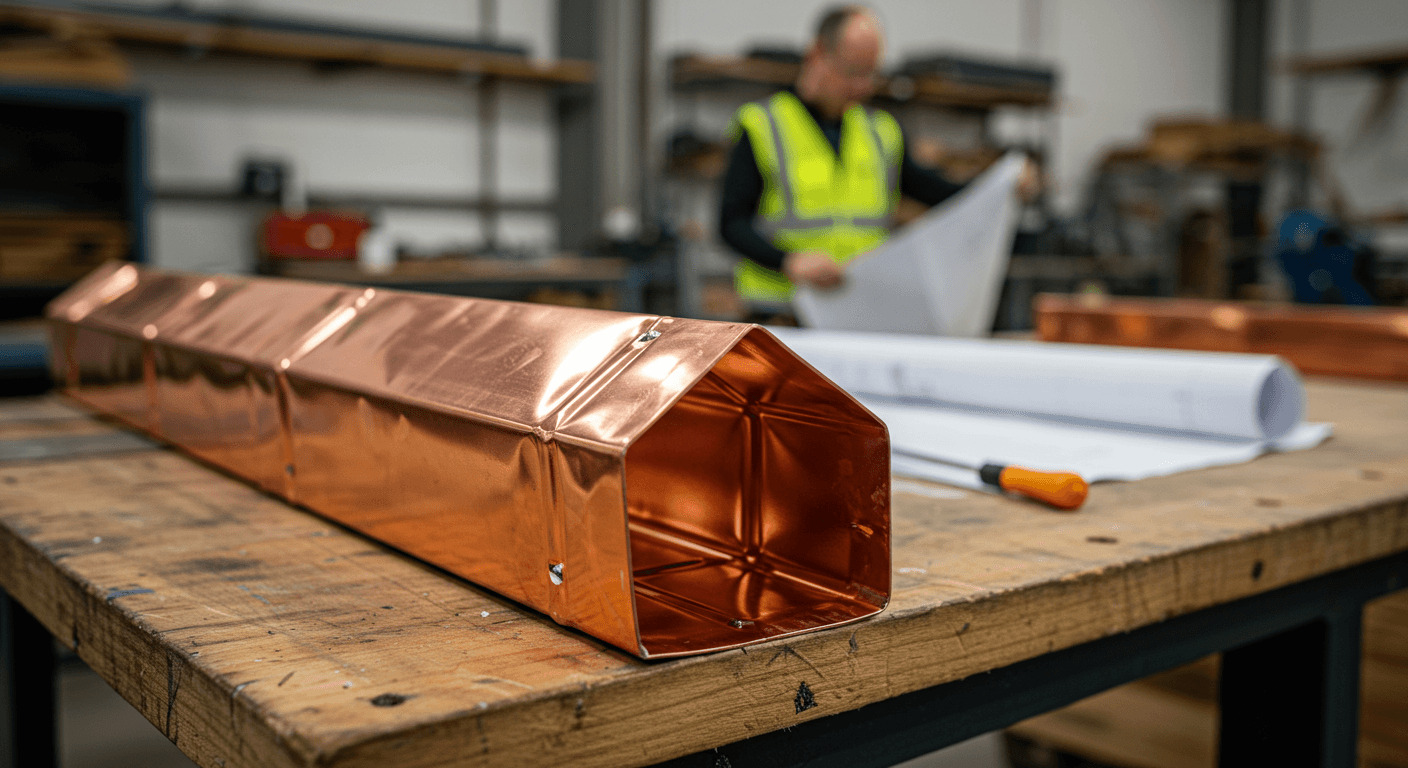
The expensive part of flashing is rarely the copper or aluminum. It is the hour the lead spends bending stock on a windy day in Holden while production backs up. Moving fabrication off the roof changes the game. Growing shops now build kits from estimator measurements so the crew shows up with pre-bent step, counter, and apron pieces that match the bid.
Action Plan
Shop-first flashing workflow
A four-step path to cut roof-time fabrication, tighten quality, and keep premium tickets from sliding into callback territory.
Estimators record pitch plus chimney L x W x H on the first site visit, not on a text thread two days before tear-off.
Shop or lead fabricates step, counter, and apron pieces at least one business day ahead so weather is not dictating tolerances.
Crews dry-fit all metal within three feet of each transition before shingles close in the area.
Lead photos step flashing before counter covers it so the job file shows a mechanical path, not a mystery stack.
Field note
"If the dry-fit photos are not in the file before cover, assume the transition was not verified. Offices hate the extra step until the first denied claim disappears."
Premium leads expect premium scope language
When you are buying verified, exclusive leads in higher-value Worcester-area zips, you are often talking to homeowners who read reviews and ask about details. They are not only buying shingles. They are buying a dry attic in March. When an estimator can show the difference between a basic kick-out and a soldered or fully integrated transition, price stops sounding arbitrary.
One contractor I worked with added a Metal and Masonry section to digital bids with side-by-side photos of new custom copper valleys against the pitted steel on the existing roof. Close rate on jobs north of $18,000 moved up 9.4% because the proposal read like a system, not a commodity swap. If you want help connecting that level of scope with homeowners who already value craft, reach the LeadZik team and we will walk through fit for your market.
Masonry integration as margin defense
Plenty of Worcester chimneys behave like sponges. Flash the lid perfectly and you can still get a callback if the crown or mortar joint is tired. From an ops view, I like a mandatory masonry protection line on roofs older than fifteen years. It is not only upsell. It is liability insulation. If water tracks through brick, many homeowners blame the roofer first.
A $540 chimney protection package with clear photos and scope language often nets around $215 after material and labor, and it keeps the story straight when someone calls six months later. Pair that field discipline with NRCA steep-slope guidance on transitions so your install narrative matches what carriers and engineers expect to see in photos.
Common Questions
Turn transitions into margin you can keep
Profitability around Worcester is often a game of inches. Fast shingle production does not help if metal details keep sending trucks back to the same neighborhood. Systemize the fab, teach the scope story, and treat masonry as part of the weather boundary. Crews stay saner when they are not repeating work, and the P&L stops bleeding the 14.8% you did not notice because it hid inside punch-list hours.