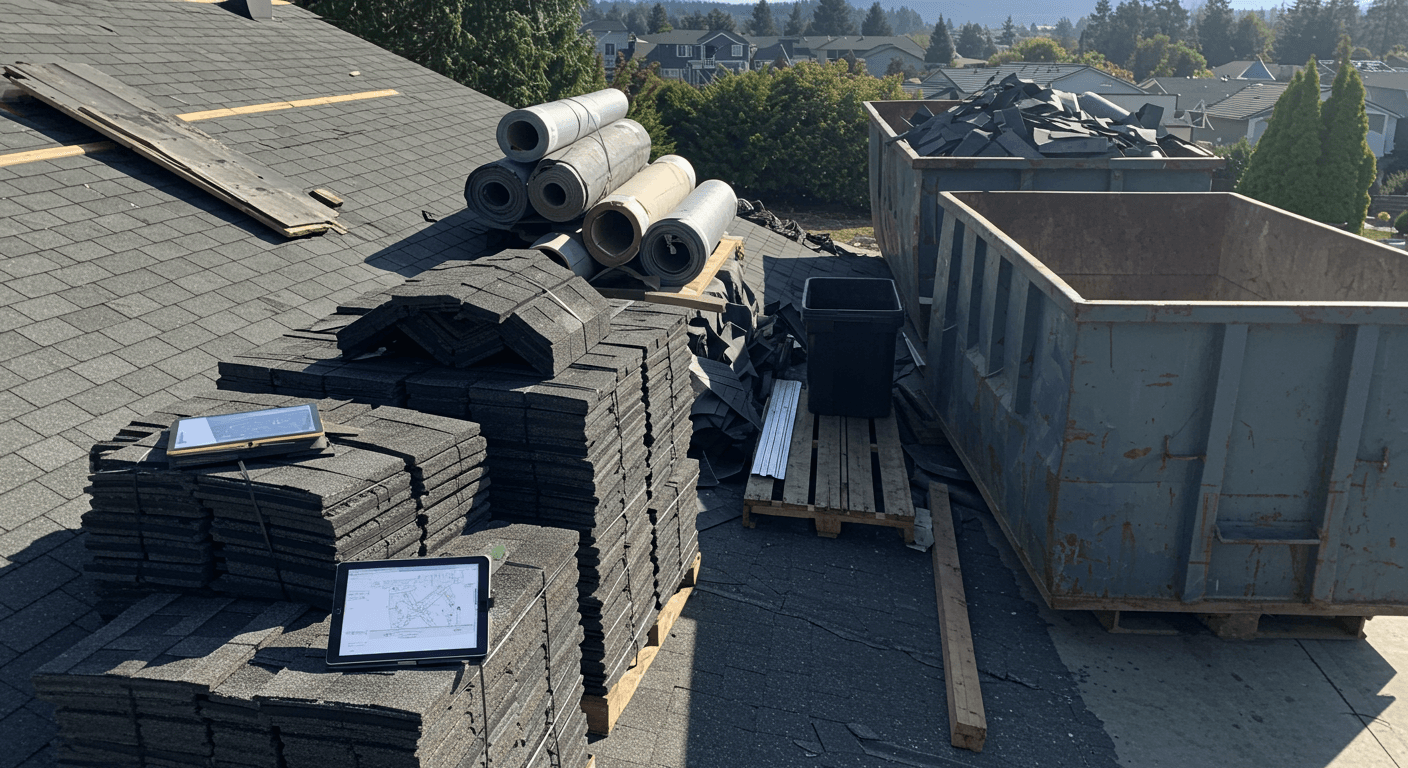
Running a high-volume roofing shop with a default 14% material waste buffer puts a hard ceiling on net profit, especially when coastal material pricing swings quarter to quarter. Contrast that with a precision-ordered job where digital takeoffs and tight field verification pull waste closer to 4.3%. The spread is not abstract. On a $28,450 residential ticket, the gap between a loose estimate and a disciplined pull can separate a 12% net outcome from an 18% one, even when labor and overhead look identical on paper.
Most owners I talk with from San Diego to Seattle still treat the extra squares as peace of mind. The accounting tells a different story. I recently sat with a Portland contractor, call him Jaxon, who believed his 15.6% average waste was just the cost of steep Victorians. Twelve jobs later, the pattern was clear. Over-ordering was not only shingles. Ridge caps, starter, and synthetic underlayment were drifting because nobody owned the accessory count. After a precision-pull rule, meaning the foreman signs a digital field measurement before anything is released, material costs dropped $9,234 in the first 45 days.
When procurement defaults to a flat buffer instead of component-level tracking, margin leaks into dumpsters, return fees, and panic reorders that never make it back into the bid.
Table of Contents
What the West Coast numbers usually mean
Flat waste percentages hide easy wins on simple gables and hide bleeding on complex hips until the P&L is already printed.
Treat ridge, starter, underlayment, and metal as line items with their own factors, not as whatever the yard throws on the truck.
A short post-job material autopsy closes the loop between sales measurements and what the roof actually consumed.
The myth of the "safe" 15% waste factor
The buffer is easy math. The problem is that easy math rarely matches real roofs, real crews, or real supplier invoices.
The most expensive sentence in the office is still some version of, add two squares so we do not get caught short. You need a margin for cuts, valleys, and odd waste. You do not need the same cushion on a plain 4:12 gable as you do on a 12:12 hip with four dormers. In competitive West Coast markets, where premium architectural lines can move more than 7% in a single quarter, a lazy percentage is cash you never get back.
The shops I like to benchmark do not use one number for every pitch. They weight waste by complexity and by crew history. If estimators are still running a blanket 15%, you are probably over-quoting easy work and losing bids, or under-protecting tough work while telling yourself the buffer covers it.
The 4% benchmark
"Aim near 4.5% waste on simple gables and cap complex hip-and-valley systems around 9.4% when training and takeoffs are honest. If your averages sit higher, start with accessories and panic reorders before you blame the crew."
Component bleed: vents, flashings, and the quiet line items
Shingles are visible. Half rolls of peel-and-stick and mismatched ridge vent are where warehouses go to die.
Waste reduction is not only bundles. Some of the biggest silent hits are coils, flashings, and vent components that never get reconciled. I have walked Bay Area yards stacked with partial rolls and one-off ridge pieces that will never match a future job because nobody logged color, exposure, or manufacturer. When every part carries a quantity tied to a job ID, utilization tightens fast.
Staging should read like a ledger, not a mood board. If drip edge is 140 lineal feet, send what the math says plus a controlled overrun you can defend. Crews treat allocated quantities differently when the variance shows up on a Friday report. Cleaner staging also lines up with practical housekeeping from OSHA roofing safety guidance, because excess material stacked in travel paths is both a margin problem and a compliance problem.
Bridging the gap between estimation and installation
Panic orders are the most expensive SKUs you will ever buy.
Most waste stories start with a measurement that was almost right. Aerial imagery from fourteen months ago misses a porch addition. The crew gets halfway through the open and suddenly needs three more squares. Delivery fees spike, labor idles, and the margin you protected in the office evaporates on the ridge.
Panic orders tax everything
Treat any same-day material run as a red flag in your job costing. If it becomes normal, your estimator-to-field feedback loop is broken, not your supplier.
High-discipline shops run a quick material autopsy after closeout. Ordered versus returned versus installed lives in one sheet. If variance clears 3.8%, the estimator and foreman compare notes. Was the plan wrong, or did cuts get sloppy? Without that record, owners guess while cash bleeds.
Action Plan
Precision procurement framework
Three moves that tighten orders without turning the office into a bureaucracy. The goal is fewer surprises on the deck and fewer half pallets in the yard.
Hybrid verification: keep aerial files, but require a physical eave-to-ridge check before the final order is released.
Component-specific factors: split shingles, underlayment, and metal instead of dumping a single 15% bucket across the whole BOM.
Return-to-inventory inside twenty-four hours: unused bundles and accessories either go back on the roof schedule or back on the rack with a label.
Why job-fit visibility changes the waste equation
Skill mismatch shows up as breakage, bad cuts, and reorders long before it shows up in reviews.
When a crew is pushed into systems they rarely install, waste climbs. Production-style asphalt teams forced into finicky tile or slate work burn margin in breakage alone. Fit matters before the first bundle hits the ladder.
This is where intake quality actually meets your P&L. When you can read how LeadZik verifies jobs and what shows up in previews, you can align crew strengths with roof complexity. If your pipeline hides pitch and cut-up detail until mobilization, you are not managing waste. You are gambling with it.
Regional bidding: required material versus wasted material
Coastal rules change fastener counts, starter, and ridge usage. Your factor should reflect code and climate, not habit.
West Coast contractors carry different disposal costs, wind rules, and underlayment habits than inland markets. Technical references from the Western States Roofing Contractors Association help teams separate normal regional consumption from true scrap. In high-wind coastal zones, starter and ridge cap usage often runs higher because fastening patterns change for warranty coverage. That is not waste if it is specified. It is waste if nobody planned for it and the extras sit behind the shop with no job number.
Blanket buffers versus precision pulls
| Decision point | Flat buffer habit | Precision habit |
|---|---|---|
| Waste factor selection | Same 15% on every proposal | Pitch and cut-up score drive the percentage |
| Accessory planning | Rounded up at the counter | Line-item counts with signed field verification |
| Post-job review | Rough memory at month end | Structured autopsy with variance thresholds |
Waste factor selection
Accessory planning
Post-job review
Common Questions
The bottom line: efficiency is the lever you still own
Top-line swings with the market. Field discipline is internal.
You cannot always control how many roofs hit the board in a month. You can control how much of each job lands in the dumpster. A six-point improvement in material efficiency is often thousands of dollars back in the business without a single extra signed contract.
When you are ready to line up work that matches how you actually roof, it helps to test local demand on LeadZik with $150 in starter credits instead of guessing from thin intake notes. Fit improves, waste drops, and the margin you fought for in the bid has a better chance of showing up in the bank statement.